Albrecht DürerGerman, 1471–1528
De bewening
May one see it?
Unknown

Amsterdam, Netherlands
The owner is known; whether it is on view today is not.
- Source
- The museum
About the work
In the museum's own words — in Dutch
De gestorven Christus beweend door zijn moeder Maria, Maria Magdalena, Johannes de Evangelist en enkele andere figuren. Deze prent is onderdeel van een serie van 16 prenten met scènes uit het Lijdensverhaal.
Rijksmuseum
Particulars
- Accession number
- RP-P-OB-1170
What it shows
In the catalog
Sources
- Rijksmuseum
- Image: Rijksmuseum — public domain
Meanwhile, in the life of Albrecht Dürer
The whole life1505
Second journey to Italy
Dürer set off for Italy again — perhaps not only to earn money but also to stop Marcantonio Raimondi from copying his prints. His stay in Venice is known from ten surviving letters to Pirckheimer.
1505–1507
To Bologna for the secrets of perspective
Dürer travelled to the university city of Bologna, hoping to learn the secrets of geometric perspective from its scholars. He then meant to visit Mantegna in Padua but received news of his death, which he greatly regretted afterwards.
1505–1507
Friendship with Giovanni Bellini
Dürer considered Giovanni Bellini “the best in painting”, the only Venetian master with whom he became friends. The Madonna of the Siskin may have been painted at Bellini's request.
1505–1507 · Workplace
Venice
1507
Leaving Venice: “Here I am a gentleman”
Dürer left Italy, apparently reluctantly: in one of his last letters to Pirckheimer he remarked, “Here I am a gentleman, while at home I am only a parasite.”
1507–1528 · Workplace
Nuremberg
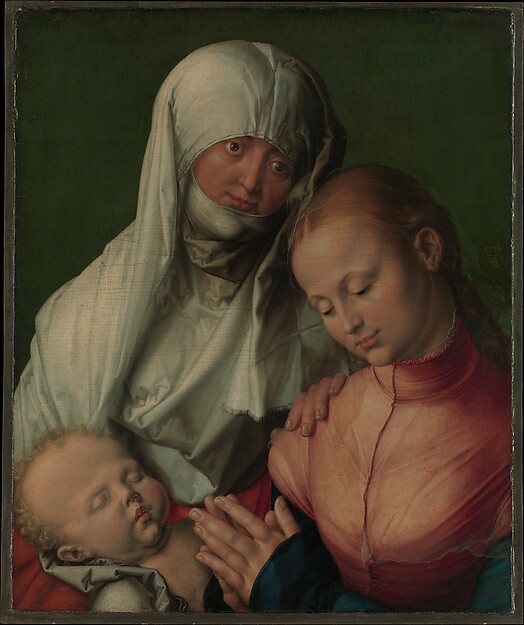
![Madonna and Child [obverse], Albrecht Dürer, c. 1496/1499](https://api.nga.gov/iiif/878db7e6-10ae-4cae-ba5d-6d6f5c413ae8/full/!2400,2400/0/default.jpg)
![Lot and His Daughters [reverse], Albrecht Dürer, c. 1496/1499](https://api.nga.gov/iiif/7565a449-f82a-414b-9bda-c93f55a51b4d/full/!2400,2400/0/default.jpg)