Kazimir MalevichRussian, 1879–1935
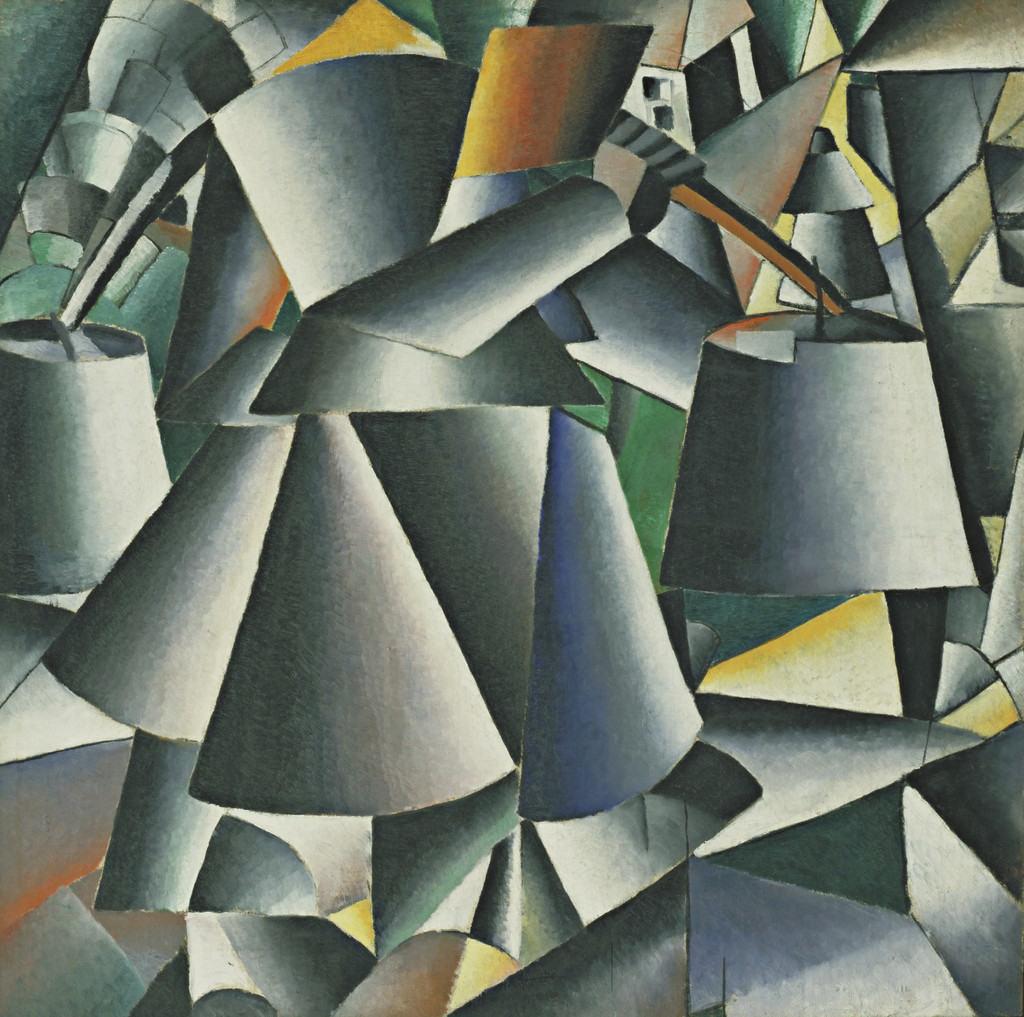
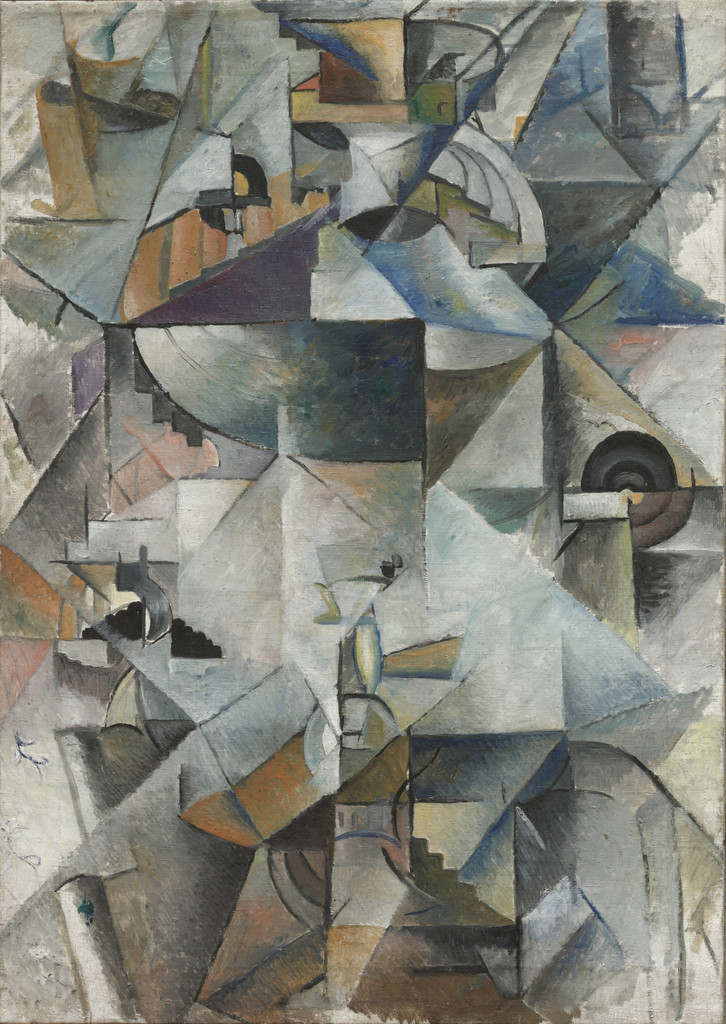
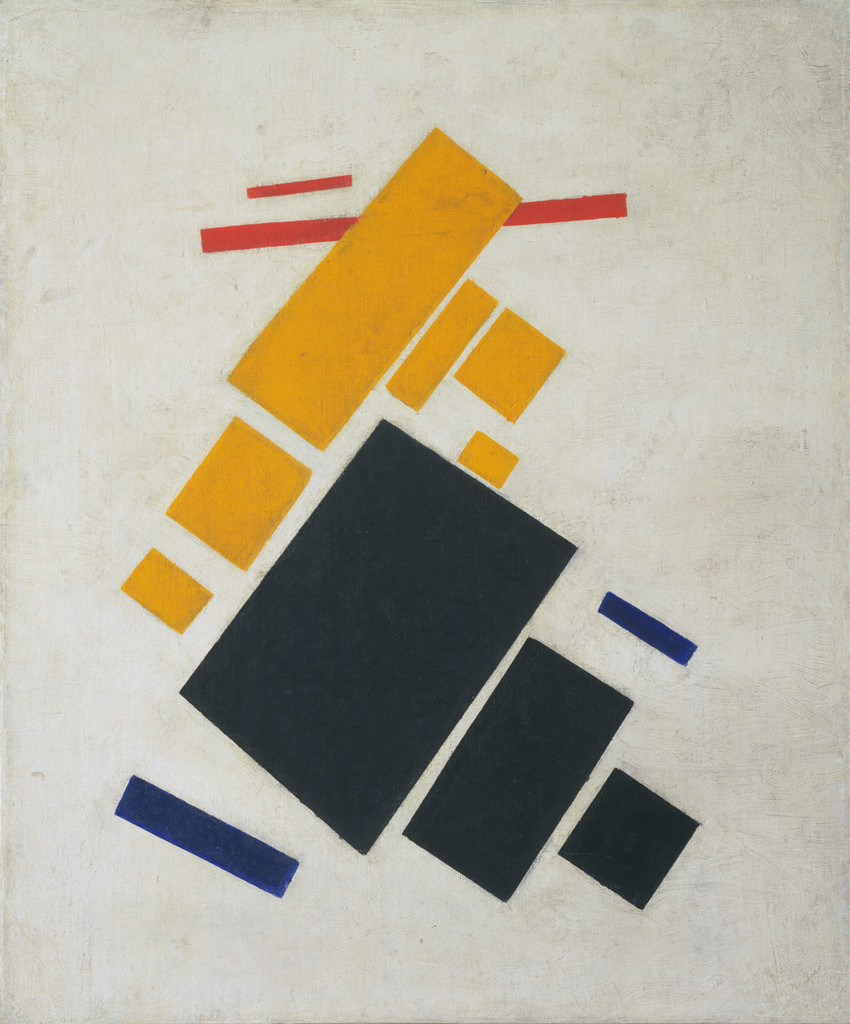
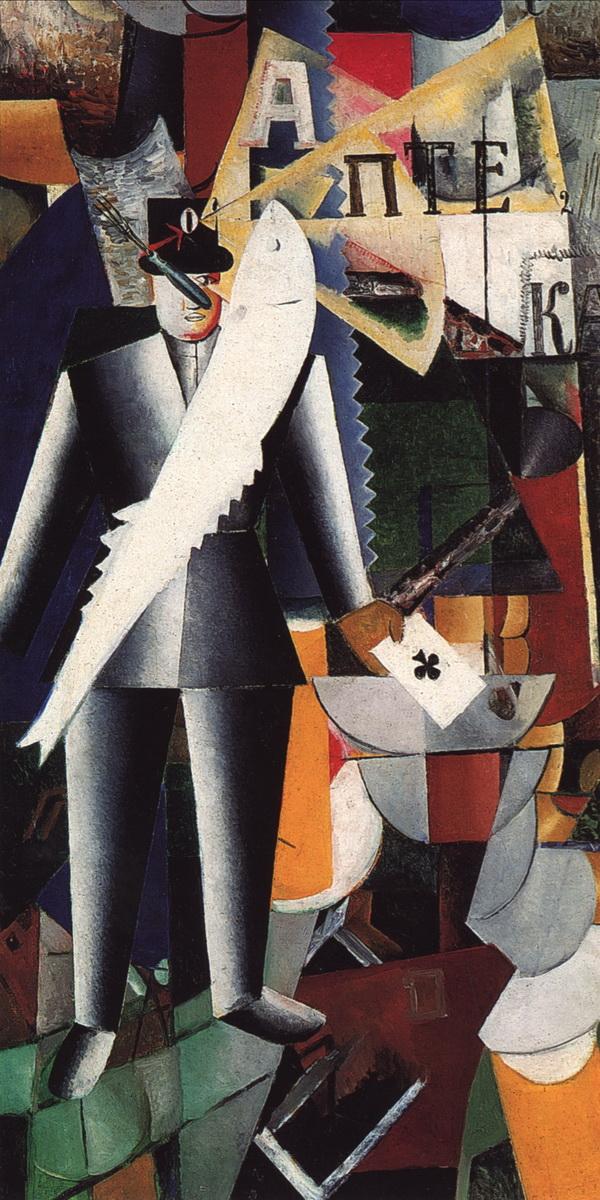
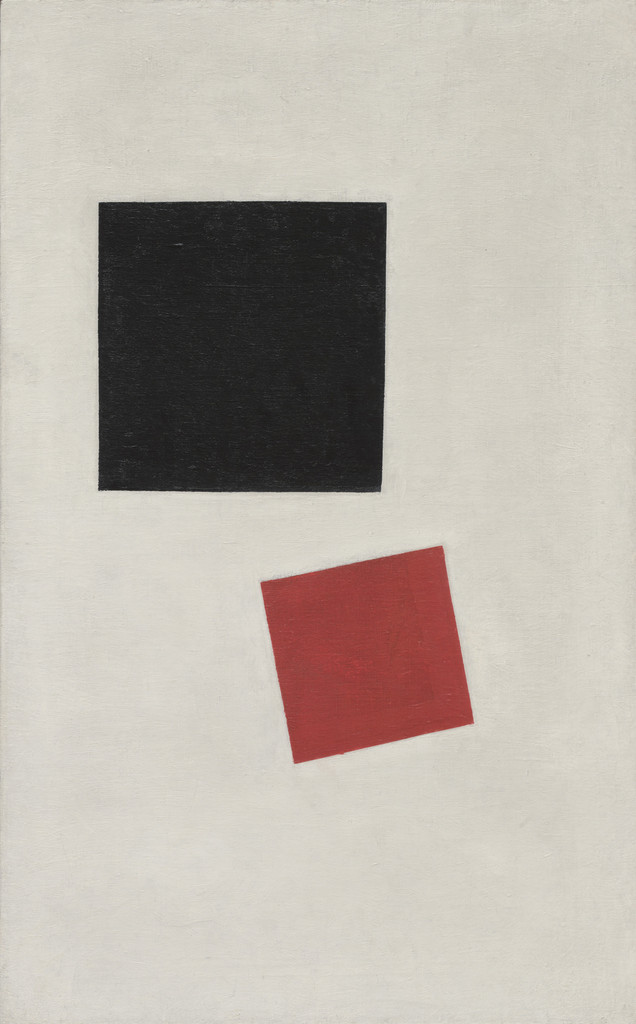
Construction: Two Views
May one see it?
Not receiving at present

Cambridge, United States
It belongs to the collection, but is not on display at present.
- Checked
- In this state since
- Source
- The museum
About the work
on verso: inscription by Alexander Dorner; lithograph of landscape drawing by O. A. Lagoda-Stichistikina
Harvard Art Museums
Particulars
- Accession number
- 2000.242
In the catalog
Sources
- Harvard Art Museums
- Image: Harvard Art Museums — © President and Fellows of Harvard College
Meanwhile, in the life of Kazimir Malevich
The whole life1923
An exhibition for the 25th anniversary of his career
In 1923 Malevich’s second solo exhibition, marking the 25th anniversary of his creative activity, was held in Moscow; that year he also gave a paper at the State Academy of Artistic Sciences and made sketches of Suprematist decoration and new forms for the Petrograd State Porcelain Factory.
1923–1926
Director of the Museum of Artistic Culture and GINKhUK
In 1923 Malevich was appointed acting director of the Petrograd Museum of Artistic Culture and began research and teaching there, surrounded by pupils who had followed him. In 1924 the museum was renamed, and from 1924 to 1926 he was director of the Leningrad State Institute of Artistic Culture (GINKhUK), where he headed the formal-theoretical department; he lived in the Myatlev house on St Isaac’s Square, where the institute was housed, from 1926 until his death.
10 June 1926
“A monastery on state supplies”: the closure of GINKhUK
On 10 June 1926 “Leningradskaya Pravda” published G. Seryi’s article “A Monastery on State Supplies”, which became the pretext for closing the institute: the newspaper called it a government-supported monastery rife with “counterrevolutionary sermonizing and artistic debauchery”. The collection of the institute’s papers prepared for print, with Malevich’s “Introduction to the Theory of the Additional Element in Painting”, was annulled, and in the autumn GINKhUK was liquidated; Malevich and his colleagues continued to work at the Institute of Art History until their dismissal in June 1929.
8 – 29 March 1927
Warsaw: a solo exhibition and a lecture
In March 1927 Malevich travelled abroad on an official trip: in Warsaw his solo exhibition was held at the Polish Arts Club in the Polonia Hotel. He met Polish artists, among them former pupils — Władysław Strzemiński, the sculptor Katarzyna Kobro and Henryk Stażewski; he was mostly greeted with enthusiasm, though Mieczysław Szczuka reproached him as a Romantic who loved painterly means for their own sake.
29 March – 5 June 1927
Berlin and the Bauhaus: the Great Berlin Art Exhibition
At the end of March 1927 Malevich left Warsaw for Berlin with the Polish poet and critic Tadeusz Peiper; on 7 April they visited the Bauhaus in Dessau, where he met Walter Gropius and László Moholy-Nagy. At the Great Berlin Art Exhibition (7 May – 30 September) he was given a hall — over seventy works spanning his whole oeuvre; the show has been called a defining moment in the Western reception of Malevich.
June 1927
His archive and paintings stay in Germany
On returning to the USSR Malevich left the paintings he had brought in Germany — with the architect Hugo Häring for temporary safekeeping — together with the whole archive accumulated up to March 1927, a kind of “time capsule” with a note in case of his death or hopeless imprisonment; the pictures never came back to his homeland. In Berlin, after Warsaw, he applied for a French visa, giving his nationality as “Polish”, but the visa was refused.