ART WIKI32,963 on view
MapCollectionArtistsMuseumsExhibitionsJournal
Sign in

ART WIKI

Where the masterpiece hangs, and when they let you in.

Collections: Art Institute of Chicago, Getty Villa, Harvard Art Museums, Hirshhorn Museum and Sculpture Garden, J. Paul Getty Museum, Minneapolis Institute of Art, Musée du Louvre, National Gallery of Art, National Museum of Asian Art, National Portrait Gallery (Smithsonian), Pushkin State Museum of Fine Arts, Rijksmuseum, Smithsonian American Art Museum, SMK — National Gallery of Denmark, State Hermitage Museum, State Russian Museum, The Cleveland Museum of Art, The Metropolitan Museum of Art, The Museum of Modern Art, Tretyakov Gallery, Victoria and Albert Museum, Whitney Museum of American Art, State Catalogue of the Museum Fund of Russia (274 museums), Europeana (19 museums), Wikidata (6 museums), Paris Musées (12 museums), and Joconde, the French Ministry of Culture's museum database (495 museums). Images belong to their rights holders.

Sections

  • Map
  • Search
  • Collection
  • Masterpieces
  • On view now
  • Artists

More

  • Museums & galleries
  • Exhibitions
  • Journal
  • Where the data comes from
  • Privacy & cookies
HomeMapBrowse
  1. Collection/
  2. Art Institute of Chicago/
  3. Close Pin Prop
Close Pin Prop, Richard Serra, 1969
Richard Serra, portraitRichard SerraAmerican, 1938–2024

Close Pin Prop

1969 · Sculpture

May one see it?

Not receiving at present

Art Institute of Chicago

Chicago, United States

It belongs to the collection, but is not on display at present.

Checked
3 days ago
In this state since
Aug 19, 2026
Source
The museum
On the mapMuseum page

About the sculpture

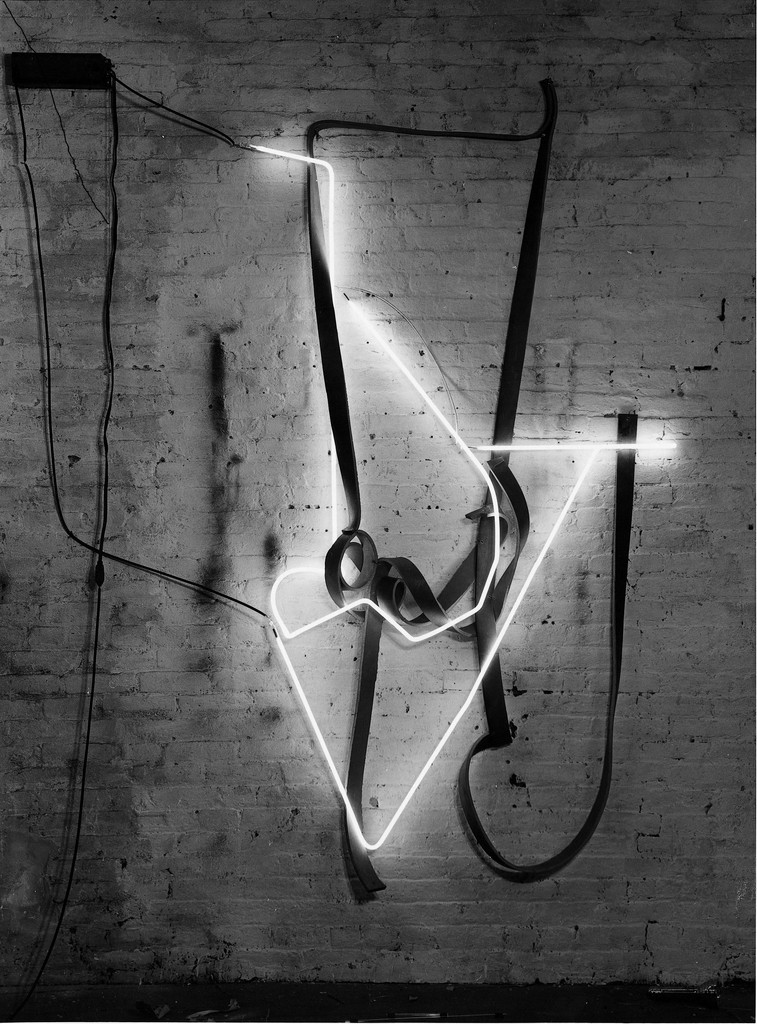
In the late 1960s, Richard Serra pioneered “antiform,” an approach to sculpture that challenged the reductive formalism of Minimalism by focusing on the process or act of creation. Capturing the raw, muscular energy of working with lead and steel, the artist utilized these materials to explore fundamental properties of sculptural tension. In 1968 Serra created his first “props,” consisting of plates and tubes in precarious configurations. Although these works are entirely stable, as all are carefully balanced, they employ gravity as their fundamental support and thus have an unnerving quality. The result is an aggressive sculptural experience evoking potential danger. The title refers to the artist Chuck Close, who visited Serra’s studio when this prop was being made.

Art Institute of Chicago · CC BY 4.0

Particulars

1969 · aged 31
19382024
Accession number
1991.161a-b

In the catalog

SculpturePost-war art20th centuryUnited States

Sources

  • Art Institute of Chicago
  • Image: Art Institute of Chicago — © the artist or rights holder

Meanwhile, in the life of Richard Serra

The whole life
  1. 1968

    Group show “Nine at Castelli”

    At the Castelli Warehouse in New York he shows “Prop” and “Scatter Piece” and makes “Splashing” by throwing molten lead into the angle between floor and wall.

  2. 1969

    Jasper Johns's commission and a plate in the corner

    Jasper Johns commissions a “Splash Piece” for his studio; while heating the lead plates, Serra sets one of the larger ones in the corner, where it stands on its own. It becomes a pivotal moment, soon followed by his break into space.

  3. 1969

    First solo exhibition in the United States

    At the Leo Castelli Warehouse in New York he exhibits ten lead “Prop Pieces”, a “Scatter Piece” and a “Splash Piece” dedicated to Eva Hesse.

  4. 1969

    “Anti-Illusion” at the Whitney

    His “Casting” is included in the exhibition “Anti-Illusion: Procedures/Materials” at the Whitney Museum of American Art: he again throws molten lead into the angle of floor and wall, pulls away the hardened casting and repeats the action, producing a series of free-standing forms.

  5. 1970

    First solo museum exhibition

    His first solo museum exhibition is held at the Pasadena Art Museum in Pasadena, California.

  6. 1970

    The Zen gardens of Myoshin-ji in Kyoto

    In Japan he spends most of his time studying the Zen gardens and temples of Myoshin-ji in Kyoto. The layout of the gardens reveals the landscape as a total field that can be experienced only by walking, and changes his way of seeing space in relation to time.


More by Richard Serra

All works
Five Plates, Two Poles, Richard Serra, 1971

Five Plates, Two Poles

1971 · National Gallery of Art

Television Delivers People, Richard Serra, Carlota Schoolman, 1973

Television Delivers People

1973 · The Museum of Modern Art

Equal, Richard Serra, 2015

Equal

2015 · The Museum of Modern Art

Candle Piece, Richard Serra, 1967

Candle Piece

1967 · Not on view · The Museum of Modern Art

Chunk, Richard Serra, 1967

Chunk

1967 · Not on view · The Museum of Modern Art

To Lift, Richard Serra, 1967

To Lift

1967 · Not on view · The Museum of Modern Art

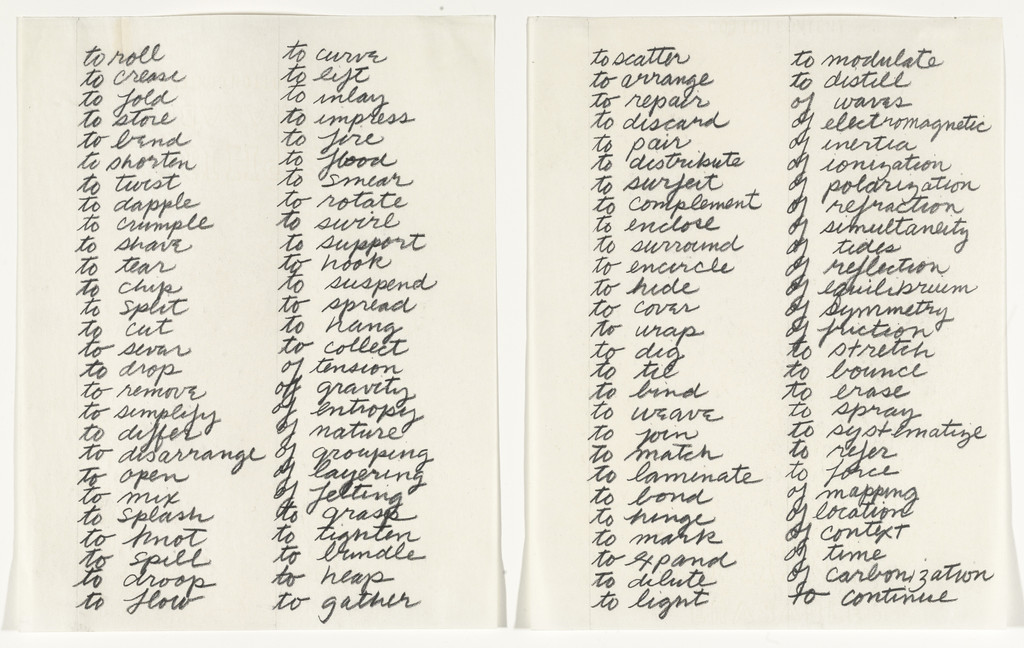
Verb List, Richard Serra, 1967

Verb List

1967 · Not on view · The Museum of Modern Art

Untitled, Richard Serra, 1967

Untitled

1967 · Not on view · The Museum of Modern Art

Neighbors at Art Institute of Chicago

Museum page
The Bedroom, Vincent van Gogh, 1889

Vincent van Gogh

The Bedroom, 1889

A Sunday on La Grande Jatte — 1884, Georges Seurat, 1884–86, border added 1888–89

Georges Seurat

A Sunday Afternoon on the Island of La Grande Jatte, 1884–86, border added 1888–89

Paris Street; Rainy Day, Gustave Caillebotte, 1877

Gustave Caillebotte

Paris Street; Rainy Day, 1877

Two Sisters (On the Terrace), Pierre-Auguste Renoir, 1881

Pierre-Auguste Renoir

Two Sisters (On the Terrace), 1881

The Basket of Apples, Paul Cézanne, c. 1893

Paul Cézanne

The Basket of Apples, c. 1893

Stacks of Wheat (End of Summer), Claude Monet, 1890–91

Claude Monet

Stacks of Wheat (End of Summer), 1890–91

American Gothic, Grant Wood, 1930

Grant Wood

American Gothic, 1930

Nighthawks, Edward Hopper, 1942

Edward Hopper

Nighthawks, 1942