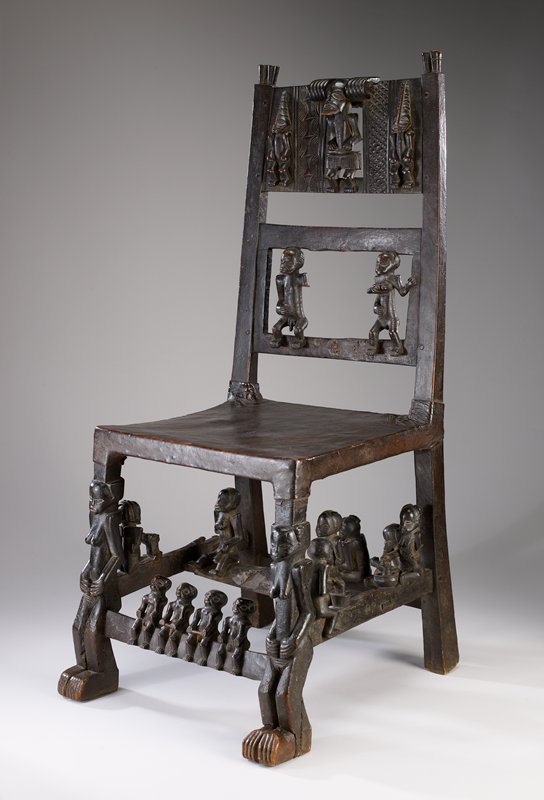
Citwamo Ca Mangu (Throne)
Can I see it?
Yes, on view now
Where is “Citwamo Ca Mangu (Throne)” now? Minneapolis Institute of Art, G250, Minneapolis. Yes, on view now. Checked September 29, 2026.

Minneapolis, United States
Closed· opens at 11:00 AM
On public display.
- Checked
- In this state since
- Source
- The museum
About the sculpture
As in all cultures, African rulers often express their status by sitting on a special stool, chair, or throne that is an recognized mark of their rank and leadership. Chokwe thrones are modeled on European chairs that arrived in Africa from Spain and Portugal after trade was established in the late 1490s. While the basic form is European, Chokwe sculptors immediately changed its decoration, covering every available surface with themed ornamentation reinforcing the power, status and responsibilities of the local ruler. The central figure on the throne back represents a masked Cihongo dancer. Cihongo is associated with courtly wealth and might, and was danced solely by the chief or his son. The front legs are in the form of female figures, symbolizing the importance of women in supporting a matrilineal society. Tiny figures on the rungs and stretcher enact narrative scenes of community life, a sign of the ruler's concern for his people's well-being.
Minneapolis Institute of Art
Details
- Accession number
- 87.65
In the catalog
Sources
- Minneapolis Institute of Art
- Image: Minneapolis Institute of Art — Copyright of the artist, artist's estate, or assignees