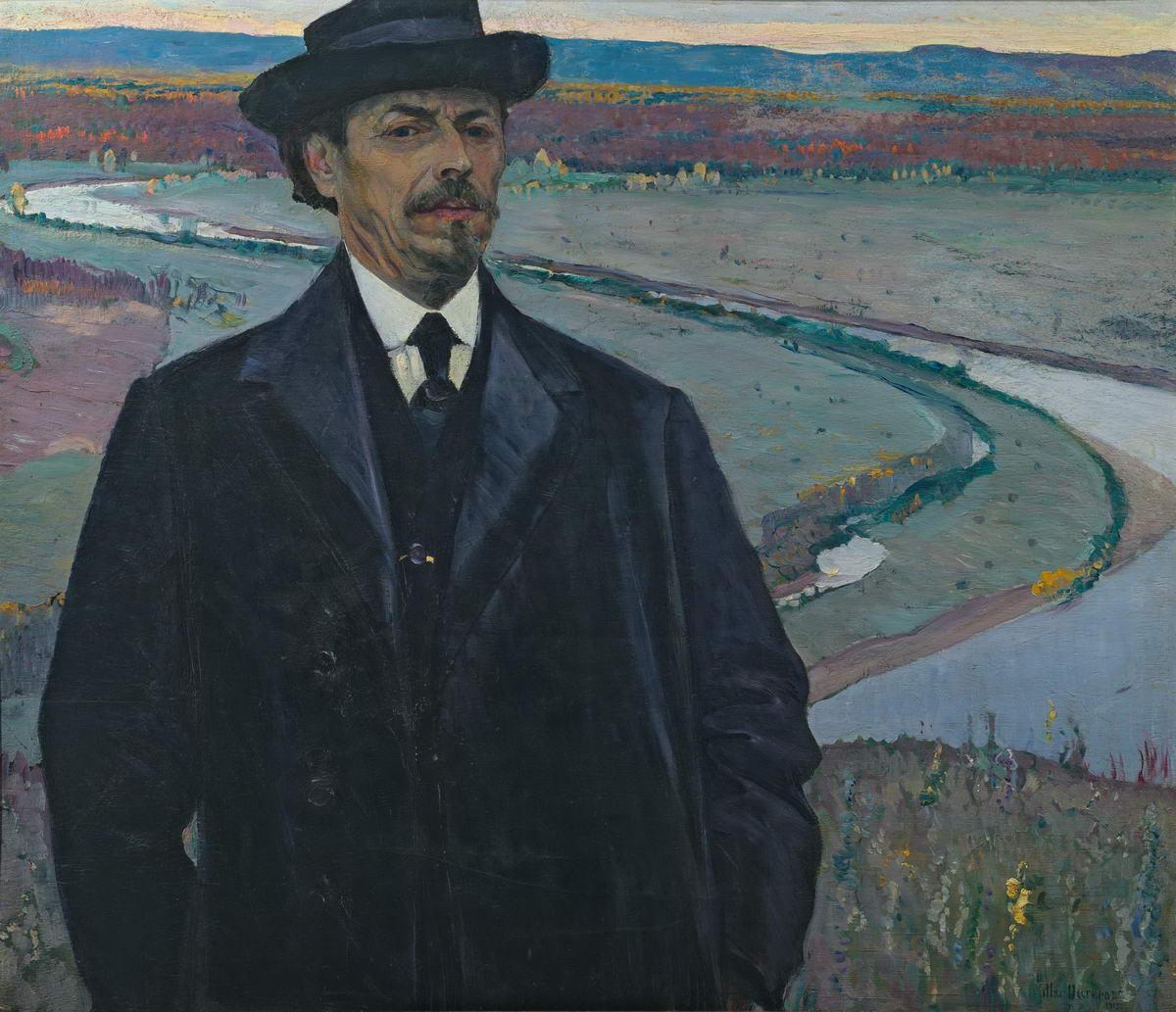
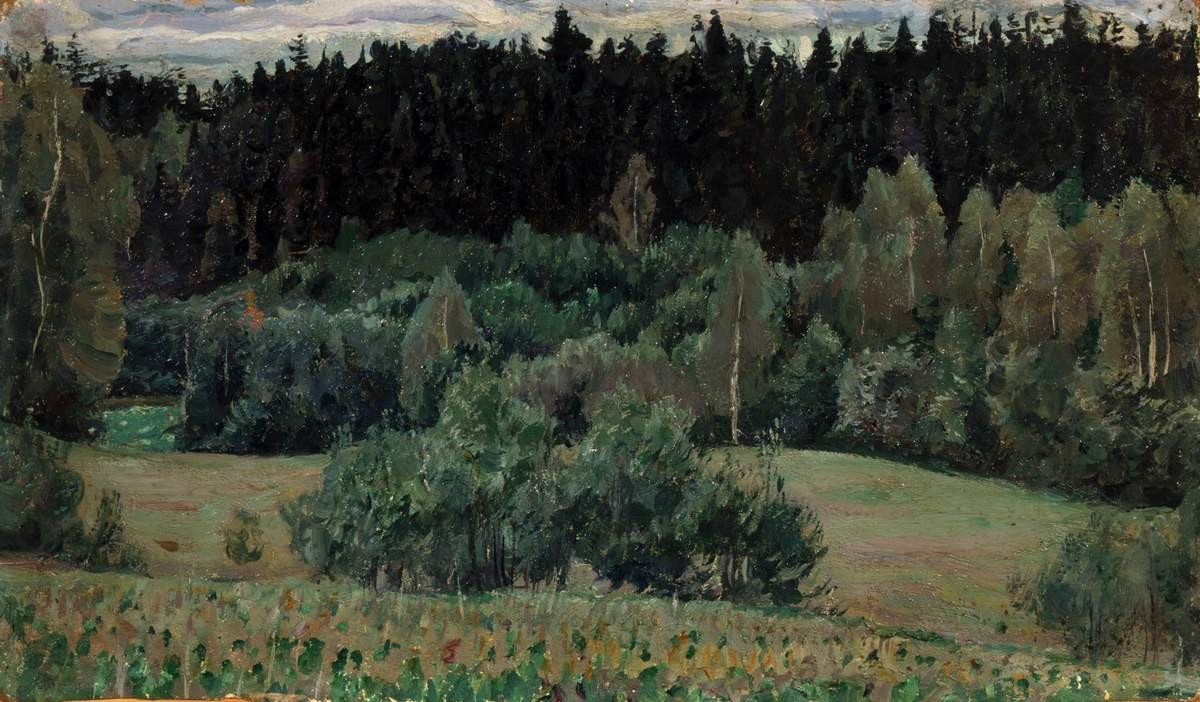
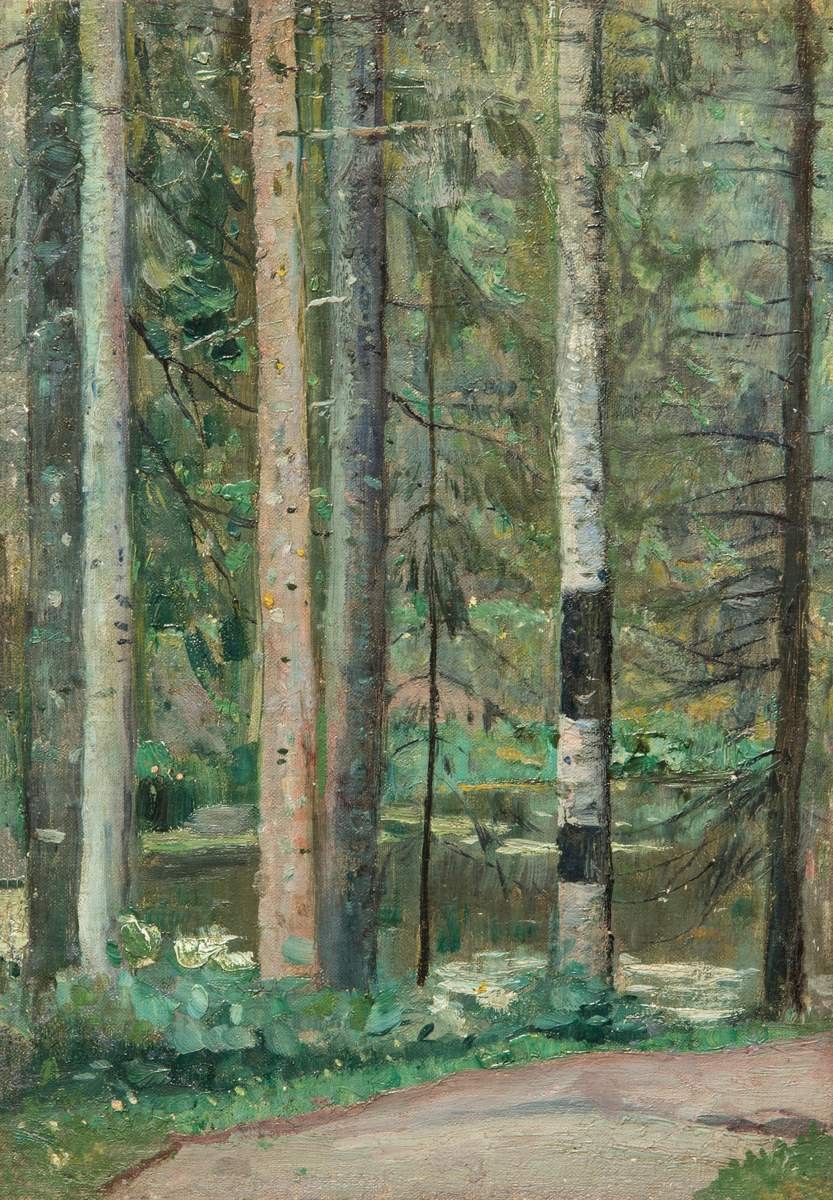
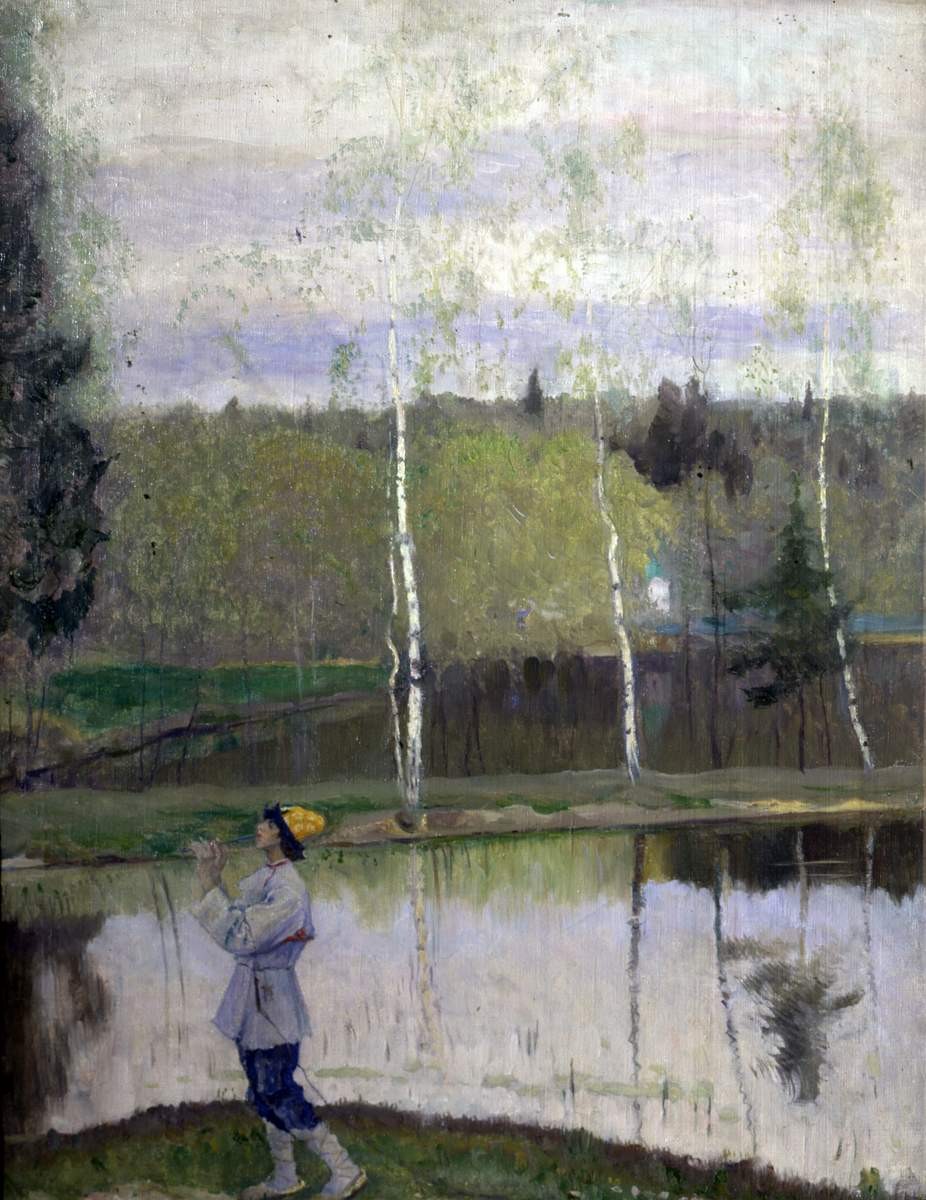
Mikhail Nesterov1862–1942
Бахчисарай
Can I see it?
Unknown
Where is “Бахчисарай” now? Collection: Sochi Art Museum, Sochi. Unknown.
Sochi, Russia
The owner is known; whether it is on view today is not.
- In this state since
- Source
- The museum
About the painting
Museum text in Russian
Летний пейзаж со стеной из белого кирпича, слева - вход башенка под красной черепицей. За стеной зеленая крона дерева, вдали пологие горы, синее небо. Тов.ярл.053957
Sochi Art Museum
Details
- Accession number
- Ж 435
In the catalog
Sources
- The State Catalogue of the Museum Fund of Russia
- Image: Sochi Art Museum — © Сочинский художественный музей · Госкаталог музейного фонда РФ
In the life of Mikhail Nesterov
The whole life1918
Flight to the Caucasus; illness in Armavir
The 1917 revolution was a watershed for the 55-year-old painter: after the Civil War broke out, the Nesterov family was forced to leave for the Caucasus. In 1918 he moved to Armavir, where he fell ill and for a long time could not work.
1920
Returns to Moscow
Nesterov returned to Moscow; from 1920 he lived and worked at 43 Sivtsev Vrazhek Lane.
spring 1925
First arrest
In spring 1925 Nesterov was arrested and spent several days in prison; he was freed thanks to the efforts of the architect Alexei Shchusev, who enjoyed the authorities' trust.
1926
Begins writing his memoirs
Nesterov began the memoirs on which he worked with enthusiasm in the last years of his life; they remained unfinished.
1927
Pavel Korin's inscription on “The Soul of the People”
After long hesitation on the artist's part, Pavel Korin inscribed the Gospel words “Except ye become as little children, ye shall not enter into the kingdom of heaven” at the lower left of the painting. Nesterov counted the picture among his most important: “At the start of life, ‘The Youth Bartholomew’; towards its end, ‘The Soul of the People’.”
1930s
Forced to abandon religious subjects
Under pressure from official ideology Nesterov gave up his religious subjects and turned to portraiture, yet he never joined the Soviet artists' unions, never accepted portrait commissions and kept his inner independence; his sitters included the surgeon Sergei Yudin (1933, 1935) and the sculptor Ivan Shadr (1934). By other accounts, he had to give up religious painting as early as his return to Moscow in 1920, though he privately continued the Sergius cycle.