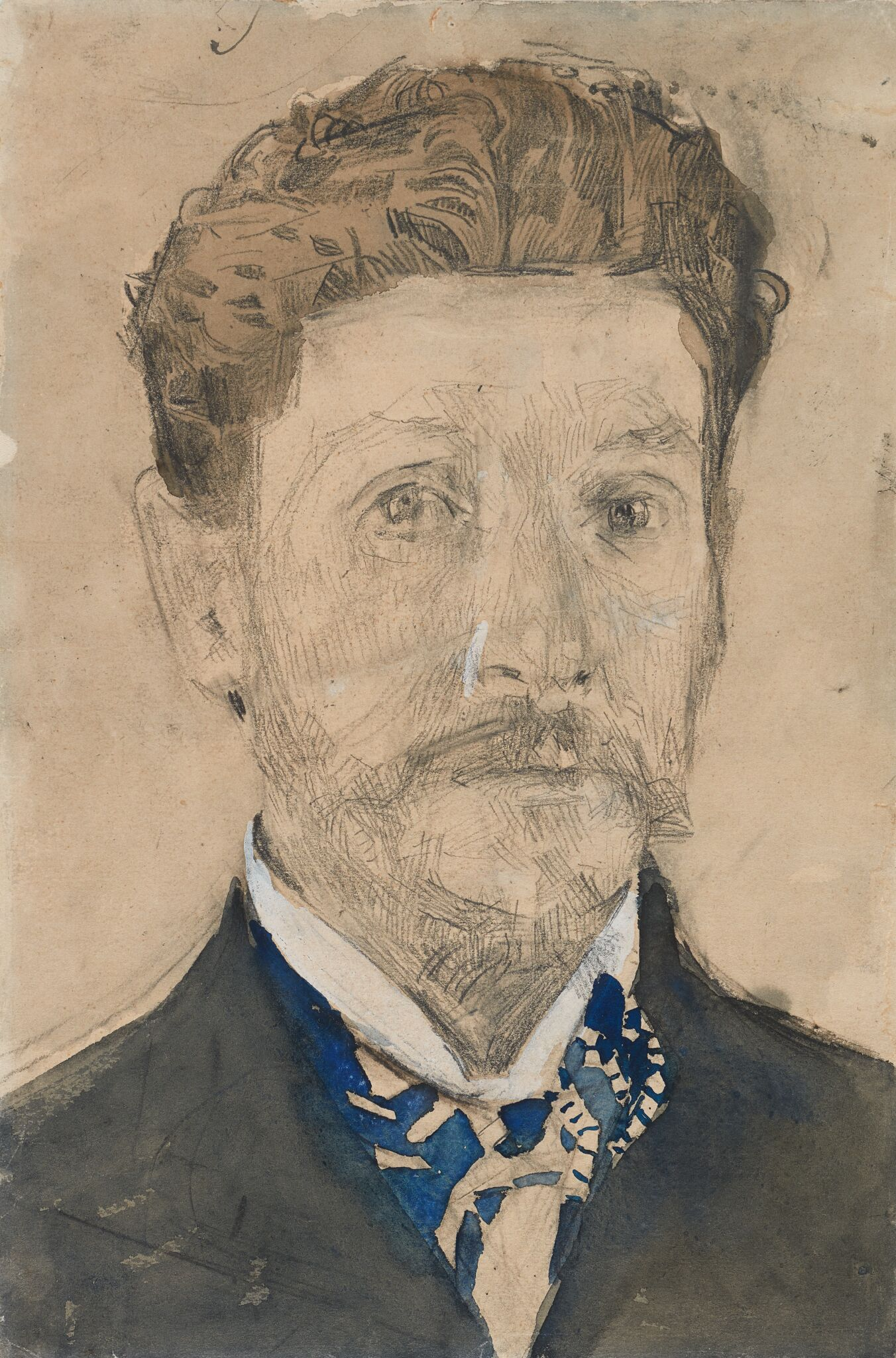
 Mikhail Vrubel1856–1910
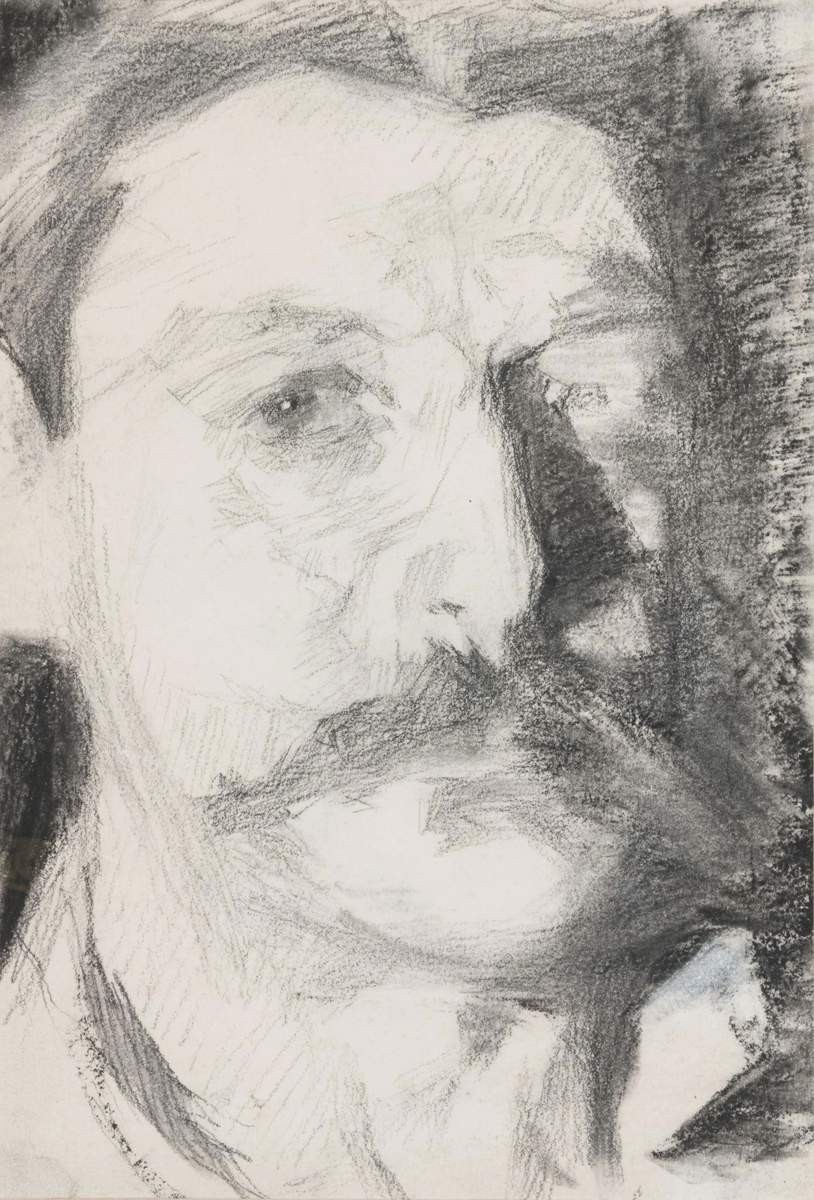
Автопортрет
May one see it?
Unknown

Tretyakov Gallery
Moscow, Russia
The owner is known; whether it is on view today is not.
- In this state since
- Source
- The museum
About the work
In the museum's own words — in Russian
В последние годы жизни Врубель создает серию автопортретов. В это время его контакты с внешним миром были крайне ограничены и художник находит в собственном лице идеальную модель. В десятках рисунков он заинтересованно исследует самого себя. Рука художника подобно тонко настроенному прибору, беспристрастно фиксирующему не только мельчайшие приметы его внешнего облика, но и отображающему малейшие изменения нюансы в состоянии модели.
Read on
Страстное желание восстановить и удержать свой облик таким, каким он должен быть, стало стержнем, лейтмотивом исповедальной серии автопортретов. Один из современников писал: «Близость безумия словно обострила в нем все душевные способности, и никогда, быть может, гений Врубеля не отражался в лице, речах и жестах, так чисто и полно, как теперь в эти прощальные приливы вдохновения». Для каждой работы автопортретной серии Врубель, подобно композитору, выбирает свой стиль и арсенал художественных приемов – технику, темп рисования, характер моделировки объемов, форму штриха, способ прикосновения к бумаге. Он энергично прорисовывает каждый завиток волос, превращая их в декоративный узор или венец, острыми мелкими штрихами строит форму лица. Центром композиции становится шейный платок, который является единственной цветной дателью портрета. Он, как некий камертон, организует звучание всей формы – подвижной и как будто еще не готовой материализоваться.
Tretyakov Gallery
Particulars
- Accession number
- 3556
In the catalog
Sources
- Tretyakov Gallery
- Image: Tretyakov Gallery — © State Tretyakov Gallery
Meanwhile, in the life of Mikhail Vrubel
The whole life1902
Bekhterev’s diagnosis
In St Petersburg Vrubel went on repainting the “Demon” without pause, ruining it in his friends’ view, and his family took him to the psychiatrist Vladimir Bekhterev, who diagnosed “incurable progressive paralysis” — tertiary syphilis; the artist himself was told nothing. In Moscow, although the collector Vladimir von Meck bought the painting for 3,000 roubles, he grew worse still: he drank and squandered money, and his wife and son tried to take refuge from him with relatives in Ryazan.
2 February 1902
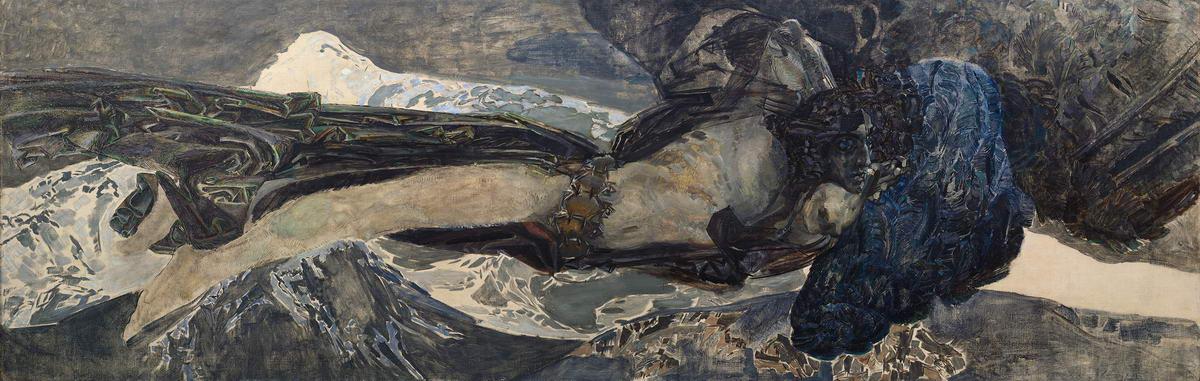
“The Demon Downcast” fails in Moscow
The painting went on show in Moscow a day before the “Group of 36” exhibition closed; Vrubel hoped it would be bought for the Tretyakov Gallery. The failure coincided with news of the suicide of Alexander Rizzoni after unfair criticism in the journal Mir iskusstva.
April 1902
First hospitalisation
In early April, with symptoms of acute mental disorder, Vrubel was admitted to F. A. Savey-Mogilevich’s private clinic; until August his condition was so grave that even his wife and sister were not allowed to see him. In September he was moved to Vladimir Serbsky’s clinic at Moscow University, and Serbsky confirmed the diagnosis, establishing that the infection dated back to 1892.
November 1902
An exhibition of 36 works turns the tide
The papers greeted Vrubel’s illness with articles such as “Mentally Ill Decadents” in Russky Listok, so Benois and Diaghilev, set on proving the artist’s sanity to the public, mounted an exhibition of thirty-six of his works, including all three painted “Demons”. It marked a turning point in how critics and the public saw Vrubel, though few believed he would recover, and Mir iskusstva wrote of him in the past tense.
3 May 1903
Death of his son Savva
Vrubel had been discharged from the clinic in February, and von Meck invited the family to spend the summer on his estate in Kiev province, but on the eve of departure two-year-old Savva fell ill, and in Kiev the child died. Vrubel at once shook off his apathy, busied himself with the funeral and supported his wife, who would not say a word; their son was buried on Baikove Hill.
February 1906
Total blindness
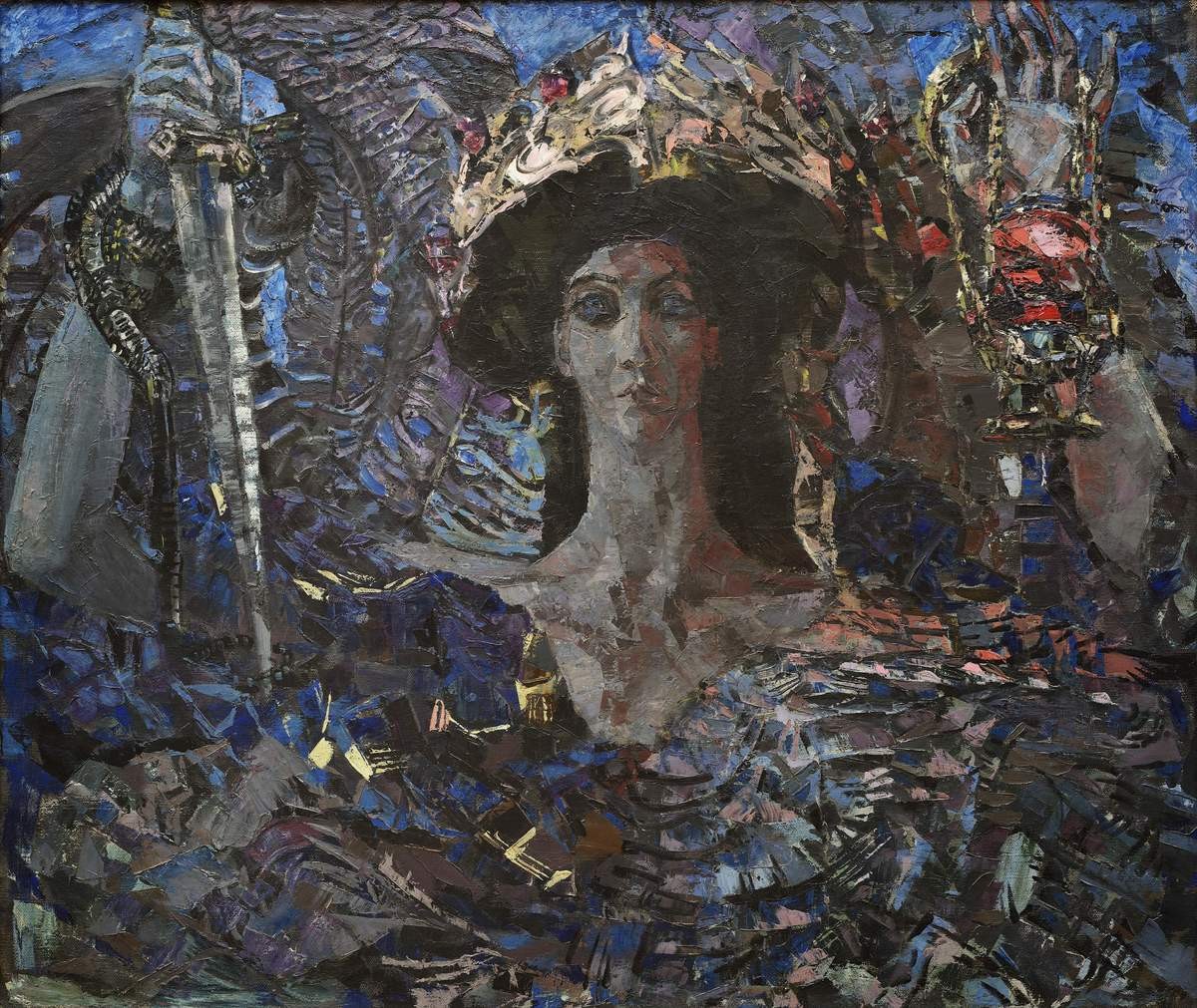
Despite the “voices” that tormented him, Vrubel returned to the theme of the Prophet — he began painting a six-winged seraph and took up the visions of Ezekiel — but the picture was never finished: his sight began to fail catastrophically, and atrophy of the optic nerve set in. On 12 February 1906 he complained in a letter to his wife that he could neither read nor draw, and a few days later he was completely blind.