 John ConstableBritish, 1776–1837
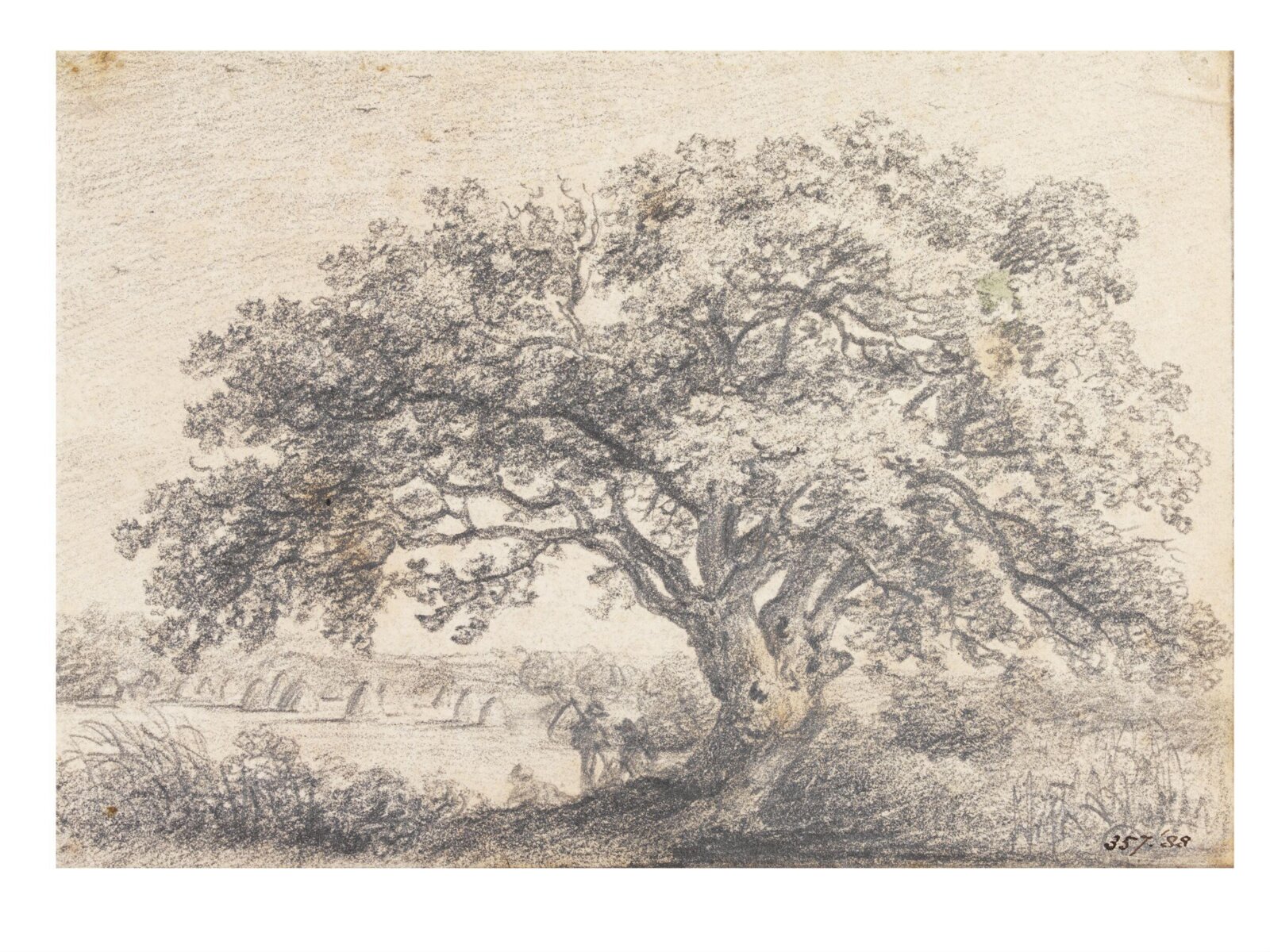
An oak tree in a hayfield
May one see it?
Not receiving at present

Victoria and Albert Museum
London, United Kingdom
It belongs to the collection, but is not on display at present.
- Checked
- In this state since
- Source
- The museum
About the work
'Portraits' of individual trees were a recurring subject in Constable's oeuvre. Often tranquil, sometimes dramatic, they often carried implications of stability and timelessness and reflected Constable's love of nature, which was both sensual and spiritual. In this sketch, Constable juxtaposed the broad crown of an old oak with a hayfield bathed in the late afternoon sun. This idyllic scene reflects the idea, widespread at the time, that a nation's countryside represented its social and political state; scenes of cultivation and husbandry indicated a state of order and harmony.
Victoria and Albert Museum
Particulars
- Accession number
- 357-1888
What it shows
In the catalog
Sources
- Victoria and Albert Museum
- Image: Victoria and Albert Museum — © Victoria and Albert Museum, London
Meanwhile, in the life of John Constable
The whole lifec. 1809
Childhood friendship with Maria Bicknell turns to love
From about 1809 Constable’s childhood friendship with Maria Bicknell grew into a deep, mutual love.
1811
First visit to John Fisher in Salisbury
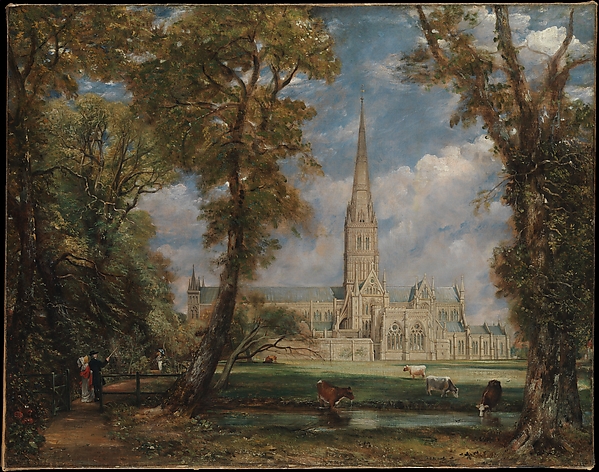
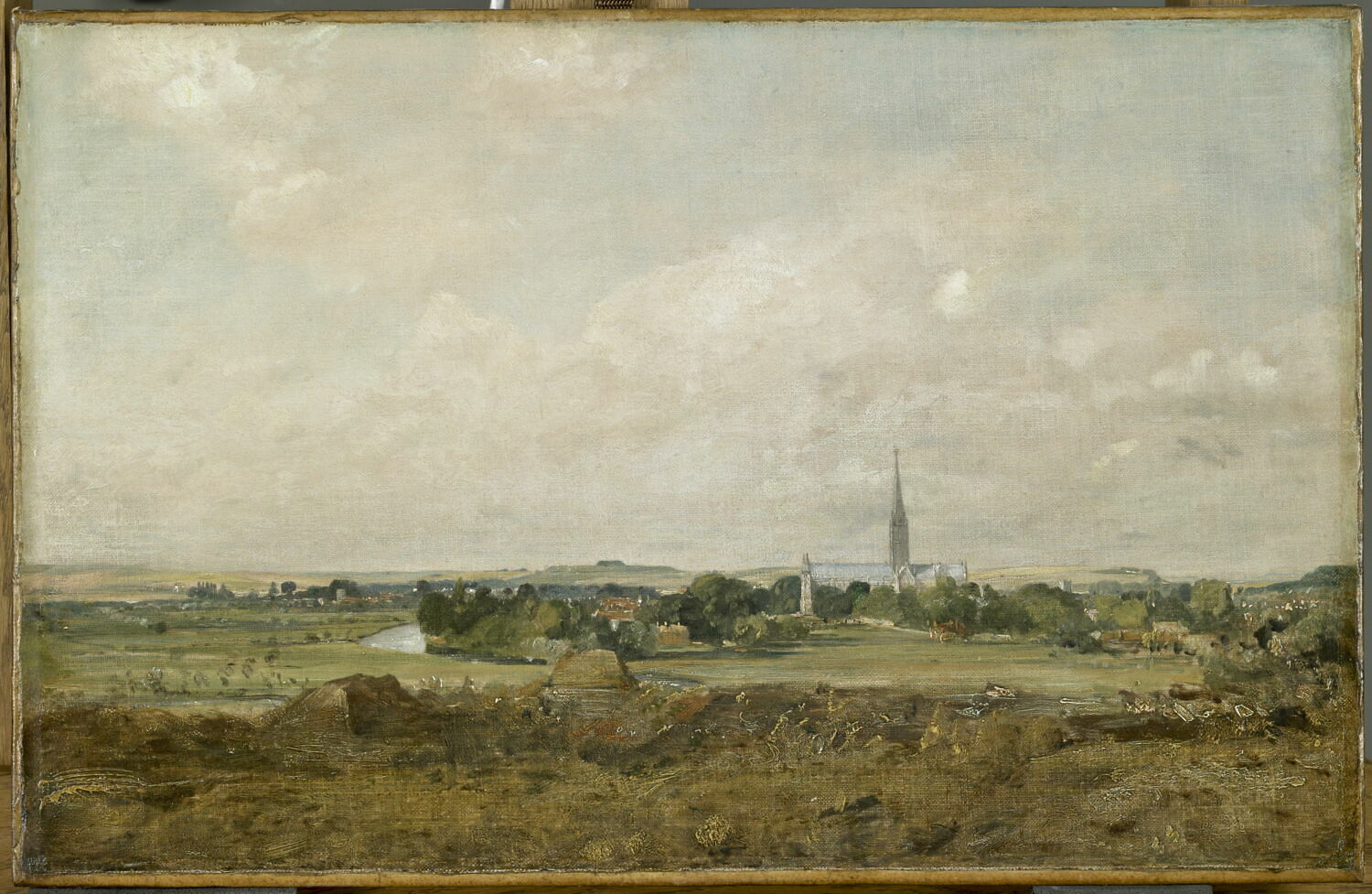
In 1811 Constable first stayed with his friend John Fisher and his family in Salisbury, whose cathedral and surrounding landscape inspired some of his greatest paintings.
1816
A marriage against the bride’s grandfather
Maria’s grandfather, Dr Rhudde, rector of East Bergholt, opposed the match: he thought the Constables his social inferiors and threatened to disinherit her. Constable’s parents approved but offered no support until he was financially secure; they died soon afterwards, and he inherited a fifth share of the family business.
October 1816
A honeymoon by the sea
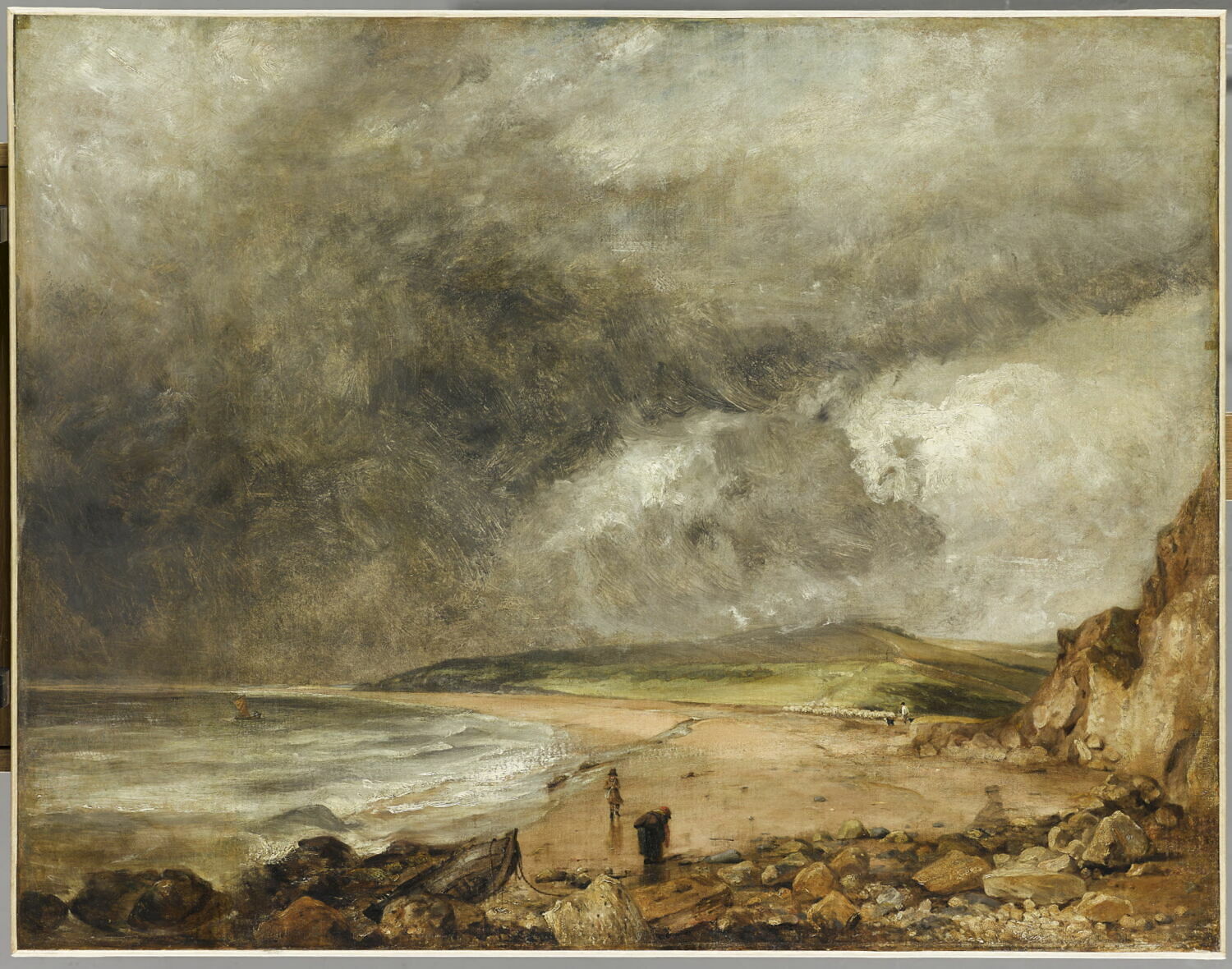
After the wedding at St Martin-in-the-Fields, conducted by Fisher, the couple stayed at Fisher’s vicarage and toured the south coast. The sea at Weymouth and Brighton pushed Constable towards brilliant colour and lively brushwork.
2 October 1816
Married: Maria Bicknell
1821
“The Hay Wain” at the Royal Academy
The picture, shown as “Landscape: Noon”, found no buyer, but it was seen by the painter Théodore Géricault and the writer Charles Nodier. According to Delacroix, Géricault went back to France quite stunned and invited Constable to Paris, while Nodier urged French artists to look to nature rather than to trips to Rome.



![Vallon à Helmingham [Helmingham Dell], Constable, John, 1e quart du XIXe siècle (peint à l'été 1823 (selon Beckett)) (1823)](https://collections.louvre.fr/media/cache/large/0000000021/0000065616/0000312650_OG.JPG)