 Claes OldenburgAmerican, 1929–2022
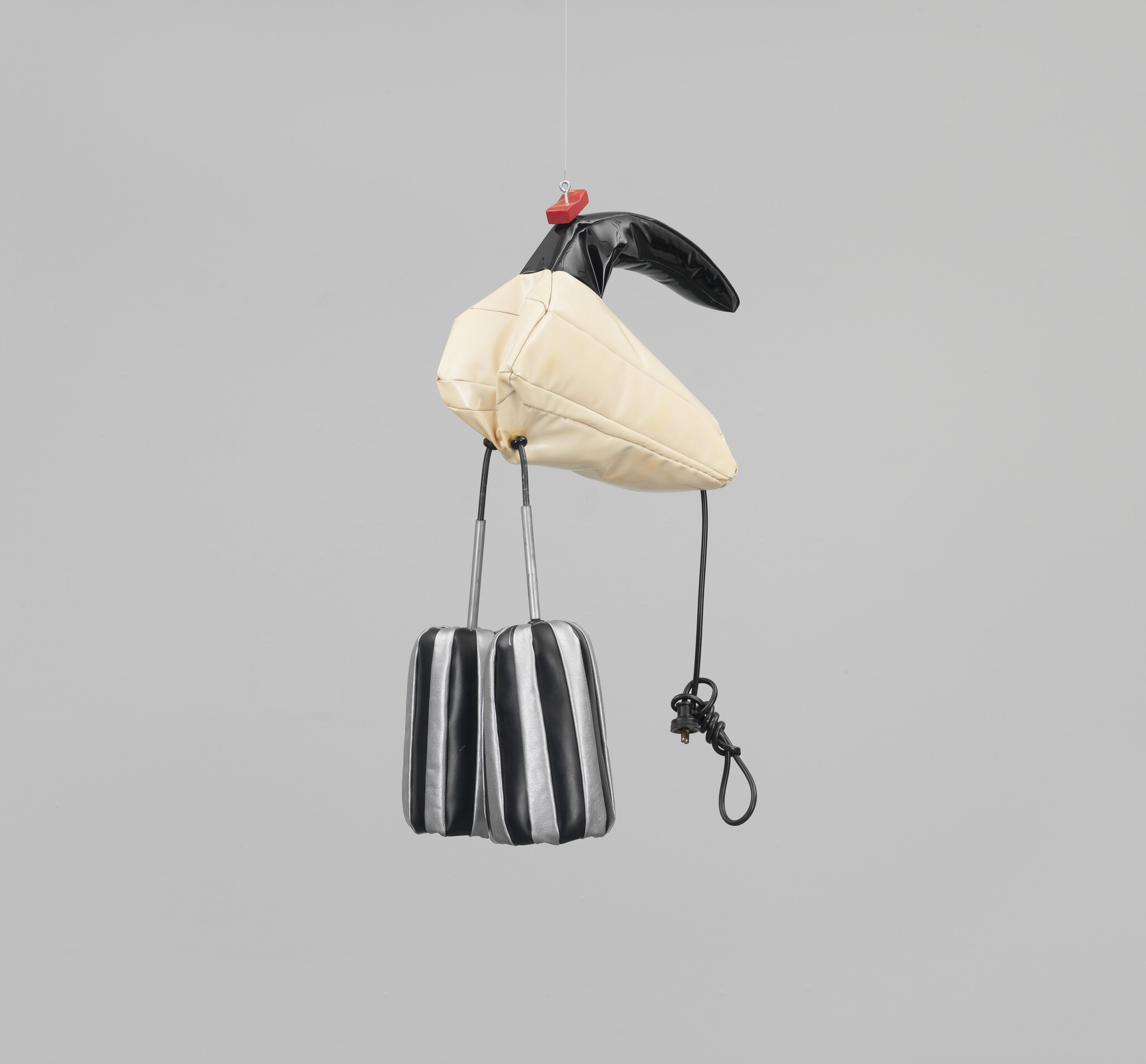
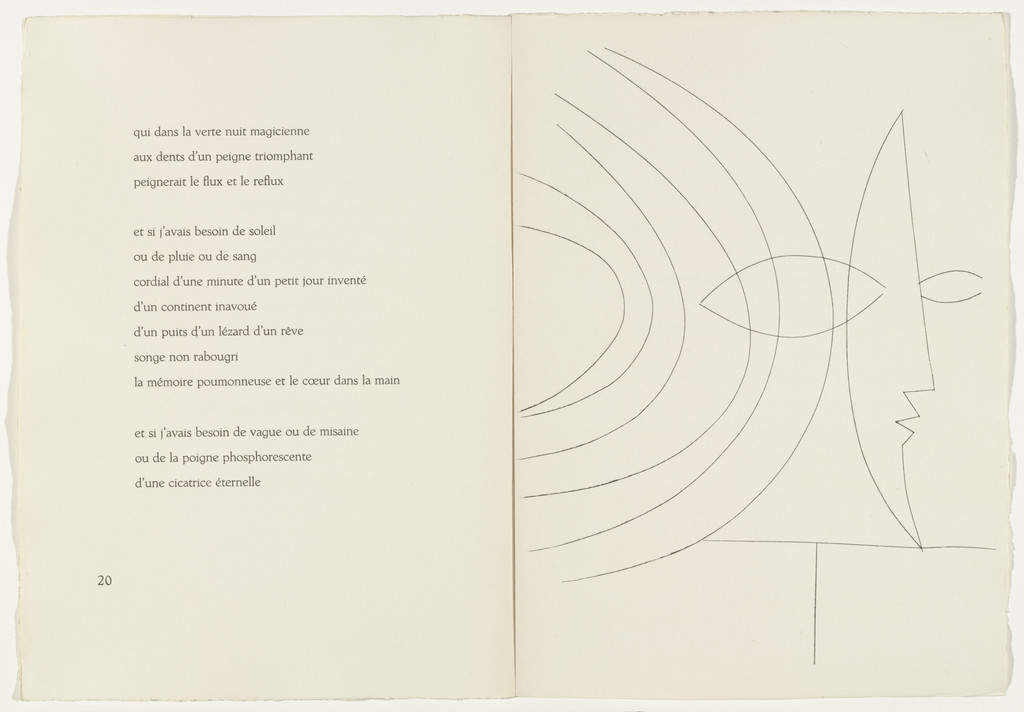
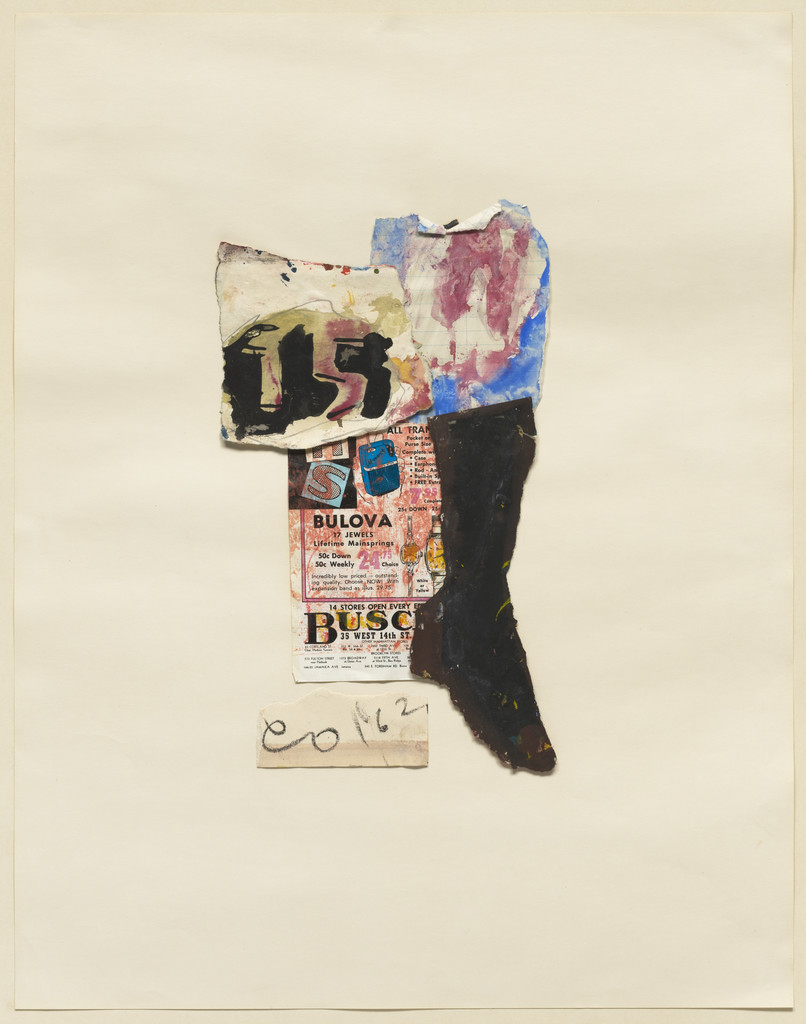
A Sock and 15 Cents (Studies for Store Objects)
May one see it?
Not receiving at present

New York, United States
It belongs to the collection, but is not on display at present.
- Checked
- Source
- The museum
Particulars
- Accession number
- 123.2002
In the catalog
Sources
- The Museum of Modern Art
- Image: The Museum of Modern Art — © the artist or rights holder
Meanwhile, in the life of Claes Oldenburg
The whole life1959
Patty Mucha, model and future wife
Patty Mucha, who had come to New York in 1957 to become an artist, met Oldenburg while posing nude for his portraits; his drawing “Pat Reading in Bed, Lenox, 1959” is in the Whitney Museum of American Art.
May 1959
First show at the Judson Gallery
In May 1959 the Judson Gallery at Judson Memorial Church on Washington Square held Oldenburg's first one-man show — figurative drawings and papier-mâché sculptures. The artist Robert Beauchamp called him “brilliant” against a “dull” Abstract Expressionist period.
1960
Married: Patty Mucha
1960s
Happenings of the “Ray Gun Theater”
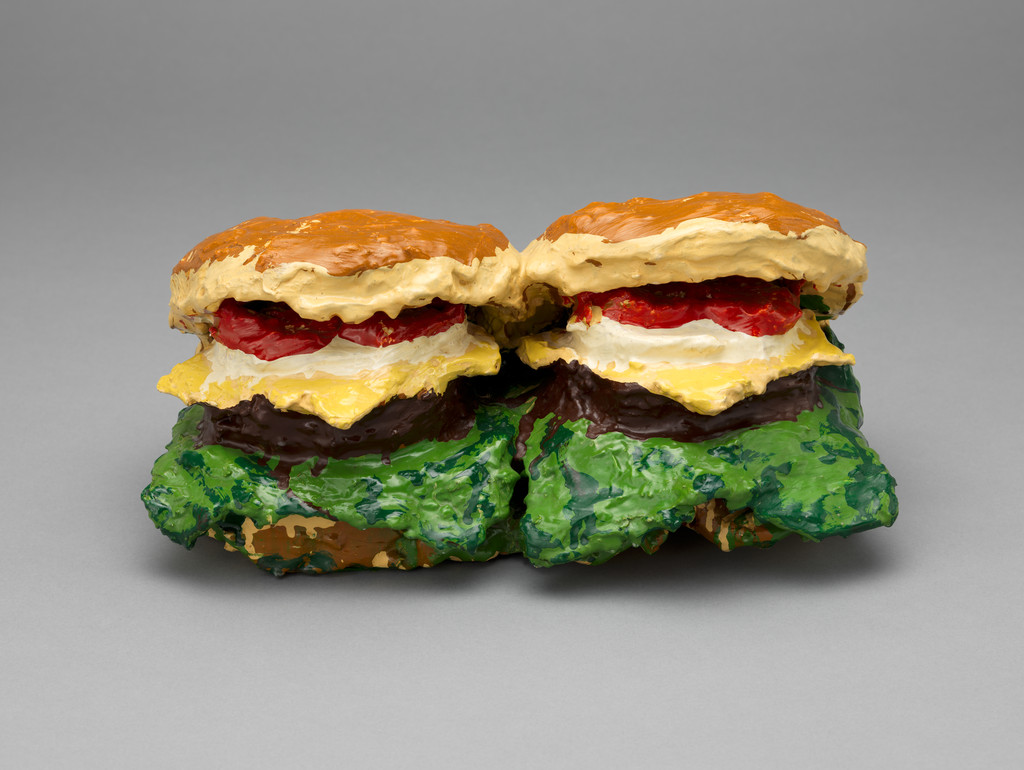
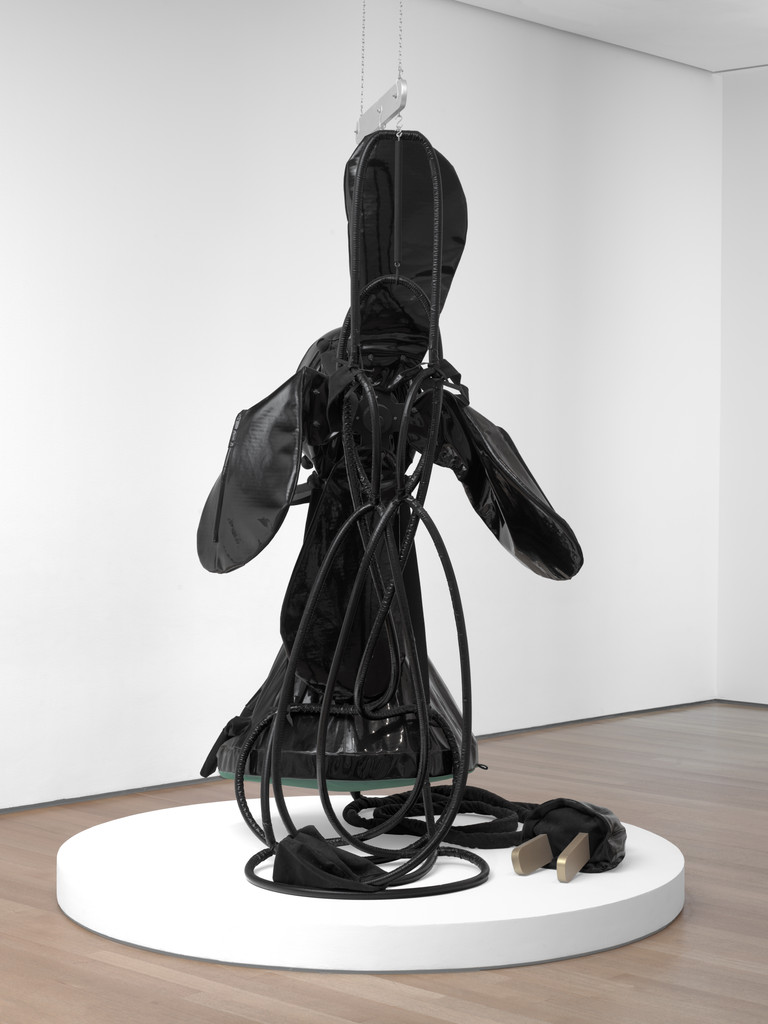
In the 1960s Oldenburg, now associated with Pop art, staged happenings he called the “Ray Gun Theater”, with Lucas Samaras, Tom Wesselmann, Carolee Schneemann and others; his first wife Patty Mucha, who sewed many of his early soft sculptures — “Floor Hamburger”, “Floor Cone”, “Floor Cake” — was a constant performer.
December 1961
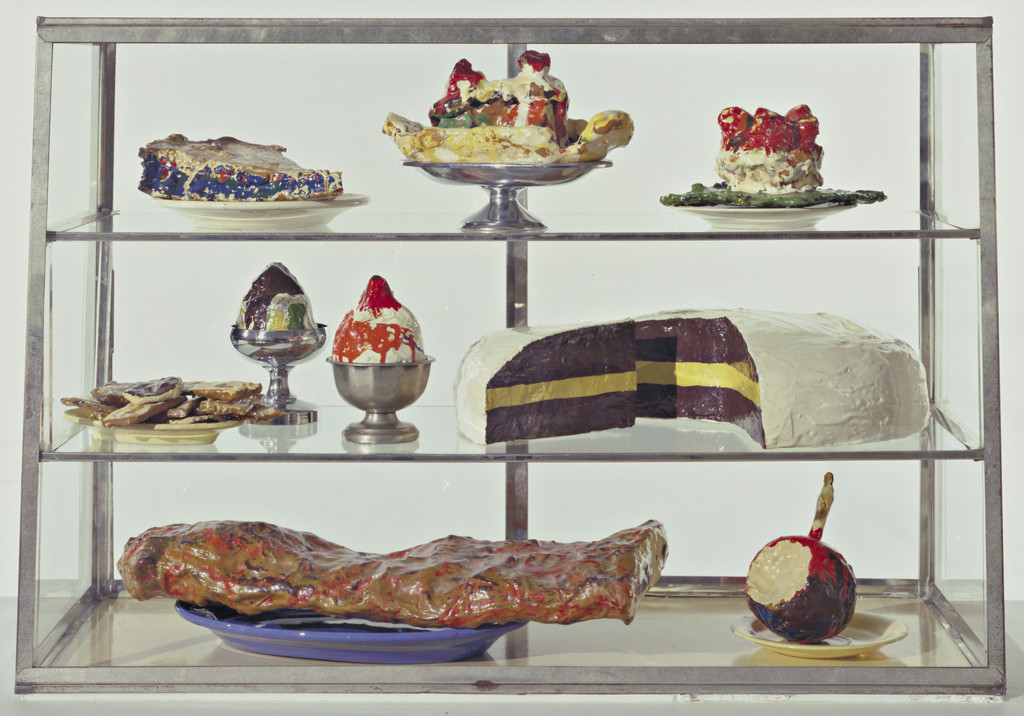
“The Store” on the Lower East Side
In 1961 Oldenburg switched to sculptures of chicken wire covered with plaster-soaked canvas and enamel paint — clothing and food. In December he rented a store on Manhattan's Lower East Side for “The Store”, a month-long installation first presented at the Martha Jackson Gallery and stocked with sculptures in the form of consumer goods.
1963
Move to Los Angeles, “the most opposite thing to New York”
In 1963 Oldenburg moved to Los Angeles “because it was the most opposite thing to New York [he] could think of”.