Jackson PollockΗνωμένες Πολιτείες Αμερικής, 1912–1956
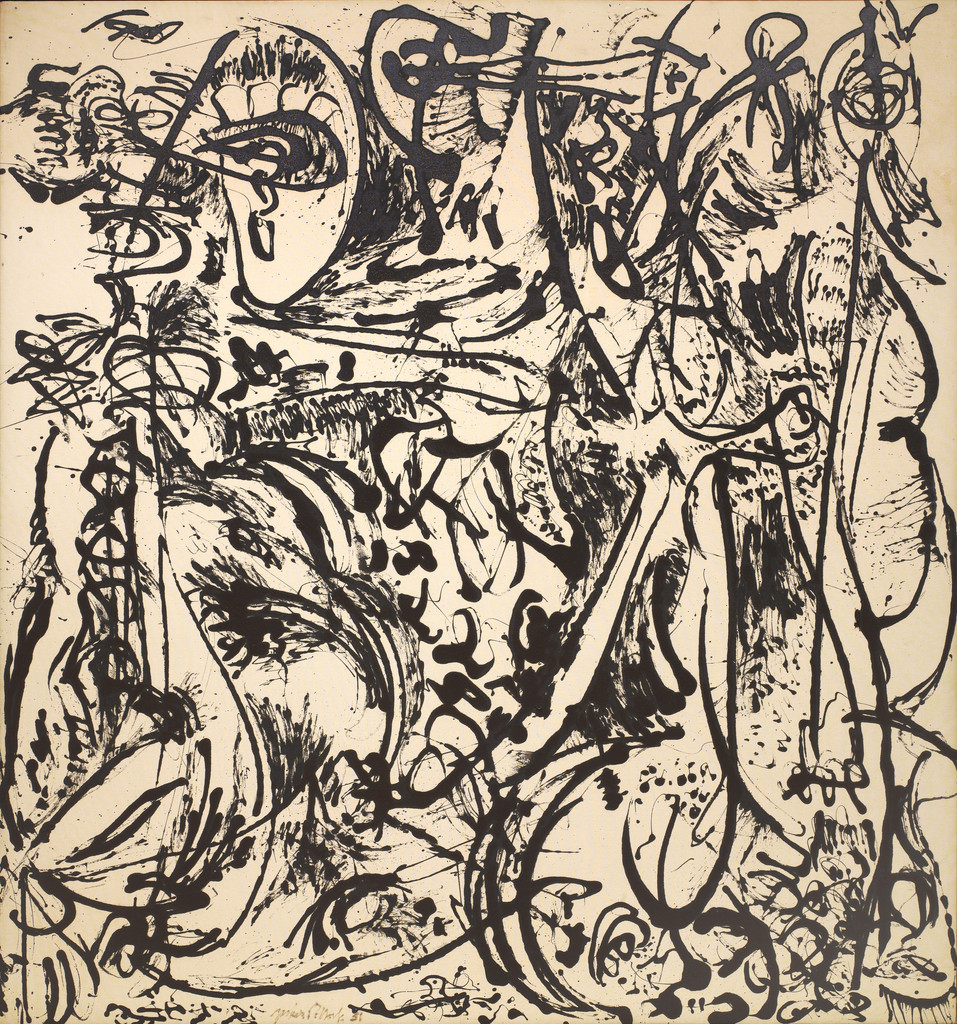
Untitled
Μπορώ να το δω;
Δεν εκτίθεται αυτή την περίοδο
Πού βρίσκεται τώρα το έργο «Untitled»; Συλλογή: Art Institute of Chicago, Σικάγο. Δεν εκτίθεται αυτή την περίοδο. Ελέγχθηκε 2 Νοεμβρίου 2026.

Σικάγο, Ηνωμένες Πολιτείες Αμερικής
Ανήκει στη συλλογή, αλλά δεν εκτίθεται αυτή την περίοδο.
- Ελέγχθηκε
- Σε αυτή την κατάσταση από
- Πηγή
- Το μουσείο
Για τον πίνακα
The late 1930s marked a key period of transition for Jackson Pollock, in which he began to separate himself from the influence of his early mentor, the regionalist painter Thomas Hart Benton. Pollock became engaged in an intense dialogue with the work of the Mexican muralists José Clemente Orozco and David Alfaro Siqueiros; he was inspired by their social commitment and use of primitive, archetypal imagery. The expressionistic style and oblong format of Untitled recall Orozco’s murals at Pomona and Dartmouth Colleges, which Pollock had seen firsthand. The bullfight imagery evokes the work of Pablo Picasso, whose Guernica (1937) made a powerful impression on Pollock when he saw the painting in New York in 1939.
Art Institute of ChicagoCC BY 4.0
Στοιχεία
- Αριθμός καταλόγου
- 1998.522
Στον κατάλογο
Πηγές
- Art Institute of Chicago
- Εικόνα: Art Institute of Chicago — © the artist or rights holder
Στη ζωή του καλλιτέχνη: Jackson Pollock
Όλη η ζωή1936
Siqueiros's workshop and liquid paint
In 1936, at an experimental workshop run in New York City by the Mexican muralist David Alfaro Siqueiros, Pollock was introduced to liquid paint. Later, asked how the drip technique came about, he disavowed any link with Siqueiros on several occasions.
summer 1936
Summer at Dartmouth: Orozco's mural
In the summer of 1936 Pollock went to Dartmouth College to study José Clemente Orozco's 3,200-square-foot mural “The Epic of American Civilization”.
1938–1942
Jungian psychotherapy
From 1938 to 1941 Pollock underwent Jungian psychotherapy with Dr. Joseph L. Henderson, and from 1941 to 1942 with Dr. Violet Staub de Laszlo. Henderson engaged him through his art by encouraging him to draw, and Jungian concepts and archetypes found expression in his paintings.
1942
Meets Lee Krasner
In 1942 both were exhibiting at the McMillen Gallery; Krasner, intrigued by Pollock's work, went to his apartment unannounced after the show to meet him.
1943
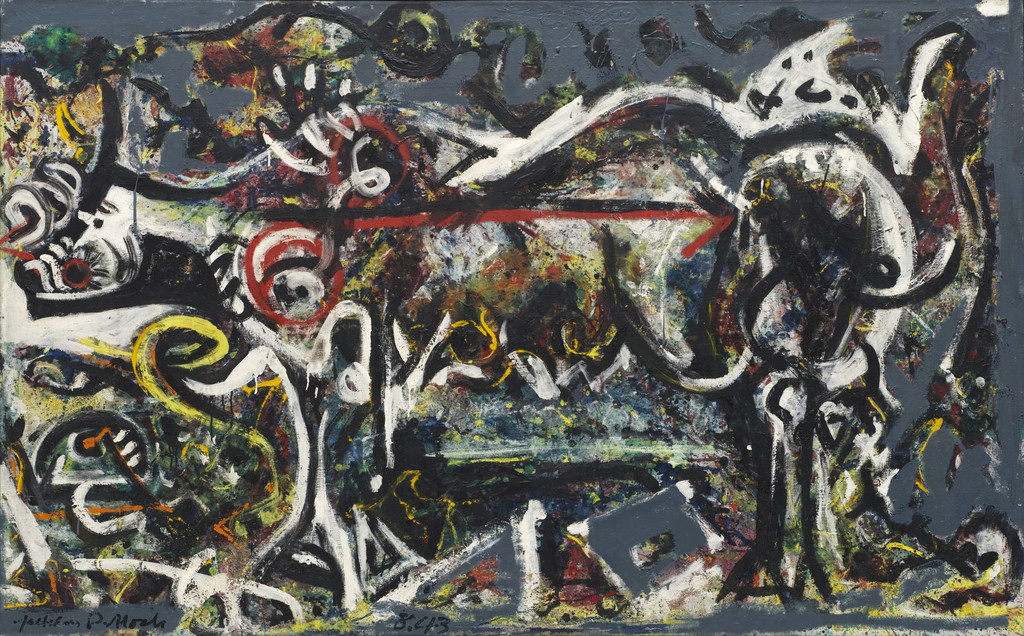
The Museum of Modern Art buys “She-Wolf”
In 1943 the Museum of Modern Art in New York bought his work “She-Wolf”; the first publications about Pollock appeared at the same time.
July 1943
Signs a contract with Peggy Guggenheim
In July 1943 Pollock signed a gallery contract with Peggy Guggenheim and received a commission for a huge mural for the entrance of her new townhouse.