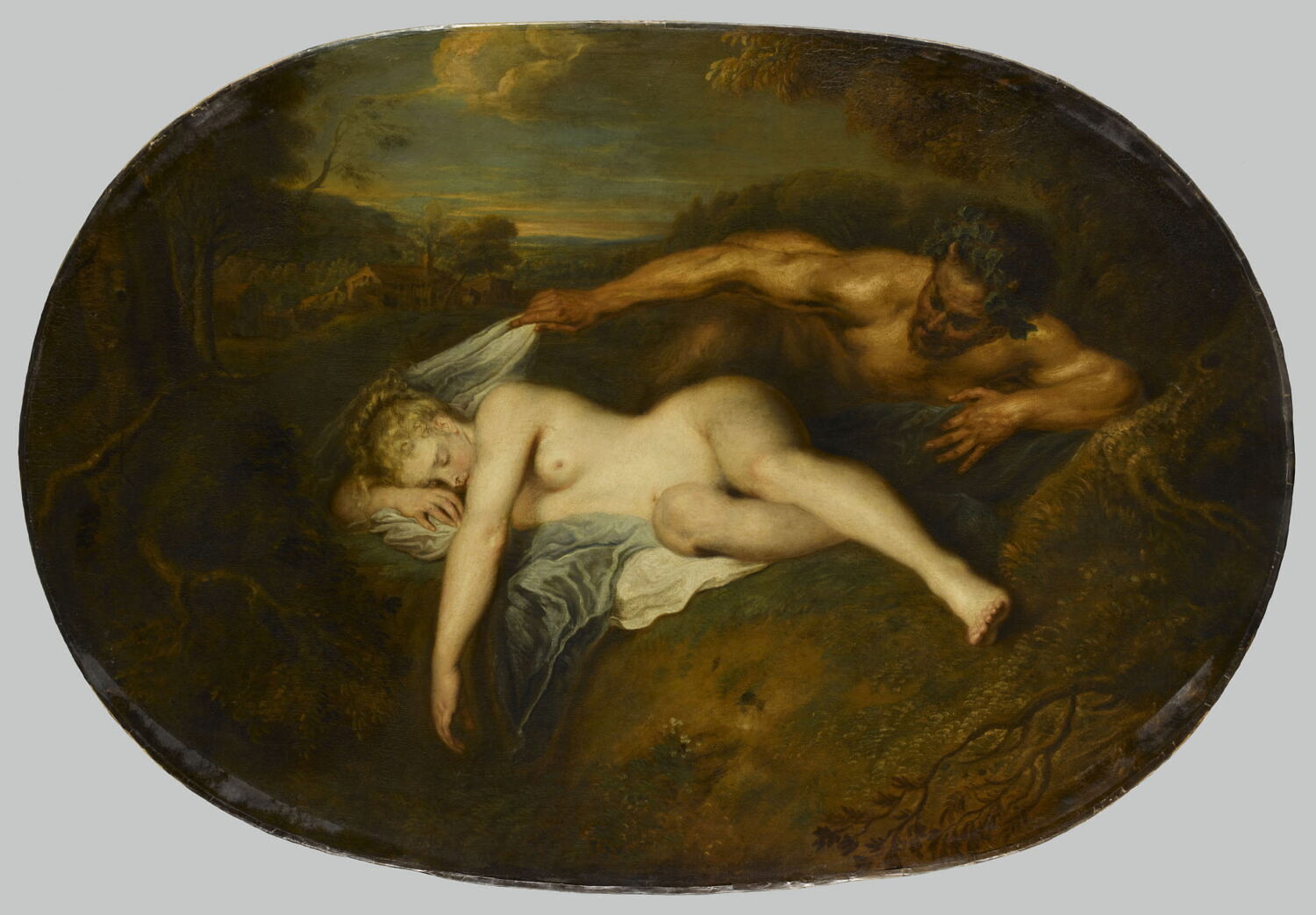
Jean-Antoine WatteauΓαλλία, 1684–1721
Two Recruits
Μπορώ να το δω;
Άγνωστο
Πού βρίσκεται τώρα το έργο «Two Recruits»; Συλλογή: Yale University Art Gallery, Νιου Χέιβεν. Δεν γνωρίζουμε αν εκτίθεται σήμερα.
Νιου Χέιβεν, Ηνωμένες Πολιτείες Αμερικής
Ο κάτοχος είναι γνωστός· δεν γνωρίζουμε αν το έργο εκτίθεται σήμερα.
- Σε αυτή την κατάσταση από
- Πηγή
- Το μουσείο
Για το έργο
Jean-Antoine Watteau preferred drawing to painting, and he made innumerable lively character and figure studies. He is one of the most admired draftsmen of the Western tradition, and his drawings are prized for the delicacy of his touch, the graceful movements of his figures, and the elegance of their placement on the page. This late work is a particularly refined example of the type of drawing that Watteau used to create the military compositions he produced throughout his career. It depicts two soldiers outdoors at midday; one stops to adjust his shoe as his companion looks on. Both figures exhibit Watteau’s ease of motion, soft touch, and attention to detail.
Yale University Art Gallery
Στοιχεία
- Αριθμός καταλόγου
- 1961.9.39
Στον κατάλογο
Πηγές
- Yale University Art Gallery
- Εικόνα: Yale University Art Gallery — Image: Yale University Art Gallery
Στη ζωή του καλλιτέχνη: Jean-Antoine Watteau
Όλη η ζωή1710s
Meets Edme-François Gersaint
At Sirois's house Watteau meets his son-in-law, the art dealer Edme-François Gersaint, who soon becomes a close friend.
1710s
Tuberculosis sets in
Watteau's fame grows steadily, yet he is as a rule dissatisfied with everything that comes from his brush; at the same time he develops a serious illness, tuberculosis.
1712–1717
Five years instead of two for the reception piece
Watteau takes five years instead of the two allowed to deliver his reception piece for the Academy: several times he asks for extensions and is summoned more than once to explain the delay. The academicians leave the choice of subject to him, although they usually set it themselves — a sign of his high reputation.
1714
Moves into the banker Crozat's mansion
Through Sirois, Watteau finds a patron in the very wealthy banker and collector Pierre Crozat and, at his invitation, moves into Crozat's newly built Paris mansion. There he gains access to the celebrated collection and eagerly copies drawings by the great masters; next door lives the academician Charles de La Fosse, with whom he is on good terms.
c. 1717
Crozat recommends Watteau to Rosalba Carriera
Watteau's fame spreads beyond Paris: the banker Crozat writes to the celebrated portraitist Rosalba Carriera in Venice that among Paris painters he knows no one but Watteau who could produce a work worthy of being shown to her. Crozat's patronage and lucrative commissions help to launch the painter's European reputation.
28 August 1717
Elected to the Academy: a “fête galante”
By 1717 Watteau's “gallant scenes” have had such wide success that an exception is made for his reception piece, “Pilgrimage to Cythera”: in the minutes the words “pilgrimage to Cythera” are struck out and replaced by “fête galante”. Watteau is elected a full member of the Academy; the ceremony is attended by the First Painter to the King, Antoine Coypel, by Claude Gillot and by the Regent, the Duke of Orléans.