Jackson PollockΗνωμένες Πολιτείες Αμερικής, 1912–1956
The Key
Μπορώ να το δω;
Δεν εκτίθεται αυτή την περίοδο
Πού βρίσκεται τώρα το έργο «The Key»; Συλλογή: Art Institute of Chicago, Σικάγο. Δεν εκτίθεται αυτή την περίοδο. Ελέγχθηκε 2 Νοεμβρίου 2026.

Σικάγο, Ηνωμένες Πολιτείες Αμερικής
Ανήκει στη συλλογή, αλλά δεν εκτίθεται αυτή την περίοδο.
- Ελέγχθηκε
- Σε αυτή την κατάσταση από
- Πηγή
- Το μουσείο
Για τον πίνακα
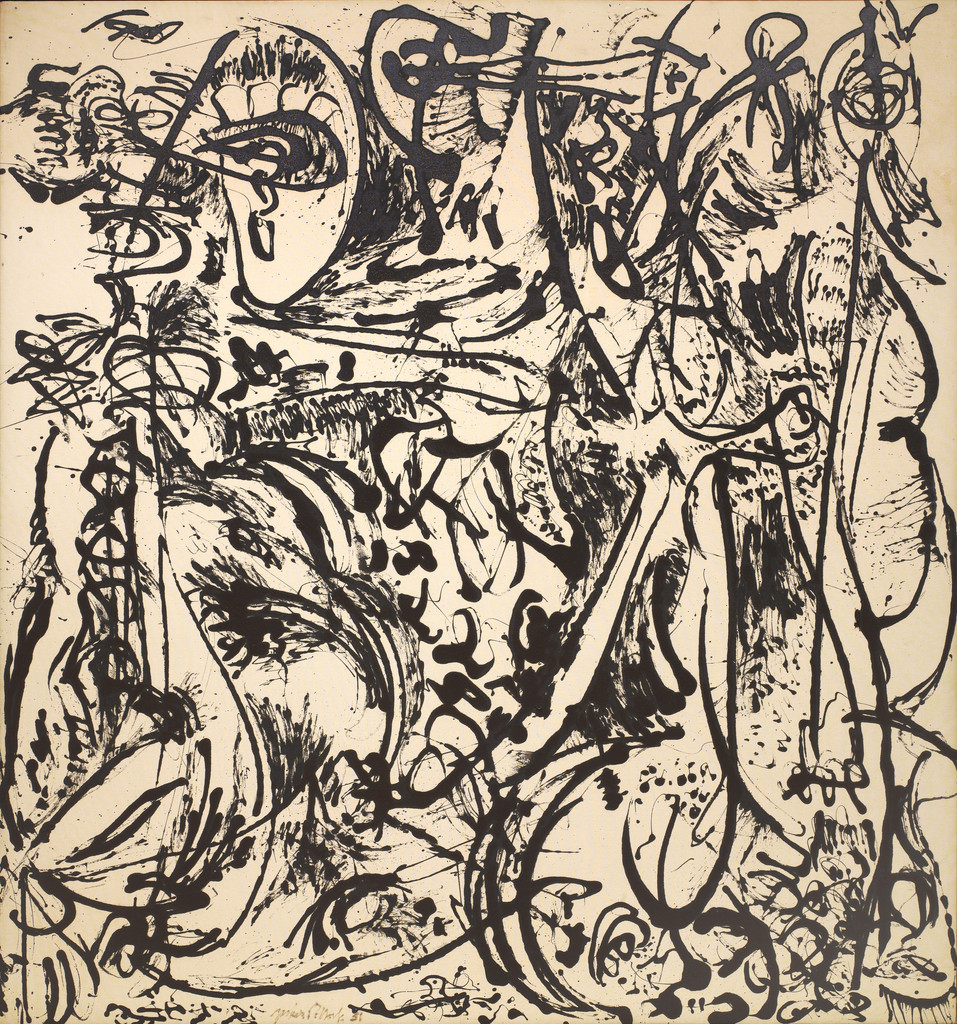
The Key belongs to Jackson Pollock’s Accabonac Creek series, named for a stream near the East Hampton property that he and his wife, the painter Lee Krasner, purchased in late 1945. Marking a crucial moment in his evolution as an artist, this quasi-Surrealist painting was created on the floor of an upstairs bedroom and worked on directly from all sides. Although there is a general suggestion of landscape, here the process of painting became primary, expressing the power of spontaneous action and chance effects. The resulting abstraction, with its expressive, gestural appearance, prefigured the allover compositions of Pollock’s celebrated drip paintings, which debuted the following year.
Art Institute of ChicagoCC BY 4.0
Στοιχεία
- Αριθμός καταλόγου
- 1987.261
Τι απεικονίζει
Στον κατάλογο
Πηγές
- Art Institute of Chicago
- Εικόνα: Art Institute of Chicago — © the artist or rights holder
Στη ζωή του καλλιτέχνη: Jackson Pollock
Όλη η ζωή1945
Married: Lee Krasner
October 1945
Marries Lee Krasner
In October 1945 Pollock and Krasner were married in a church with two witnesses present.
1945
Moves to Springs: a house and a barn studio
In November 1945 the couple left the city for Springs, in East Hampton on Long Island, and bought a wood-frame house and barn at 830 Springs Fireplace Road with a down-payment loan from Peggy Guggenheim. Pollock converted the barn into his studio.
1946
Sees the work of Janet Sobel
In 1946 Pollock and the critic Clement Greenberg saw Janet Sobel's paintings at Guggenheim's gallery Art of This Century. Greenberg later wrote that Pollock admitted these pictures had made an impression on him.
1947
The start of “drip painting”
In 1947 Pollock began working on huge canvases laid out on the floor, splashing paint from brushes without touching the surface. He himself preferred the term “pouring technique”.
1948
A sensational show at Betty Parsons
Pollock's 1948 exhibition at the Betty Parsons Gallery was a sensation and a financial success. He was then able to get a larger studio.