Kurt SchwittersΓερμανία, 1887–1948
Tea Rose
Μπορώ να το δω;
Άγνωστο
Πού βρίσκεται τώρα το έργο «Tea Rose»; Συλλογή: Ρέικσμουζεουμ, Δήμος Άμστερνταμ. Δεν γνωρίζουμε αν εκτίθεται σήμερα.

Δήμος Άμστερνταμ, Ολλανδία
Ο κάτοχος είναι γνωστός· δεν γνωρίζουμε αν το έργο εκτίθεται σήμερα.
- Πηγή
- Το μουσείο
Για το έργο
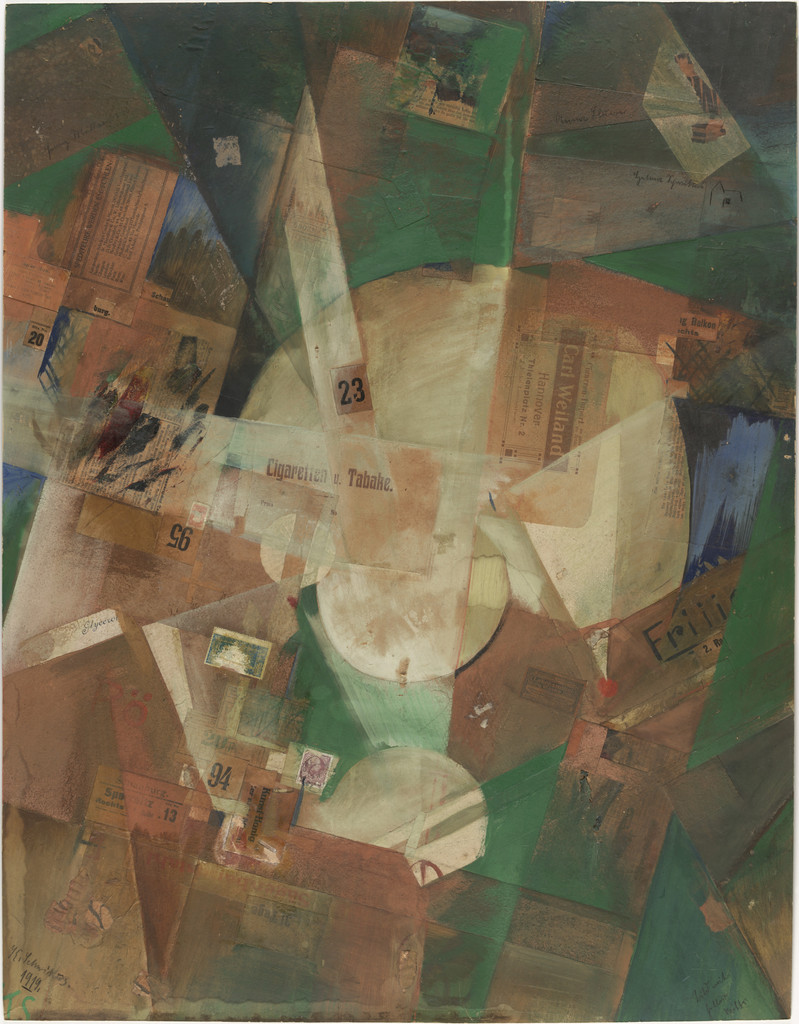
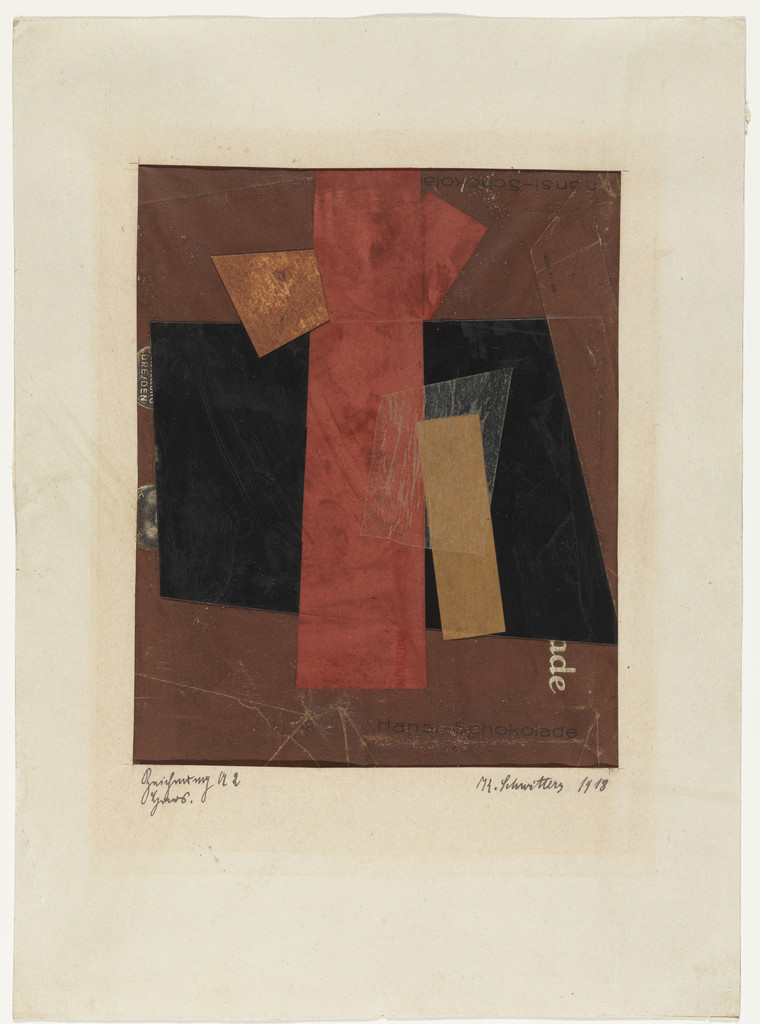
This collage is made of all kinds of scraps of paper that Kurt Schwitters gathered from the streets. He took suitcases
full of scavenged trash and objets trouvés with him when he travelled. In the abstract composition of brown, grey, pink and black angular planes, he attached an illustration of a rose. Another fragment identifies it as a tea rose. Such a bit of reality is a light-hearted counterbalance to the sober abstract composition.
Ρέικσμουζεουμ
Στοιχεία
- Αριθμός καταλόγου
- RP-T-2006-281
Τι απεικονίζει
Στον κατάλογο
Πηγές
- Ρέικσμουζεουμ
- Εικόνα: Ρέικσμουζεουμ — public domain
Στη ζωή του καλλιτέχνη: Kurt Schwitters
Όλη η ζωή1920s
Lecture and recital tours across Europe
Together with other members of the international avant-garde — Jean Arp, Raoul Hausmann and Tristan Tzara — he organises and takes part in tours of provocative evening recitals and lectures in Czechoslovakia, the Netherlands and Germany.
1922
Answers Huelsenbeck with an absurdist story
Huelsenbeck had ridiculed him as ‘the Caspar David Friedrich of the Dadaist Revolution’; in reply Schwitters publishes in the magazine Der Sturm the story ‘Franz Mullers Drahtfrühling’, about an innocent bystander who starts a revolution ‘merely by being there’.
1922–1923
Dada evenings in the Netherlands with Van Doesburg
In 1922 Theo van Doesburg organises Dada performances in Amsterdam, Leiden, Utrecht and The Hague: the Dadaists he invites decline, and the programme is carried by Theo van Doesburg, Nelly van Doesburg (performing as Petrò van Doesburg), Schwitters and sometimes Vilmos Huszár. Schwitters’s solo evening takes place on 13 April 1923 in Drachten, where he later stays often with the local painter Thijs Rinsema and makes collages, probably together with him.
1923–1932
Publishes the periodical ‘Merz’
The periodical appears from 1923 to 1932, each issue devoted to a central theme: no. 5 (1923) is a portfolio of prints by Jean Arp, and double issue 8/9 (1924) is edited and typeset by El Lissitzky, whose friendship proves particularly influential and brings Schwitters’s pictures closer to Constructivism. In all, 21 issues appeared; by numbering, the last is no. 24.
after 1924
Runs the advertising agency Merzwerbe
After the demise of the Der Sturm gallery in 1924 he runs an advertising agency, Merzwerbe, whose clients include Pelikan inks and Bahlsen biscuits. Designs, test prints and proof sheets from these jobs often crop up in his Merz pictures.
14 February 1925
First performance of the ‘Ursonate’
He performs the ‘Ursonate’ for the first time at the home of Irmgard Kiepenheuer in Potsdam, then performs it regularly, developing and extending it; in 1932 he publishes the notation in the last ‘Merz’ (no. 24, typography by Jan Tschichold) and continues to develop the piece for at least ten more years.