 MichelangeloΙταλία, 1475–1564
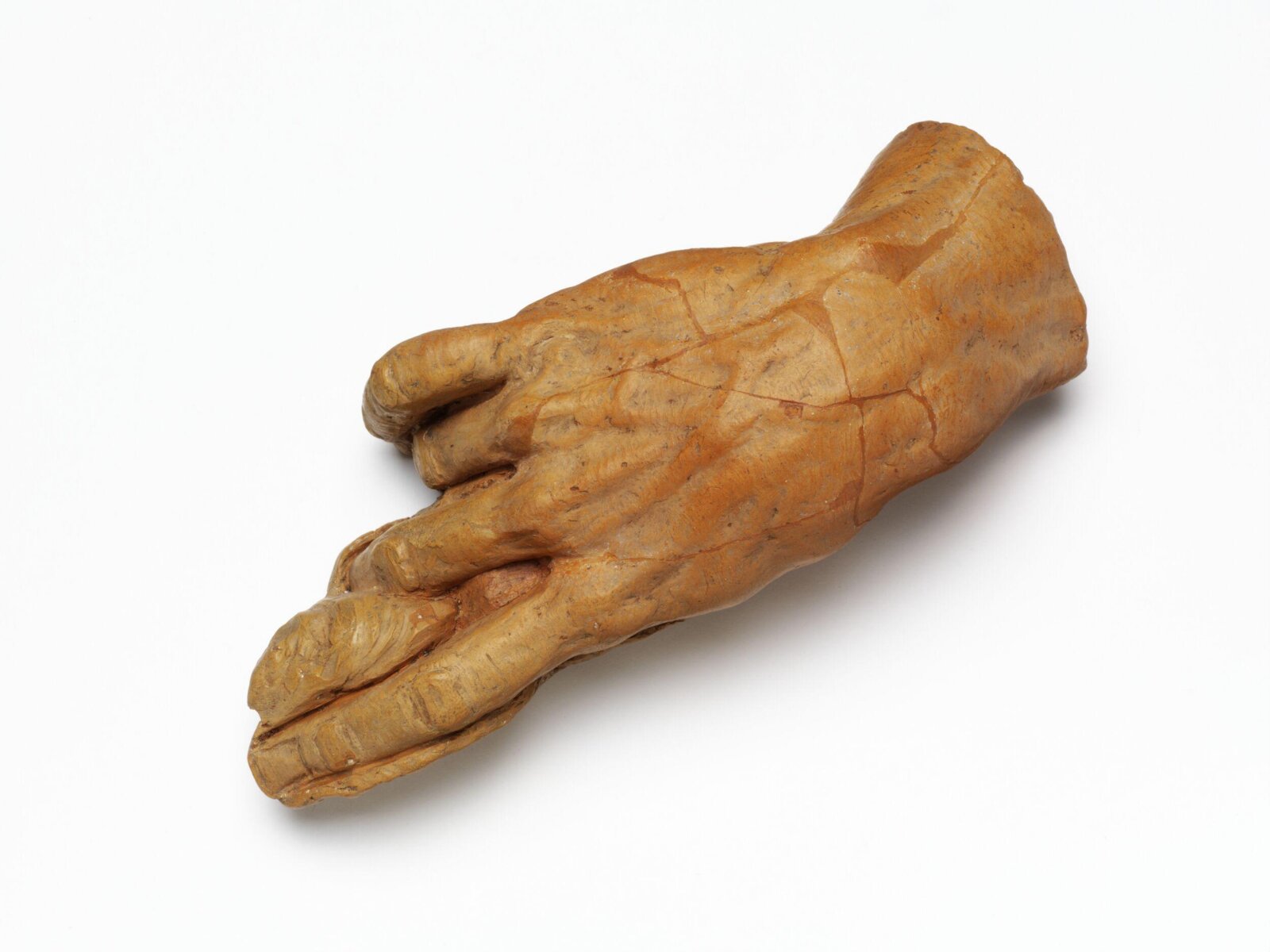
Statuette
Μπορώ να το δω;
Δεν εκτίθεται αυτή την περίοδο
Πού βρίσκεται τώρα το έργο «Statuette»; Συλλογή: Μουσείο Βικτωρίας και Αλβέρτου, Λονδίνο. Δεν εκτίθεται αυτή την περίοδο. Ελέγχθηκε 25 Σεπτεμβρίου 2026.

Λονδίνο, Ηνωμένο Βασίλειο
Ανήκει στη συλλογή, αλλά δεν εκτίθεται αυτή την περίοδο.
- Ελέγχθηκε
- Σε αυτή την κατάσταση από
- Πηγή
- Το μουσείο
Για το γλυπτό
This is a reduced copy of the right hand of the Moses in the church of San Pietro in Vincoli, Rome. It was formerly in the Von Praun Collection, in Nuremberg.
Μουσείο Βικτωρίας και Αλβέρτου
Στοιχεία
- Αριθμός καταλόγου
- A.8-1938
Τι απεικονίζει
Στον κατάλογο
Πηγές
- Μουσείο Βικτωρίας και Αλβέρτου
- Εικόνα: Μουσείο Βικτωρίας και Αλβέρτου — © Victoria and Albert Museum, London
Στη ζωή του καλλιτέχνη: Michelangelo
Όλη η ζωή8 June 1504
The “David” is unveiled in the Piazza della Signoria
The statue Michelangelo had worked on since 1501 was unveiled in the Piazza della Signoria. Many citizens were shocked by the boldness of showing the biblical hero entirely nude, yet the “David” became the embodiment of the pride of Florentines then fighting the republic's enemies.
1505
Julius II commissions his tomb
Pope Julius II summoned Michelangelo to Rome and commissioned him to design a huge mausoleum in the middle of St Peter's, a structure with a chapel inside adorned with dozens of statues. He spent eight months in Carrara choosing the marble, while Rome overwhelmed him with the Colosseum, the Pantheon and the forums.
1527
The Medici expelled: inspector of the republic's fortifications
After the Medici were expelled from Florence, Michelangelo, a republican at heart, joined the popular movement and became chief inspector of fortifications. He abandoned his post and set off for Venice, meaning to go on to France, but returned and rendered his city important services during the siege by imperial troops.
1530
A death sentence and a hiding place under the Medici Chapel
Florence fell, the Medici returned to power and Pope Clement VII sentenced Michelangelo to death. He is thought to have hidden for two months in a small chamber under the Medici chapels, covering its walls with charcoal and chalk drawings, until he was pardoned so that he could complete the Sistine Chapel and the Medici tombs.
1546
Chief architect of St Peter's
After Antonio da Sangallo's death Michelangelo became the leading architect in Rome, and his appointment as chief architect of St Peter's kept him in Rome until his death. As a gesture of goodwill he asked that the decree state he served on the building for the love of God and without any reward.
18 Φεβρουαρίου 1564
Died