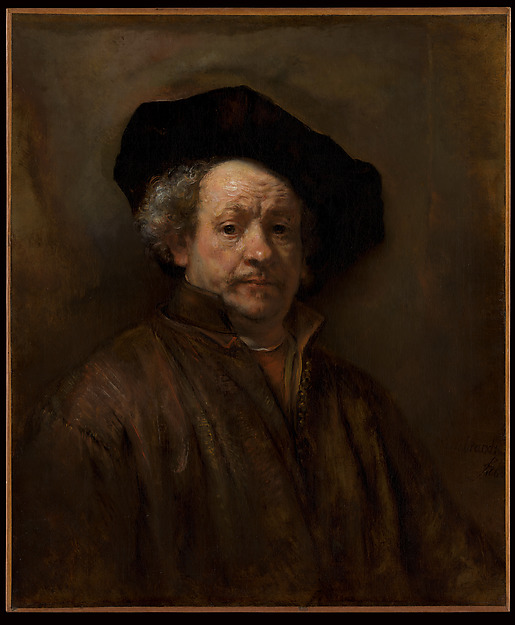
 Rembrandt van RijnΟλλανδία, 1606–1669
Portrait of a Lady with an Ostrich-Feather Fan
Μπορώ να το δω;
Ναι, εκτίθεται τώρα
Πού βρίσκεται τώρα το έργο «Portrait of a Lady with an Ostrich-Feather Fan»; Εθνική Πινακοθήκη της Ουάσιγκτον, Αίθουσα 48 · Δυτικό κτίριο, κύριος όροφος, Ουάσινγκτον. Ναι, εκτίθεται τώρα. Ελέγχθηκε 2 Νοεμβρίου 2026.

Ουάσινγκτον, Ηνωμένες Πολιτείες Αμερικής
ΑίθουσαΑίθουσα 48 · Δυτικό κτίριο, κύριος όροφος
Ανοιχτά τώρα· έως 5:00 μ.μ.
Εκτίθεται για το κοινό.
- Ελέγχθηκε
- Σε αυτή την κατάσταση από
- Πηγή
- Το μουσείο
Για τον πίνακα
Rembrandt painted Portrait of a Lady with an Ostrich-Feather Fan around 1656–1658; the canvas is in Washington's National Gallery of Art. The unidentified woman wears black beneath a translucent, lace-edged collar. Her feather fan inclines toward the man in the companion portrait. She also glances in his direction, while the light falls on both sitters from the same angle. The painting is on view in room M-048.
Στοιχεία
- Αριθμός καταλόγου
- 1942.9.68
Τι απεικονίζει
Στον κατάλογο
Πηγές
- Εθνική Πινακοθήκη της Ουάσιγκτον
- Εικόνα: Εθνική Πινακοθήκη της Ουάσιγκτον — Museum open access
Στη ζωή του καλλιτέχνη: Rembrandt van Rijn
Όλη η ζωή1631–1669 · Τόπος εργασίας
Amsterdam
1639–1658 · Διαμονή
Rembrandt House Museum
1654
Birth of His Daughter Cornelia
In 1654 Rembrandt and Hendrickje's daughter Cornelia was born; the parish council censured Hendrickje for "sinful cohabitation" with the artist.
1656
Declaration of Insolvency
Under pressure from creditors, Rembrandt declared himself insolvent (cessio bonorum) in July 1656 and voluntarily surrendered his property; by that time he had already transferred the house to his son.
1657–1658
Sale of His Property and Collection
Rembrandt's property and art collection were sold at auction; the detailed inventory listed 363 items — paintings, prints, antique busts, weapons, textiles, and exotic objects.
1658
Move to the Rozengracht
After the house was sold at auction, the family left the prestigious Jodenbreestraat and moved to modest rented lodgings on the Rozengracht — a district of craftsmen and artists, where Rembrandt lived until the end of his life.