 RaphaelΙταλία, 1483–1520
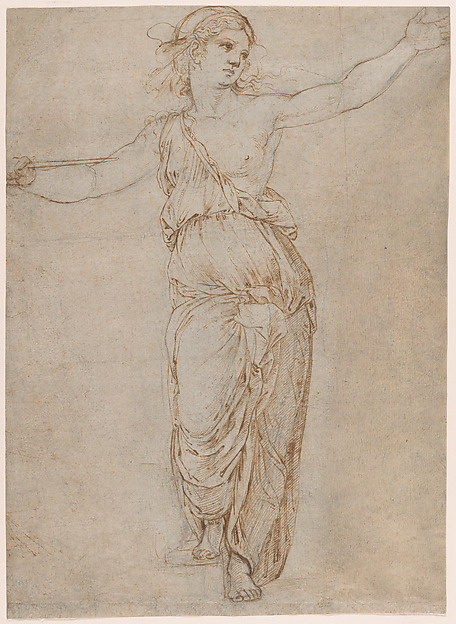
Lucretia
Μπορώ να το δω;
Δεν εκτίθεται αυτή την περίοδο
Πού βρίσκεται τώρα το έργο «Lucretia»; Συλλογή: Μητροπολιτικό Μουσείο Τέχνης, Νέα Υόρκη. Δεν εκτίθεται αυτή την περίοδο. Ελέγχθηκε 11 Νοεμβρίου 2026.

Νέα Υόρκη, Ηνωμένες Πολιτείες Αμερικής
Ανήκει στη συλλογή, αλλά δεν εκτίθεται αυτή την περίοδο.
- Ελέγχθηκε
- Σε αυτή την κατάσταση από
- Πηγή
- Το μουσείο
Στοιχεία
- Αριθμός καταλόγου
- 1997.153
Τι απεικονίζει
Στον κατάλογο
Πηγές
- Μητροπολιτικό Μουσείο Τέχνης
- Εικόνα: Μητροπολιτικό Μουσείο Τέχνης — Open Access (CC0)
Στη ζωή του καλλιτέχνη: Raphael
Όλη η ζωήc. 1504 – c. 1508 · Τόπος εργασίας
Florence
1507
Meets Donato Bramante
Raphael met the architect Donato Bramante, by an unproven account his relative. Bramante became his adviser and patron and later recommended him to Pope Julius II as the best candidate for work in the Vatican.
1508
Moves to Rome at the invitation of Julius II
The new pope, Julius II, invited Raphael to Rome, perhaps at the suggestion of his architect Bramante, a distant relative of the artist. Unlike Michelangelo, kept waiting for months after his summons, Raphael was immediately commissioned to fresco what was to become the pope's private library, a far larger commission than any he had had before.
1508–1520 · Τόπος εργασίας
Rome
c. 1510
Marcantonio Raimondi engraves his designs
Raphael made no prints himself, but his pupils and assistants, above all Marcantonio Raimondi, engraved his drawings; around 1510 came “The Judgement of Paris”. The prints were sold in street shops and bought by maiolica painters, jewellers and carvers.
1511
Under the spell of Michelangelo's ceiling
According to Vasari, Bramante let Raphael into the Sistine Chapel secretly, and while painting the Stanza he was clearly influenced by Michelangelo's ceiling, as in his portrait of Michelangelo himself as Heraclitus in “The School of Athens”. Michelangelo accused him of plagiarism and years later complained that “everything he knew about art he got from me”.