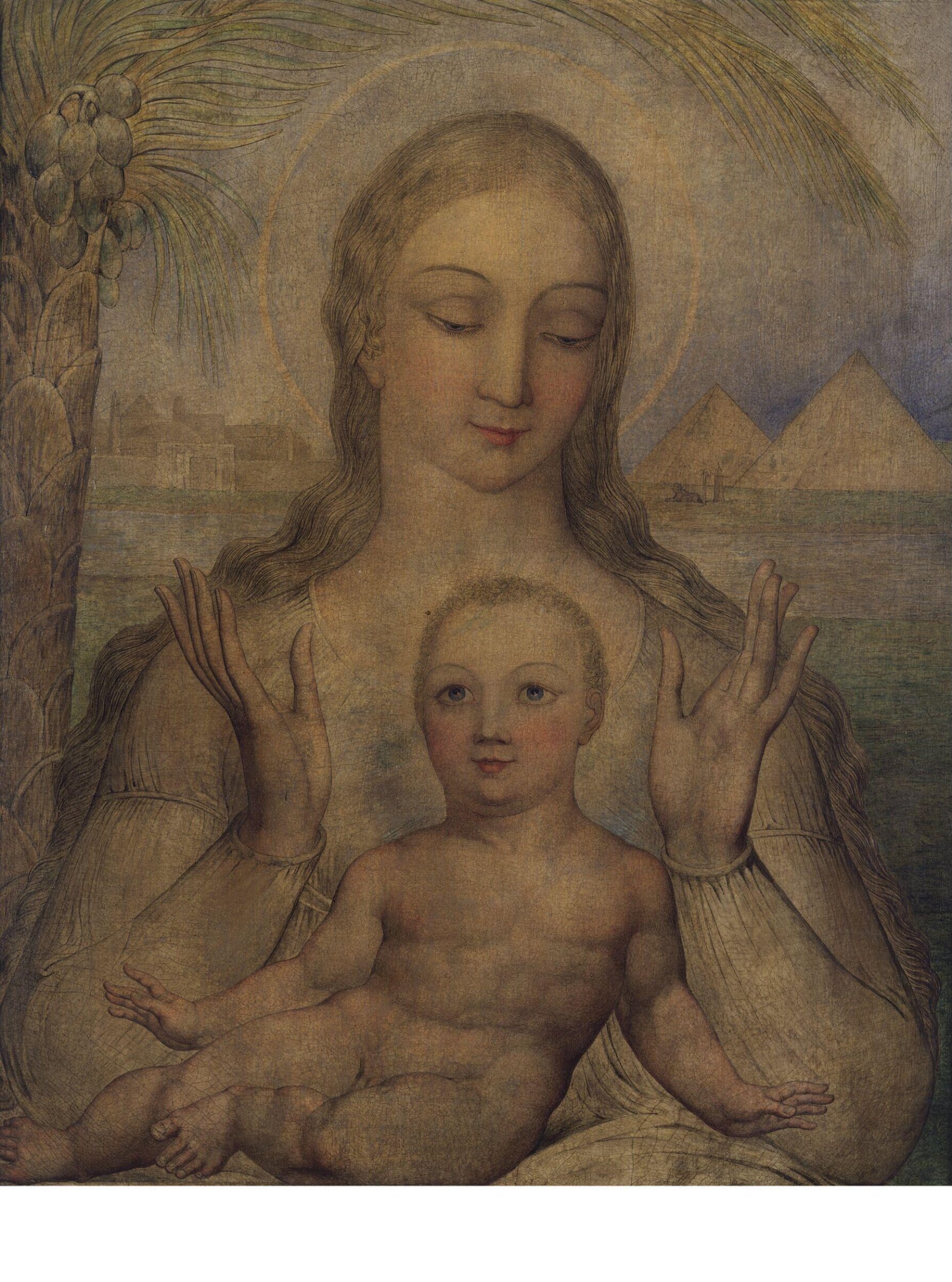
William BlakeΗνωμένο Βασίλειο, 1757–1827
Ezekiel's Wheels
Μπορώ να το δω;
Άγνωστο
Πού βρίσκεται τώρα το έργο «Ezekiel's Wheels»; Συλλογή: Μουσείο Καλών Τεχνών της Βοστώνης, Βοστώνη. Δεν γνωρίζουμε αν εκτίθεται σήμερα.
Βοστώνη, Ηνωμένες Πολιτείες Αμερικής
Ο κάτοχος είναι γνωστός· δεν γνωρίζουμε αν το έργο εκτίθεται σήμερα.
- Σε αυτή την κατάσταση από
- Πηγή
- Το μουσείο
Για τον πίνακα
Ezekiel’s Wheels, made by William Blake in the 1800s, is in Boston’s Museum of Fine Arts. The scene depicts Ezekiel and draws on the biblical book bearing his name. Blake combined graphite, ink and watercolor on paper in an upright work measuring 39.4 by 29.5 centimetres.
Στοιχεία
- Αριθμός καταλόγου
- 90.108
Στον κατάλογο
Πηγές
- Wikidata
- Εικόνα: Μουσείο Καλών Τεχνών της Βοστώνης — William Blake · Public domain · Wikimedia Commons
Στη ζωή του καλλιτέχνη: William Blake
Όλη η ζωή1800
Moves to Felpham for his patron Hayley
In 1800 Blake moved to a cottage at Felpham, in Sussex, to take up a job illustrating the works of William Hayley, a minor poet.
1803
A fight with the soldier Schofield and a trial at Chichester
In August 1803 Blake was involved in a physical altercation with a soldier, John Schofield, and was charged not only with assault but with uttering seditious and treasonable expressions against the King; Schofield claimed that Blake had exclaimed “Damn the king. The soldiers are all slaves.” Blake was cleared at the Chichester assizes.
Σεπτέμβριος 1803 – Οκτώβριος 1803 · Διαμονή
Broadwick Street
Οκτώβριος 1803 – 1820 · Διαμονή
South Molton Street
1804
Returns to London and begins “Jerusalem”
In 1804 Blake returned to London and began to write and illustrate “Jerusalem: The Emanation of the Giant Albion” (1804–20), his most ambitious work.
1809
An exhibition in his brother's shop: nothing sold
Blake set up an independent exhibition in his brother's haberdashery shop at 27 Broad Street in Soho to market his version of “The Canterbury Pilgrims” along with other works. It was very poorly attended, sold none of the temperas or watercolours, and its only review, in The Examiner, was hostile.