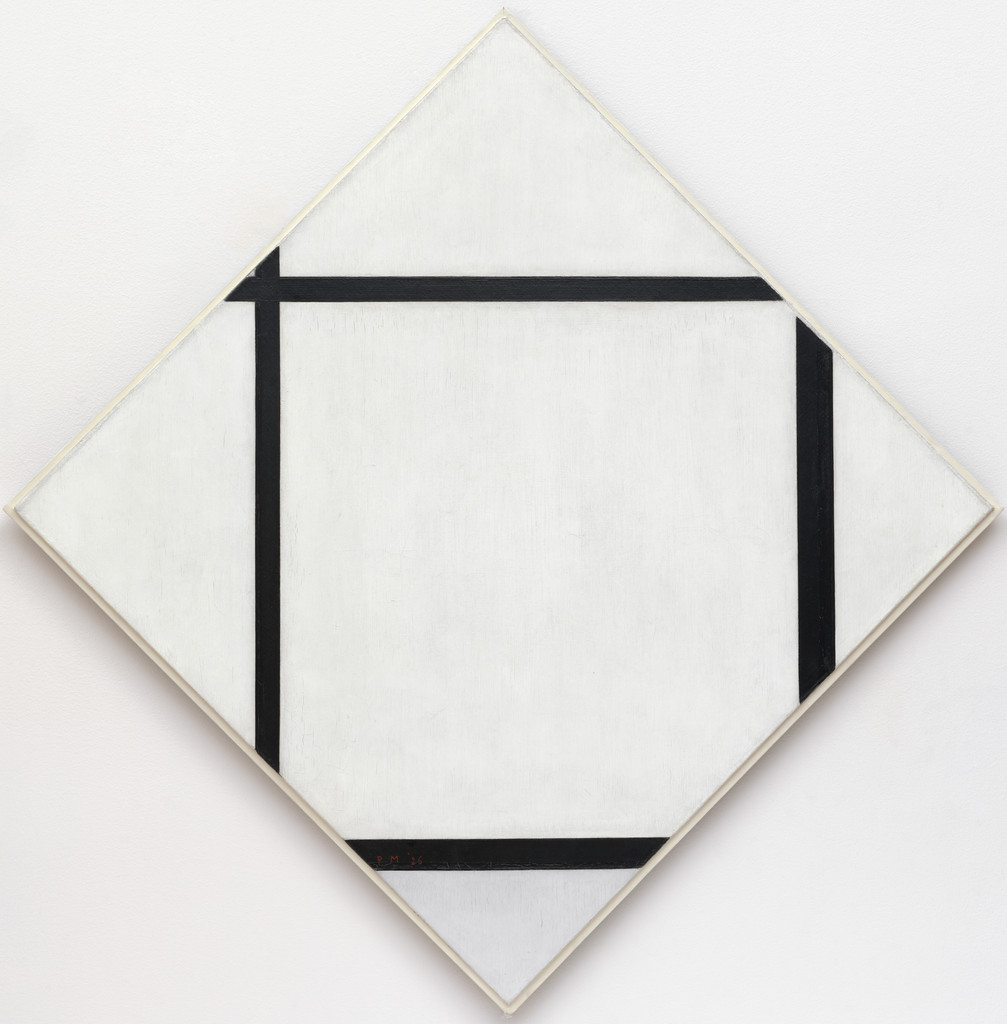
Piet MondrianΟλλανδία, 1872–1944
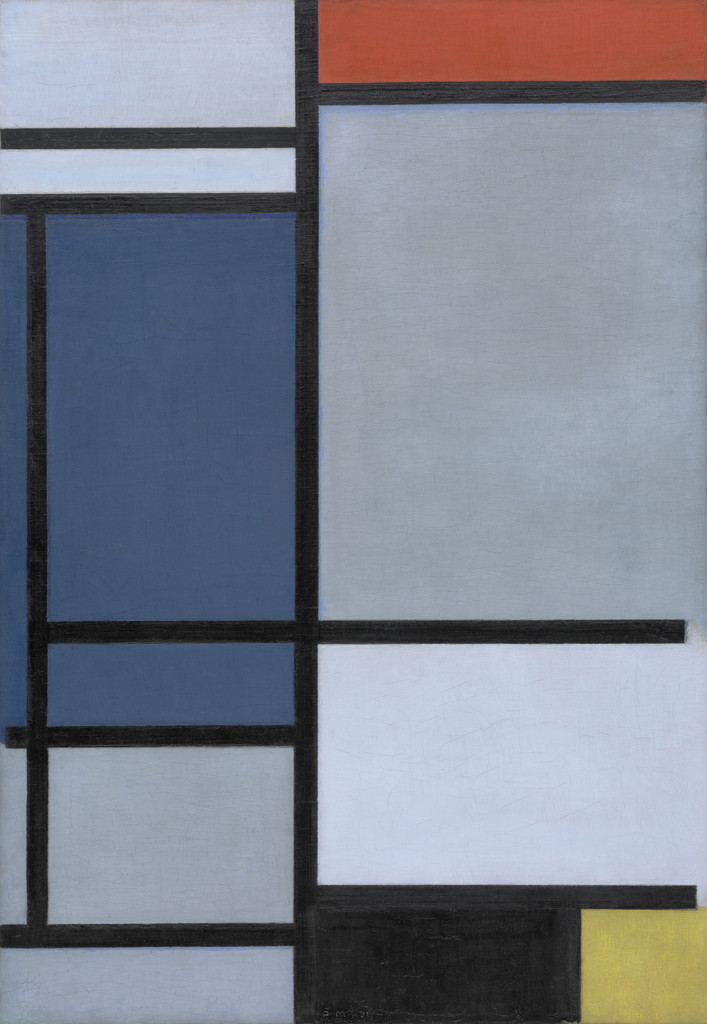
Composition no.XI (authentic)
Μπορώ να το δω;
Άγνωστο
Πού βρίσκεται τώρα το έργο «Composition no.XI (authentic)»; Συλλογή: Kröller-Müller Museum, Ede. Δεν γνωρίζουμε αν εκτίθεται σήμερα.
Ede, Ολλανδία
Ο κάτοχος είναι γνωστός· δεν γνωρίζουμε αν το έργο εκτίθεται σήμερα.
- Σε αυτή την κατάσταση από
- Πηγή
- Το μουσείο
Για τον πίνακα
Composition No. XI, dated 1913, is a Piet Mondrian oil painting at the Kröller-Müller Museum in Otterlo. Slender dark lines rise through a pale grey and yellowish field, bending and branching as they climb. Short horizontal strokes run across the spaces between them. The upright canvas measures 76 by 57.5 centimetres, with the signature tucked into the lower-right corner.
Στοιχεία
- Αριθμός καταλόγου
- KM 103.263
Στον κατάλογο
Πηγές
- Wikidata
- Εικόνα: Kröller-Müller Museum — Piet Mondrian · Public domain · Wikimedia Commons
Στη ζωή του καλλιτέχνη: Piet Mondrian
Όλη η ζωή1912–1914
Move to Paris
In 1912 Mondrian moved to Paris, where the Cubism of Picasso and Braque showed in his work almost at once: “The Sea” (1912) and his studies of trees from that year still keep a measure of representation but are increasingly dominated by geometric shapes and interlocking planes.
1912–1917
The Cubist period
Mondrian was eager to absorb the influence of Cubism but saw it as a port of call on his artistic journey rather than a destination; his Cubist period lasted from 1912 to 1917.
1913
The final break with representation
In 1913 Mondrian began to fuse his art and his theosophical studies into a theory that signalled his final break from representational painting.
1914
The war catches Mondrian in the Netherlands
While Mondrian was visiting the Netherlands in 1914, the First World War began, forcing him to stay there for the duration of the conflict; in isolation he began to create his own visual language, with works such as “Composition 10 in Black and White” (1915).
1914–1918
The artists' colony at Laren
During the war Mondrian stayed at the Laren artists' colony, where he met Bart van der Leck and Theo van Doesburg, both of whom were pursuing their own journeys toward abstraction.
1915–1918
Founding De Stijl with Van Doesburg
With Theo van Doesburg Mondrian founded De Stijl, the journal of the De Stijl group, in which he first published essays defining his theory, which he called Neoplasticism.