 Mikhail Nesterov1862–1942
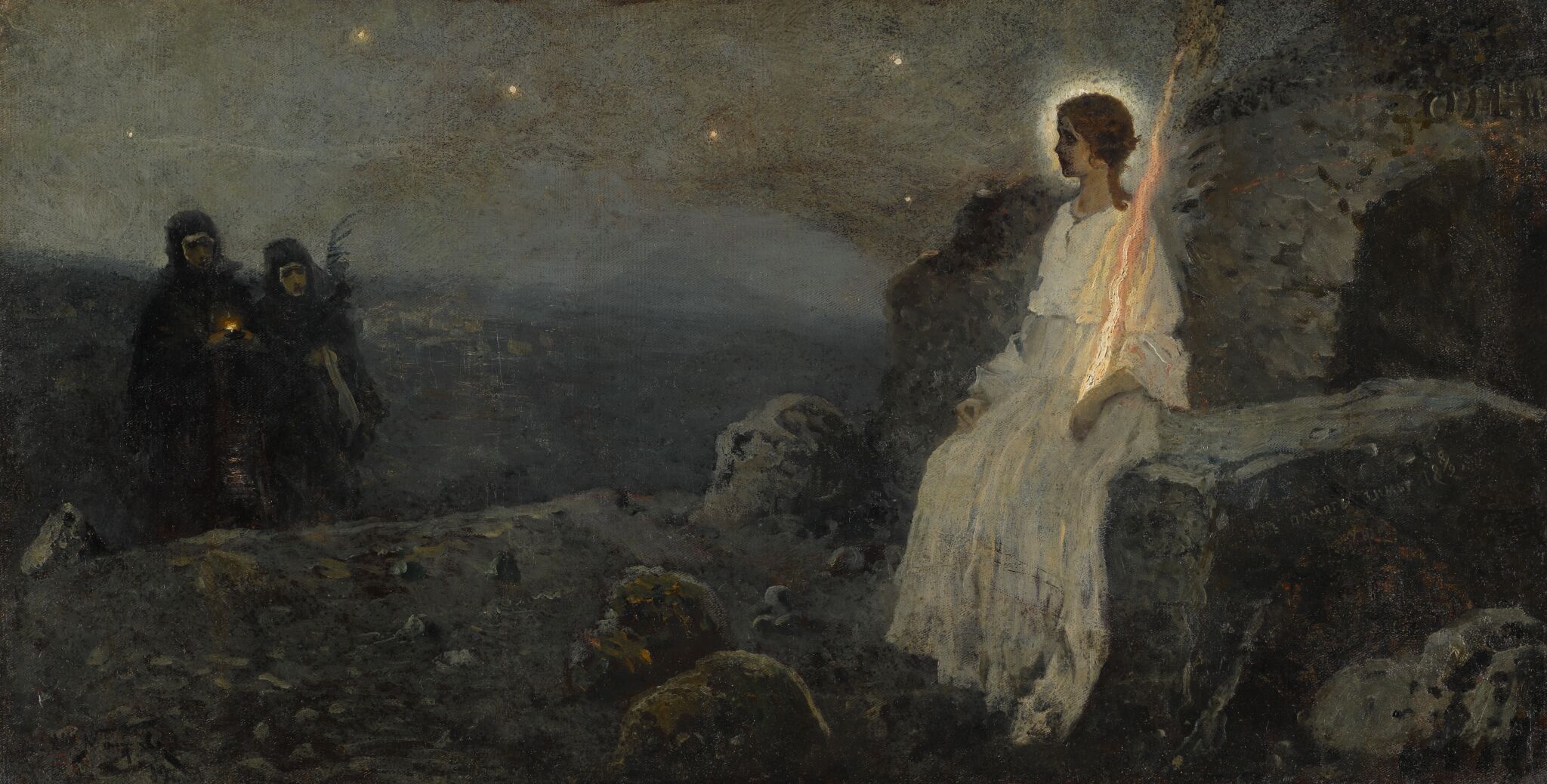
Жены-мироносицы
Kann ich es sehen?
Unbekannt
Wo ist „Жены-мироносицы“ heute? Sammlung: Tretjakow-Galerie, Moskau. Unbekannt.

Moskau, Russland
Der Besitzer ist bekannt; ob das Werk derzeit ausgestellt ist, nicht.
- Quelle
- Das Museum
Über das Gemälde
In den Worten des Museums — auf Russisch
Впервые к евангельскому сюжету, повествующему о воскресении Христа, Нестеров обратился во время первого путешествия по Италии, совершенного в 1889 году на деньги, полученные от продажи «Пустынника» (1889, Государственная Третьяковская галерея) П.М. Третьякову. Из Неаполя художник радостно сообщал родителям: «Задуманные картины в голове моей все более и более делаются ясными. Если не удастся сделать всех этюдов к “Женам Мироносицам”, то по приезде в Москву попытаюсь начать этюды к “Преп[одобному] Сергию”». Однако уже на Капри, поселившись в отеле «Грот-бле», Нестеров, очарованный южной природой, написал двадцать этюдов, а затем и саму картину. Вскоре он уничтожил не удовлетворившее его полотно, сохранив первоначальный эскиз.
Mehr lesen
Живописец изобразил это событие не ранним утром, как повествует Евангелие, а, скорее, ночью. В пронзительной тьме виднеются звезды на небе, едва различимы фигуры двух женщин со светильниками в руках, спешащих к гробу Спасителя. Справа на переднем плане у входа в пещеру Нестеров помещает ангела в белых сияющих одеяниях с горящей свечой в руке. Контраст света и тьмы, белого и сине-черного цвета в одеждах персонажей создает таинственное и одновременно радостное звучание композиции. Через двадцать лет Нестеров вернулся к этому сюжету в стенописи храма Марфо-Мариинской обители в Москве.
Tretjakow-Galerie
Angaben
- Inventarnummer
- 27820
Im Katalog
Quellen
- Tretjakow-Galerie
- Bild: Tretjakow-Galerie — © State Tretyakov Gallery
Im Leben von Mikhail Nesterov
Das ganze Leben1889
“The Hermit” at the 17th Peredvizhniki show
Shown at the 17th Peredvizhniki exhibition, “The Hermit” caused a stir and placed the young Nesterov among the most outstanding painters of the day; the word “mood” recurred in almost every review. Pavel Tretyakov bought the painting.
May 1889
First journey abroad
With the money from selling “The Hermit” to Tretyakov, Nesterov set off on his first trip abroad: Warsaw, Vienna, Venice, Florence, Rome, Naples with Pompeii and Capri, Paris, Munich, Berlin, Dresden. He brought back dozens of studies on lemon-wood panels, most of them from Capri; his travel diary (20 April – 24 July 1889) is kept in the Presidential Library.
May – July 1889
Carpaccio in Venice, Bastien-Lepage in Paris
In Venice Nesterov was struck above all by Vittore Carpaccio's “naive composition” and “childlike faith”, in Rome by Raphael's frescoes and the Sistine Chapel. In Paris he saw the painting of Puvis de Chavannes and Bastien-Lepage, whose “Joan of Arc”, art historians agree, decisively shaped the concept of “The Vision to the Youth Bartholomew”.
1890
Invited to paint St Volodymyr's Cathedral
Professor Adrian Prakhov, who was in charge of decorating St Volodymyr's Cathedral in Kiev, saw “The Youth Bartholomew” and invited its author. After some hesitation Nesterov agreed — and ended up devoting more than 22 years to church murals and icons.
1890
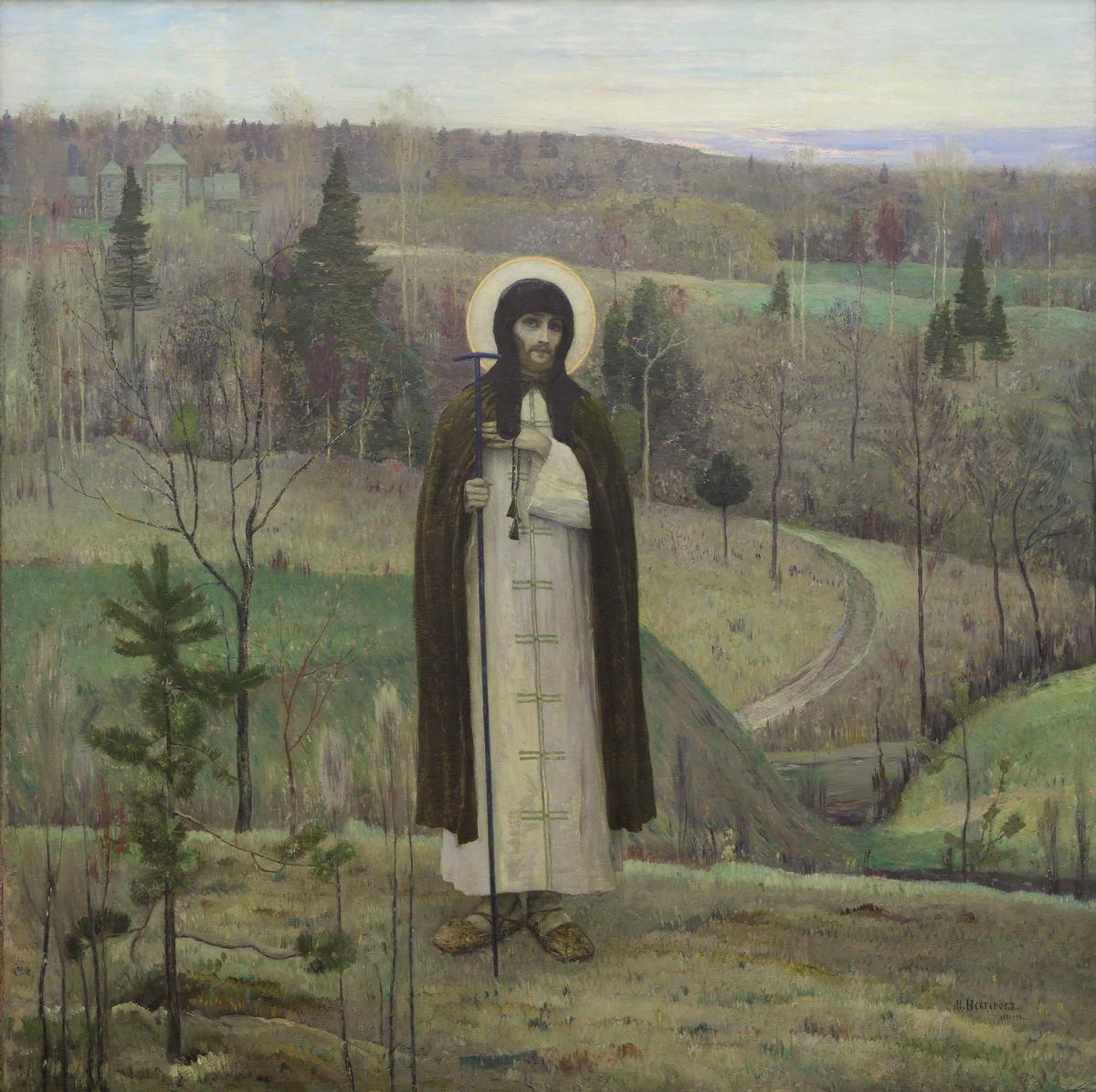
“The Vision to the Youth Bartholomew” causes a sensation
The painting, for which Nesterov made landscape studies near the Trinity-Sergius Lavra while living in the village of Komyakino near Khotkovo, provoked the most conflicting opinions, became the sensation of the 18th Peredvizhniki exhibition and was bought by Tretyakov. To the end of his days the artist considered it his finest work.
1890–1895
Friendship with Vasnetsov and the Prakhovs
In Kiev Nesterov grew close to Adrian Prakhov's family and to Viktor Vasnetsov, who worked alongside him in the cathedral; Vasnetsov became his teacher and friend.