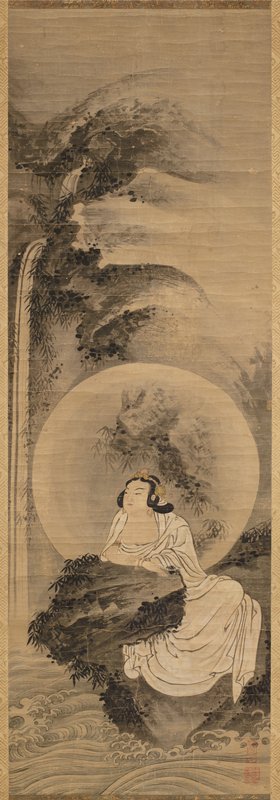
attributed to Kenkō ShōkeiJapan
White-robed Kannon
Darf man es sehen?
Empfängt derzeit nicht

Minneapolis Institute of Art
Minneapolis, Vereinigte Staaten
Es gehört zur Sammlung, ist derzeit aber nicht ausgestellt.
- Geprüft
- Unverändert seit
- Quelle
- Das Museum
Über das Gemälde
Buddhist monks, particularly those of the Zen school, were devoted landscape painters. Like calligraphy, painting was considered part of the spiritual training necessary for enlightenment. Zen monks favored monochrome ink painting due to its simplicity and straightforwardness. The priest Kenkō Shōkei, who served as secretary at Kenchōji Temple in Kamakura, studied Chinese paintings from the Song and Yuan dynasties and became a key figure in the ink-painting circles of Japan.
(2013.29.143.1-.3)
Minneapolis Institute of Art
Angaben
- Inventarnummer
- 2013.29.143.2
Im Katalog
Quellen
- Minneapolis Institute of Art
- Bild: Minneapolis Institute of Art — public domain
![Landscape [right of a triptych of White-Robed Kannon with Landscapes], attributed to Kenkō Shōkei, late 15th century](https://img.artsmia.org/web_objects_cache/117000/100/50/117157/mia_6010103_800.jpg)
![Landscape [left of a triptych of White-Robed Kannon with Landscapes], attributed to Kenkō Shōkei, late 15th century](https://img.artsmia.org/web_objects_cache/117000/100/50/117159/mia_6010110_800.jpg)