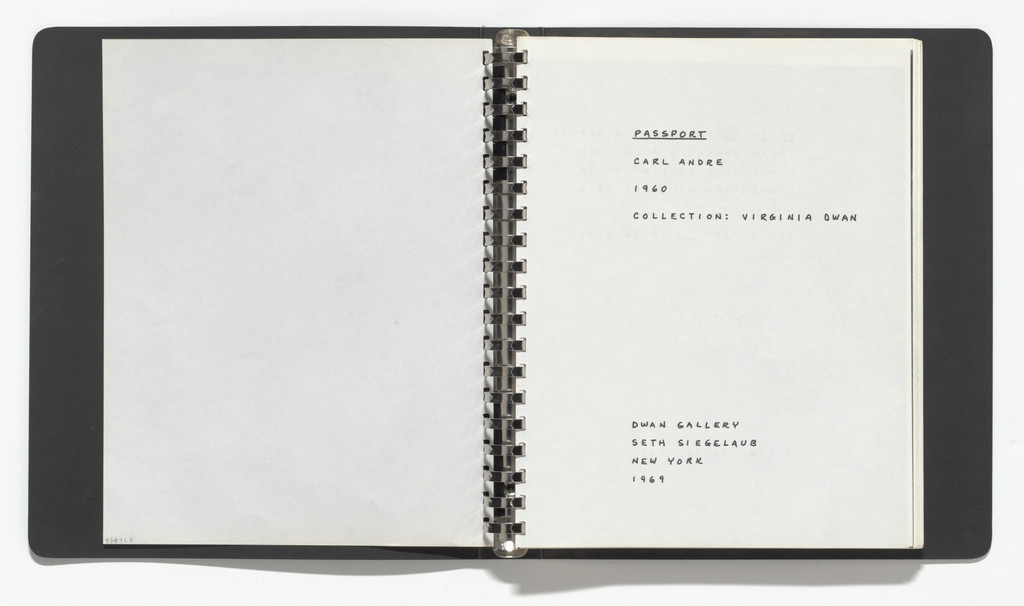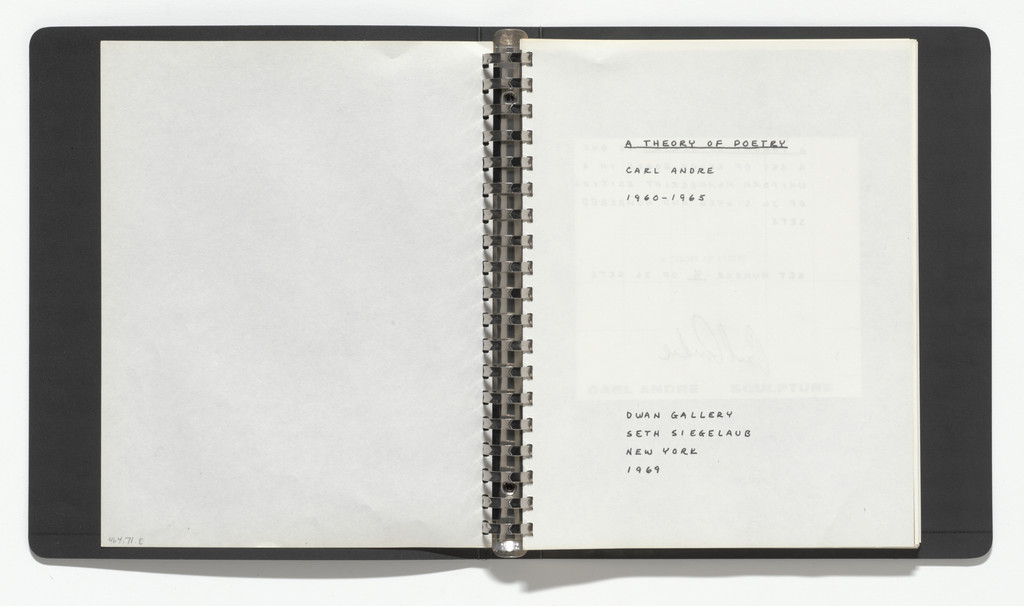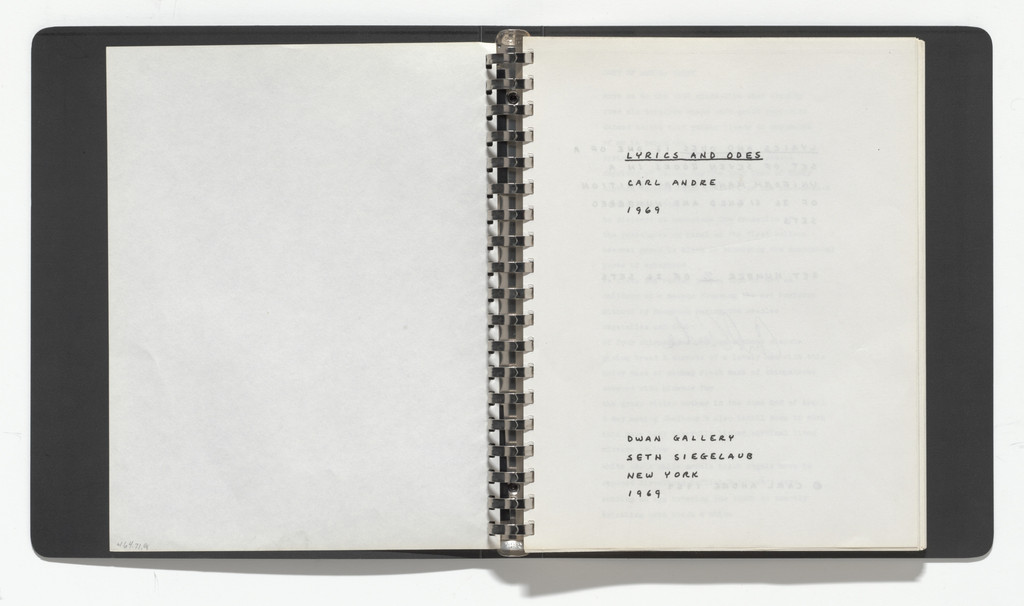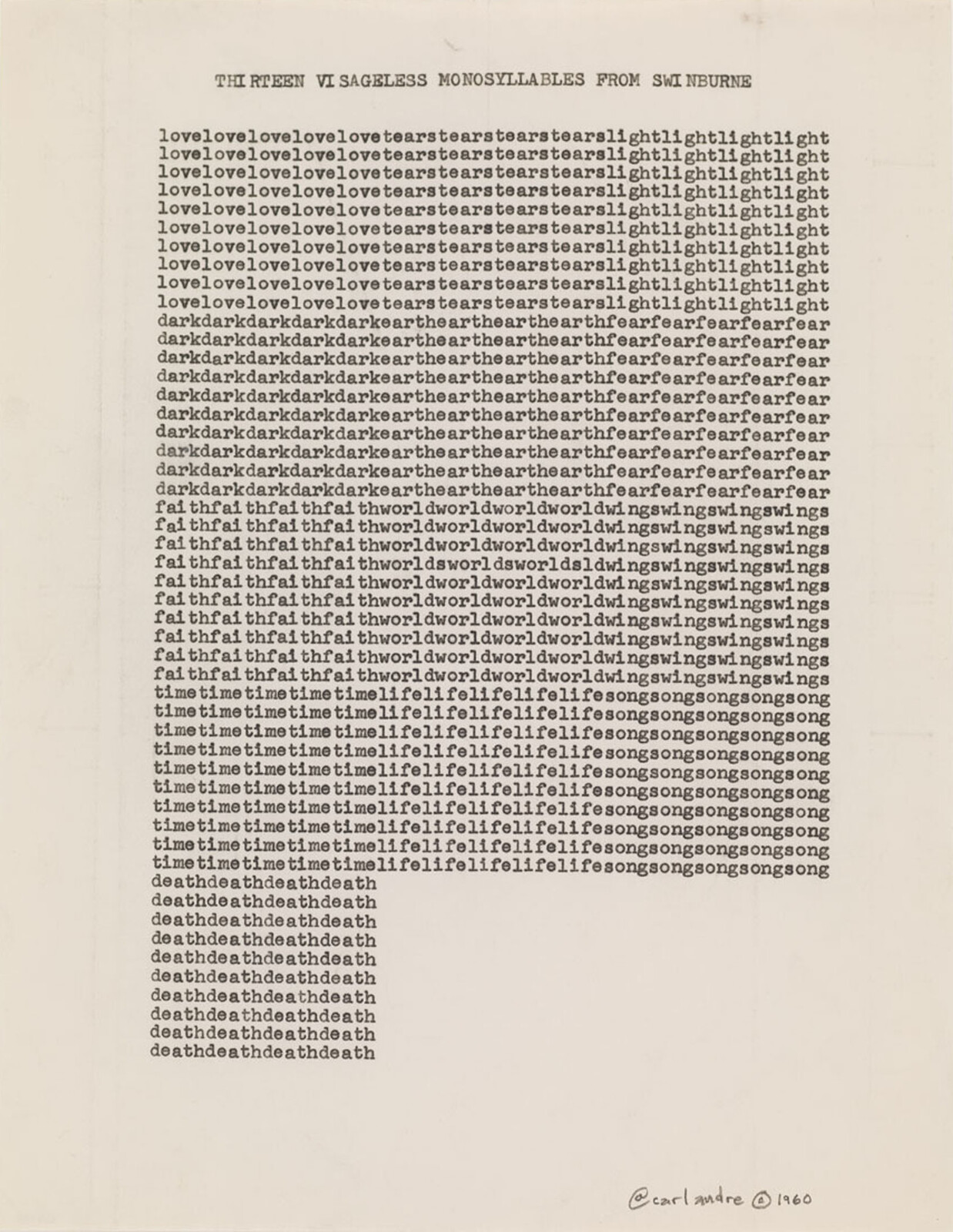
Thirteen Visageless Monosyllables from Swinburne
Darf man es sehen?
Empfängt derzeit nicht

New York City, Vereinigte Staaten
Es gehört zur Sammlung, ist derzeit aber nicht ausgestellt.
- Geprüft
- Quelle
- Das Museum
Angaben
- Inventarnummer
- 2024.57
Im Katalog
Quellen
- Whitney Museum of American Art
- Bild: Whitney Museum of American Art — © the artist or rights holder
Derweil im Leben von Carl Andre
Das ganze Leben1958–1960
A shared studio with Frank Stella
In 1958 he becomes reacquainted with a former classmate from Phillips Academy, Frank Stella, and shares a studio with him until 1960. Brâncuși inspires his first wooden sculptures, but conversations with Stella about space and form lead him in a different direction; seeing the hunks of wood cut away from one of his sculptures, Stella remarks that this too is sculpture.
1960
Sketches for the “Elements”: the modular principle
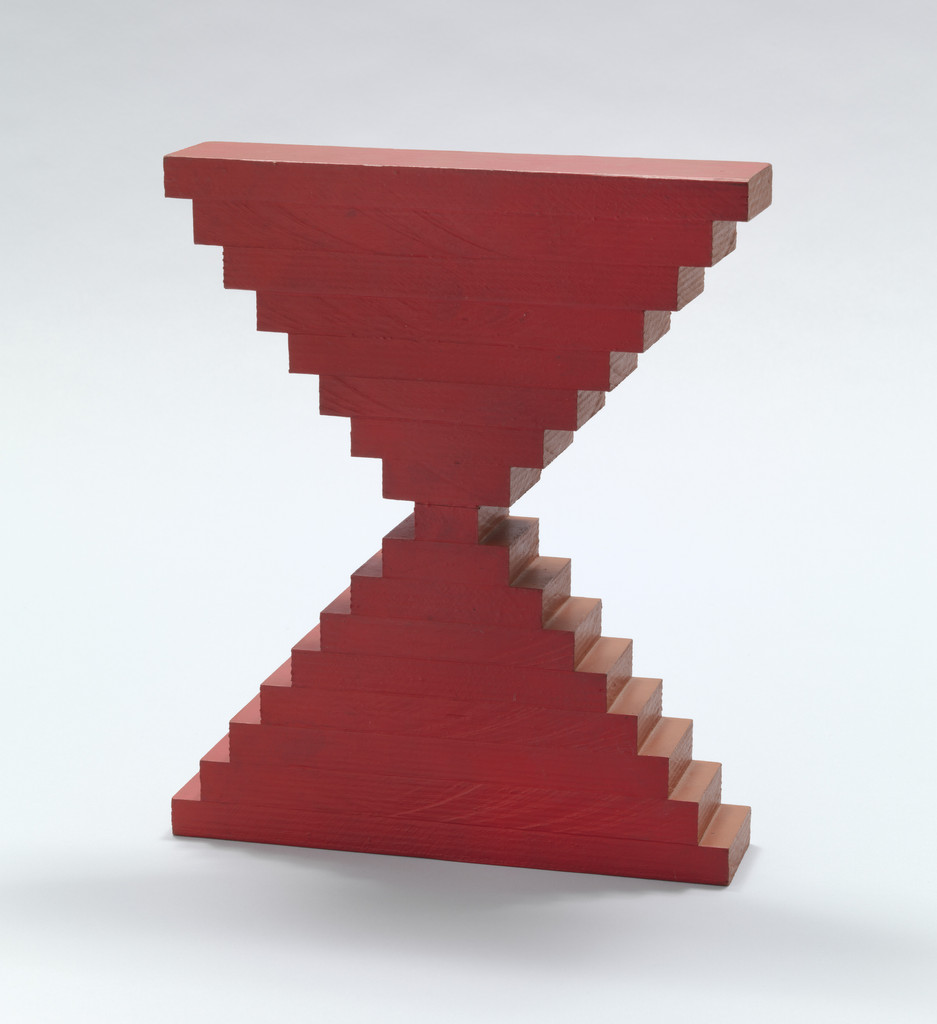
He makes sketches for a series of sculptures called “Elements”, built from standard blocks of wood 12 × 12 × 36 inches in simple configurations, but lacks the money to buy the timber. The decision to use modular units in regular, repeated compositions will become the basis of his later work.
1960–1964
A conductor on the Pennsylvania Railroad
He works as a freight brakeman and train conductor in New Jersey for the Pennsylvania Railroad. The experience of blue-collar labour and the ordered nature of freight trains will shape his sculpture and persona: he often turns up in overalls and a blue work shirt, even at the most formal occasions.
1960–1964
Years of writing and concrete poetry
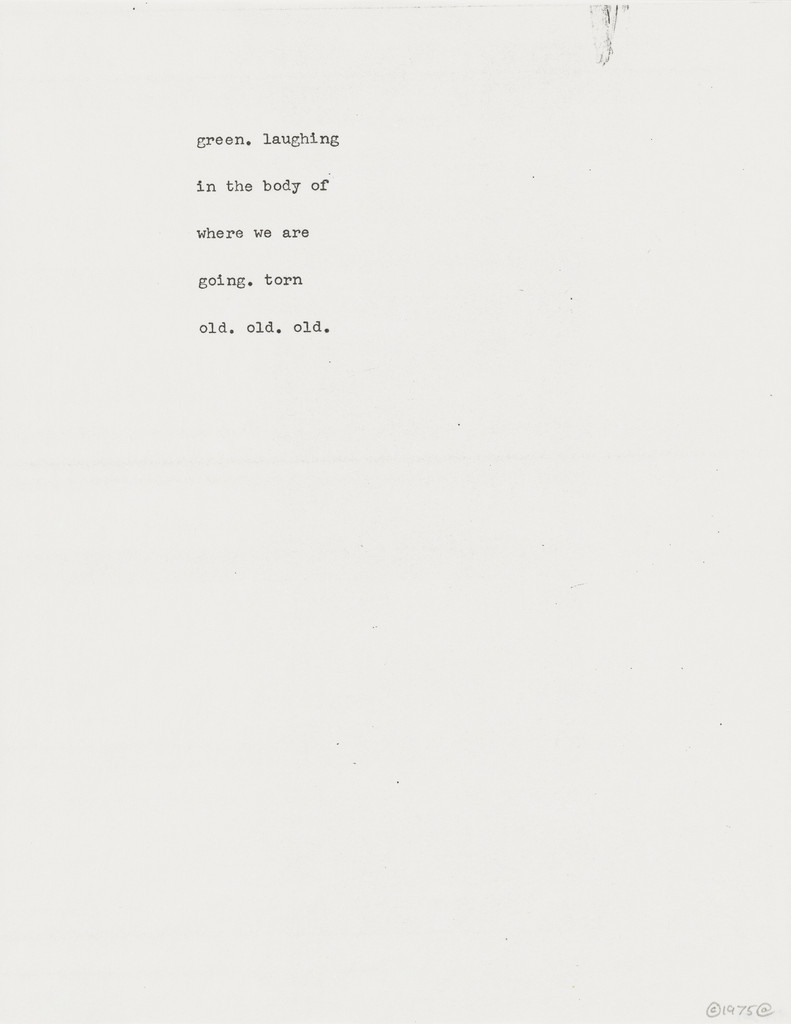
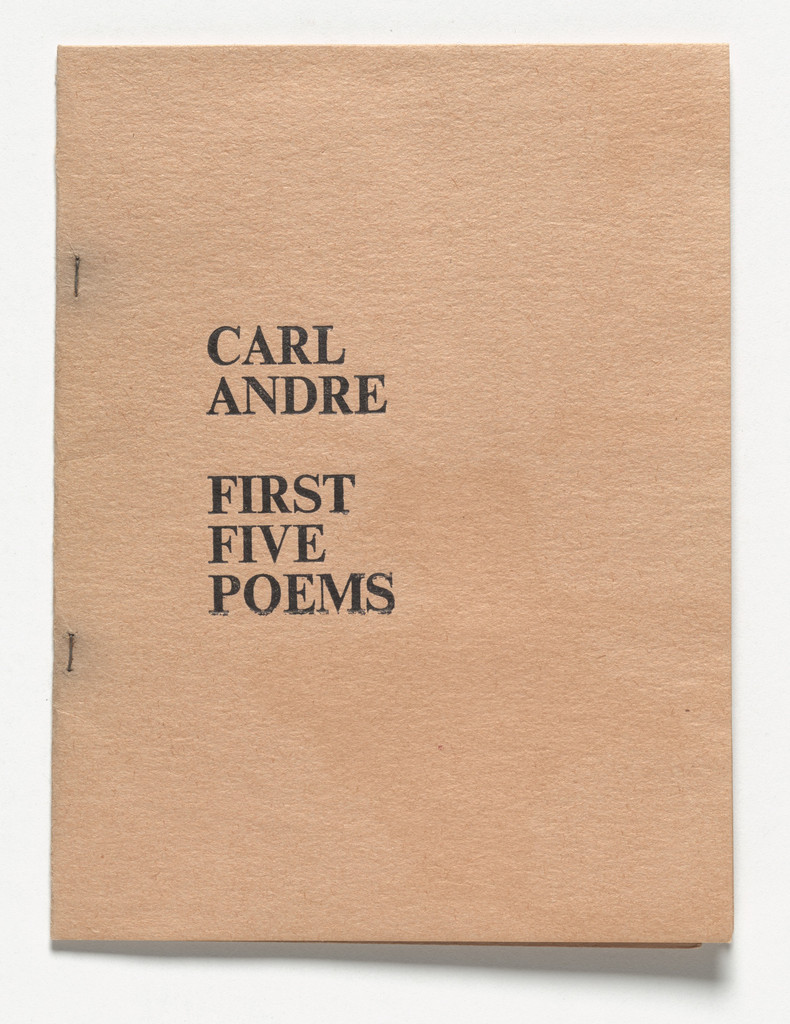
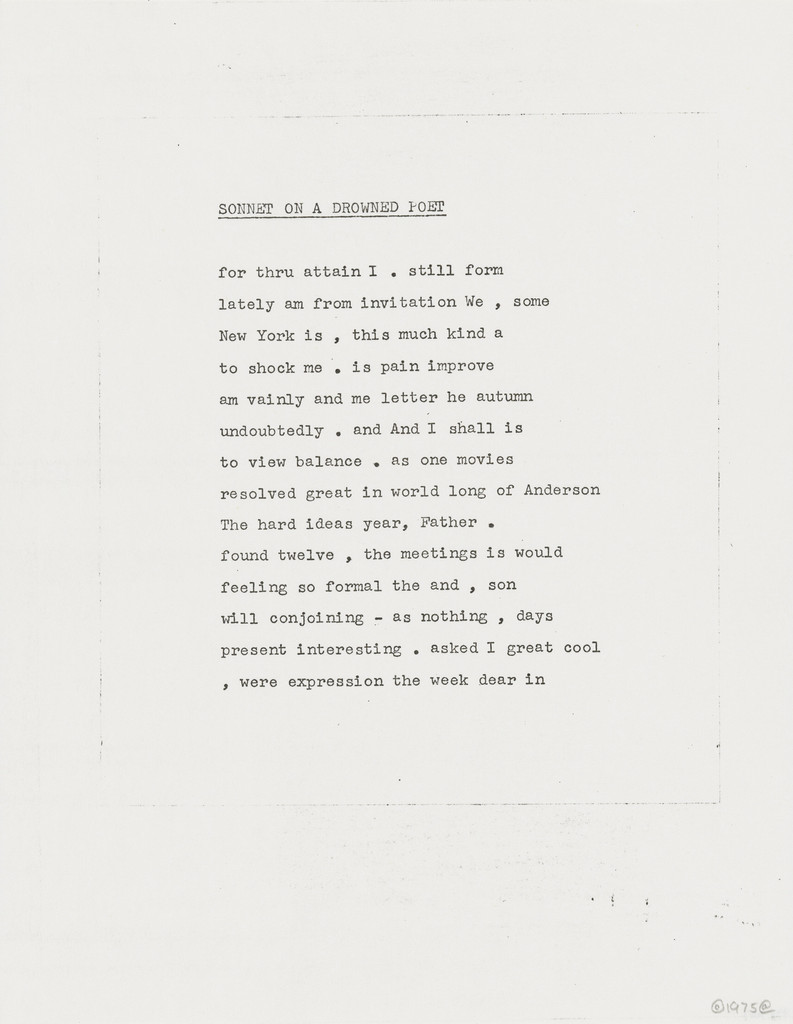
In these years he writes above all, and there is little notable sculpture by him between 1960 and 1965. His concrete poetry is later exhibited in the United States and Europe, and a comprehensive collection of it is held by the Stedelijk Museum in Amsterdam.