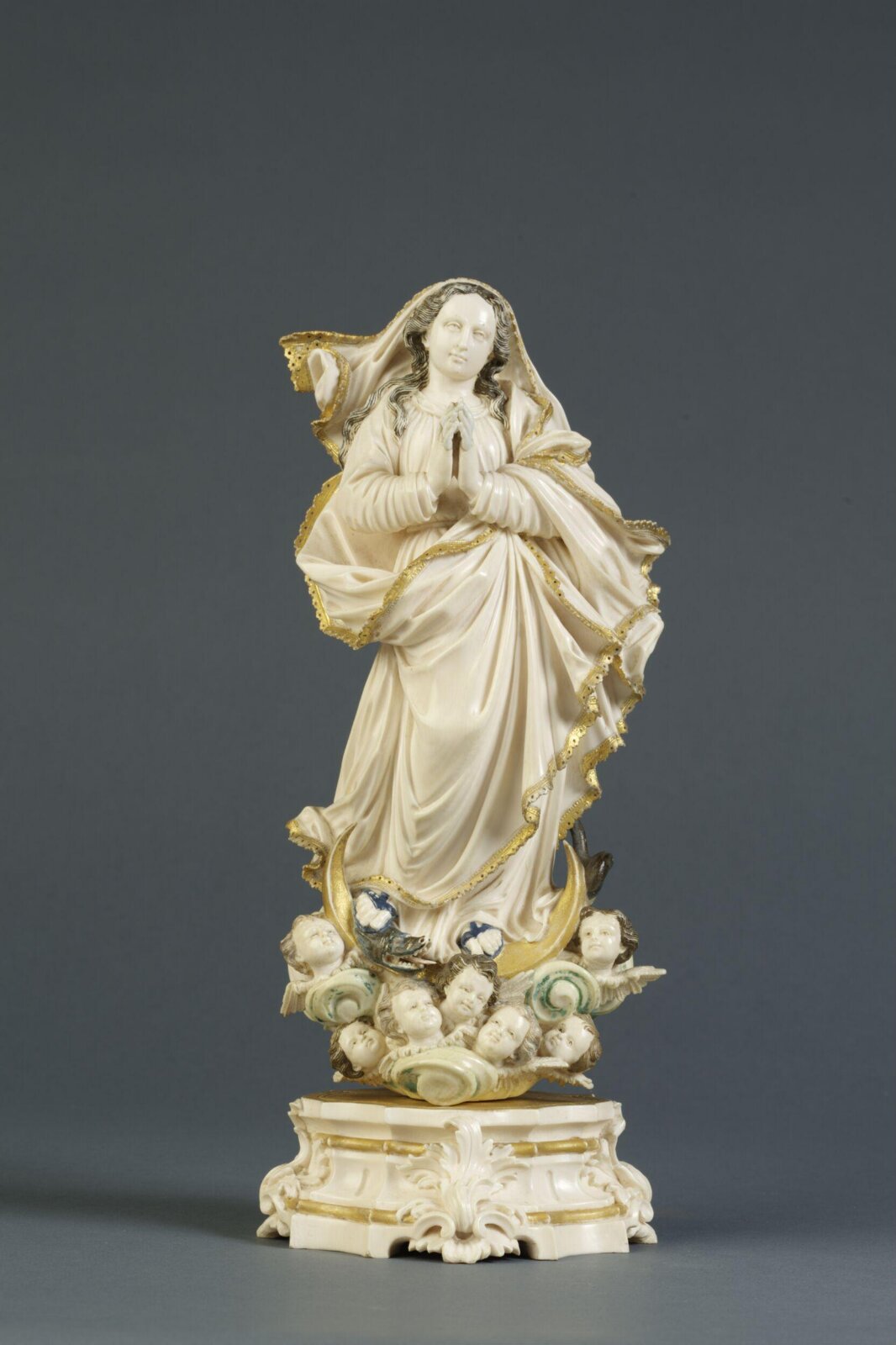
The Virgin of the Immaculate Conception
Darf man es sehen?
Ja, es empfängt Besucher

Victoria and Albert Museum
London, Vereinigtes Königreich
SaalSculpture, Room 111, The Gilbert Bayes Gallery
Öffentlich ausgestellt. Wer dafür bürgt, steht unten.
- Geprüft
- Unverändert seit
- Quelle
- Sammlungsdaten des Museums selbst
Über die Skulptur
This ivory statuette of the Virgin of the Immaculate Conception is made in Goa in about 1720-1750. It was formerly identified as Portuguese, but Indo-Portuguese figures from Goa exhibit similar features, and the edging of the drapery, the cherubim, and the acanthus on the base imply a Goan origin for the present piece.
Ivory carving had a long tradition on the Indian subcontinent, and elaborate works of art were made, particularly as diplomatic gifts, often presented to Western rulers. From the sixteenth century onwards, the four main missionary Orders, the Augustinians, Jesuits, Dominicans and Franciscans, built churches and aimed to convert the inhabitants of India. The ivories would assist in the presentation of Christian imagery, as well as being exported back to churches, convents and private collectors in Europe.
Victoria and Albert Museum
Angaben
- Inventarnummer
- 183-1864
Was es zeigt
Im Katalog
Quellen
- Victoria and Albert Museum: die offenen Daten des Museums · abgerufen vor 12 Tagen
- Bild: Victoria and Albert Museum — © Victoria and Albert Museum, London