ART WIKI33.040 ausgestellt
KarteSammlungKünstlerMuseenAusstellungenJournal
Anmelden

ART WIKI

Wo das Meisterwerk hängt und wann man vorgelassen wird.

Sammlungen: Art Institute of Chicago, Cleveland Museum of Art, Eremitage, Getty Villa, Harvard Art Museums, Hirshhorn Museum and Sculpture Garden, J. Paul Getty Museum, Louvre, Metropolitan Museum of Art, Minneapolis Institute of Art, Museum of Modern Art, National Gallery of Art, National Museum of Asian Art, National Portrait Gallery, Puschkin-Museum, Rijksmuseum Amsterdam, Russisches Museum, Smithsonian American Art Museum, Statens Museum for Kunst, Tretjakow-Galerie, Victoria and Albert Museum, Whitney Museum of American Art, Staatskatalog des Museumsfonds Russlands (274 Museen), Europeana (19 Museen), Wikidata (6 Museen), Paris Musées (12 Museen) und Joconde, die Museumsdatenbank des französischen Kulturministeriums (495 Museen). Die Bilder gehören ihren Rechteinhabern.

Rubriken

  • Karte
  • Suche
  • Sammlung
  • Meisterwerke
  • Jetzt ausgestellt
  • Künstler

Mehr

  • Museen & Galerien
  • Ausstellungen
  • Journal
  • Woher die Daten stammen
  • Datenschutz & Cookies
StartseiteKarteKatalog
  1. Sammlung/
  2. National Gallery/
  3. Eine groteske alte Frau
Eine groteske alte Frau, Quinten Massijs, 1513
Quinten Massijs, PorträtQuinten MassijsHistorische Niederlande, 1530

Eine groteske alte Frau

The Ugly Duchess

1513 · Painting · 64.2 × 45.4 cm

Darf man es sehen?

Unbekannt

National Gallery

London, Vereinigtes Königreich

Der Besitzer ist bekannt; ob das Werk derzeit ausgestellt ist, nicht.

Unverändert seit
29. Sept. 2026
Quelle
Das Museum
Auf der KarteMuseumsseite

Über das Gemälde

The Ugly Duchess (also known as A Grotesque Old Woman) is a satirical portrait painted by the Flemish artist Quinten Matsys around 1513.

The painting is in oil on an oak panel, measuring 62.4 by 45.5 cm. It shows an old woman with wrinkled skin and withered breasts. She wears the aristocratic horned headdress (escoffion) of her youth, out of fashion by the time of the painting, and holds in her right hand a red flower, then a symbol of engagement, indicating that she is trying to attract a suitor. However, it has been described as a bud that will 'likely never blossom'. The work is Matsys' best-known painting.

Weiterlesen

The painting was long thought to have been derived from a putative lost work by Leonardo da Vinci, on the basis of its striking resemblance to two caricature drawings of heads commonly attributed to the Italian artist. However the caricatures are now thought to be based on the work of Matsys, who is known to have exchanged drawings with Leonardo.

A possible literary influence is Erasmus's essay In Praise of Folly (1511), which satirizes women who "still play the coquette", "cannot tear themselves away from their mirrors" and "do not hesitate to exhibit their repulsive withered breasts". The woman has been often identified as Margaret, Countess of Tyrol, claimed by her enemies to be ugly; however, she had died 150 years earlier.

The painting is in the collection of the National Gallery in London, to which it was bequeathed by Jenny Louisa Roberta Blaker in 1947. It was originally half of a diptych, with a Portrait of an Old Man. In a private collection, it has a study in the Musée Jacquemart-André, Paris, which was lent to the National Gallery in 2008 for an exhibition in which the two paintings were hung side by side.

The portrait is thought to be a source for John Tenniel's 1865 illustrations of the Duchess in Alice's Adventures in Wonderland.

A 1989 article published in the British Medical Journal speculated that the subject might have suffered from Paget's disease, in which the victim's bones enlarge and become deformed. A similar suggestion was made by Michael Baum, emeritus professor of surgery at University College London.

Wikipedia · CC BY-SA

Angaben

Inventarnummer
NG5769

Im Katalog

GemäldeRenaissance16. Jahrhundert

Quellen

  • Wikidata
  • Bild: National Gallery — Quinten Metsys · Public domain · Wikimedia Commons
Mehr von Quinten Massijs

Alle Werke
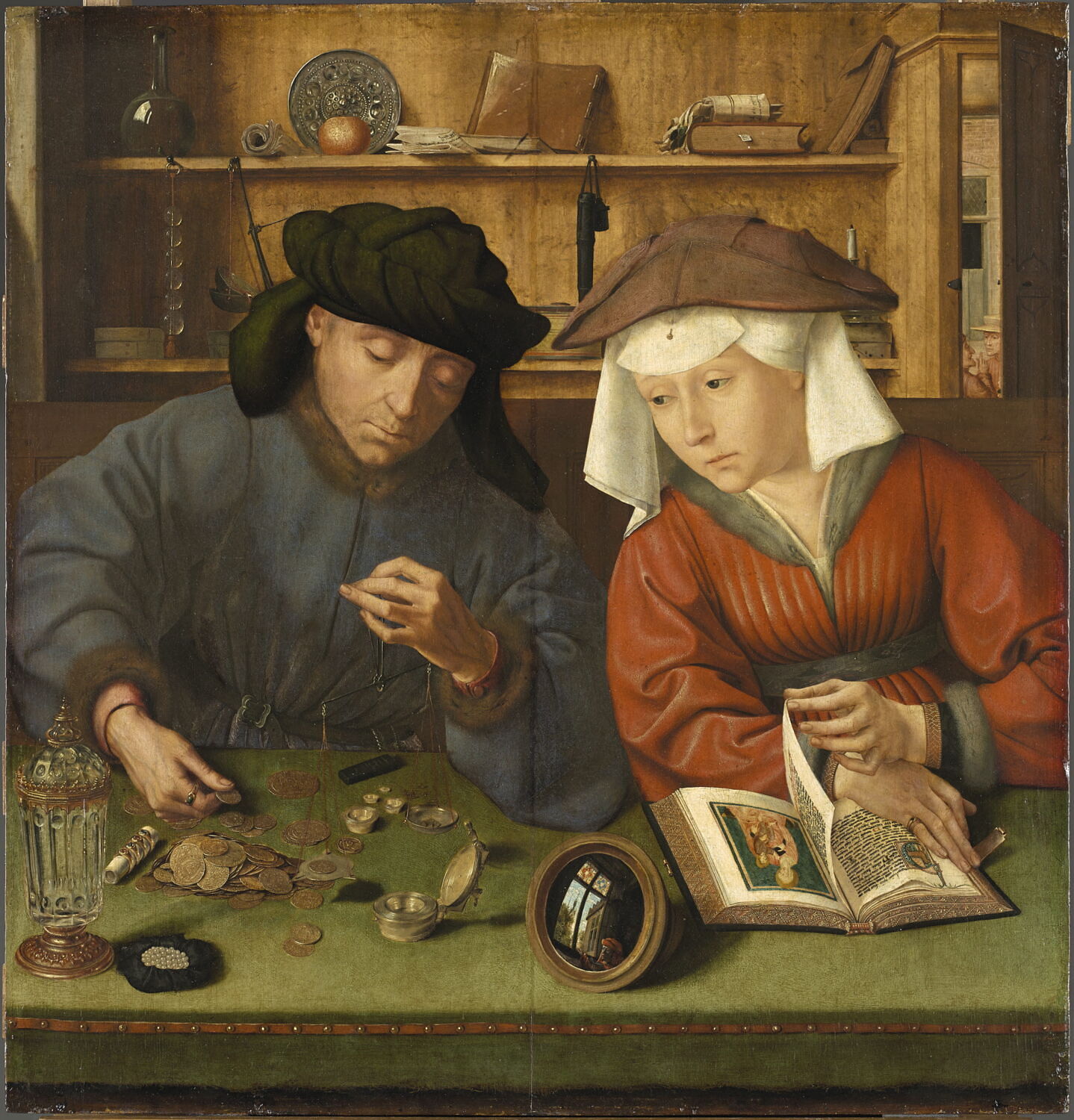
Le prêteur et sa femme, Metsys, Quentin, Fin du XVe siècle - début du XVIe siècle (1514)

Der Goldwäger und seine Frau

Fin du XVe siècle - début du XVIe siècle (1514) · Louvre

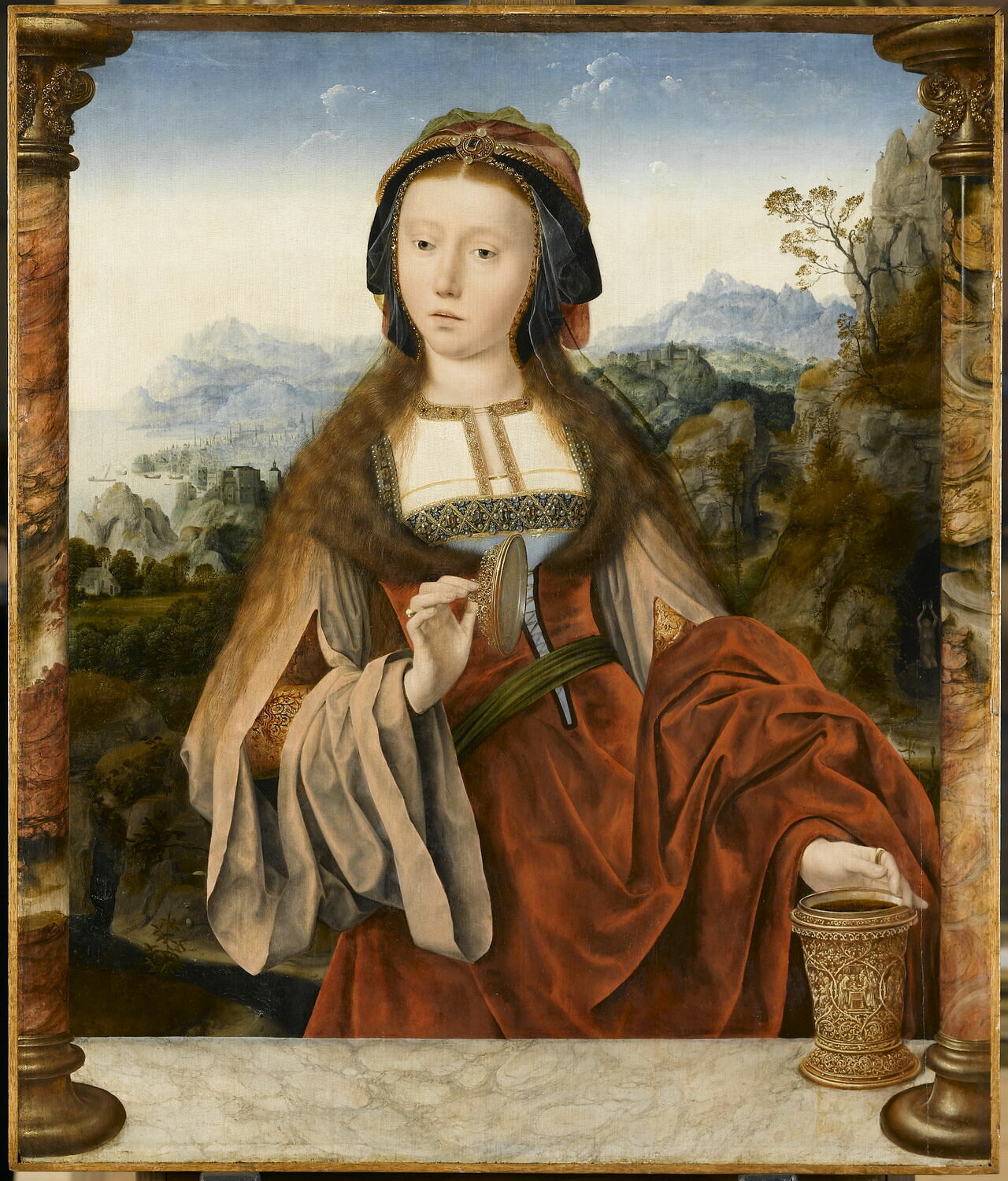
Sainte Madeleine, Metsys, Quentin, 1e tiers du XVIe siècle (1500 - 1535)

Sainte Madeleine

1e tiers du XVIe siècle (1500 - 1535) · Louvre

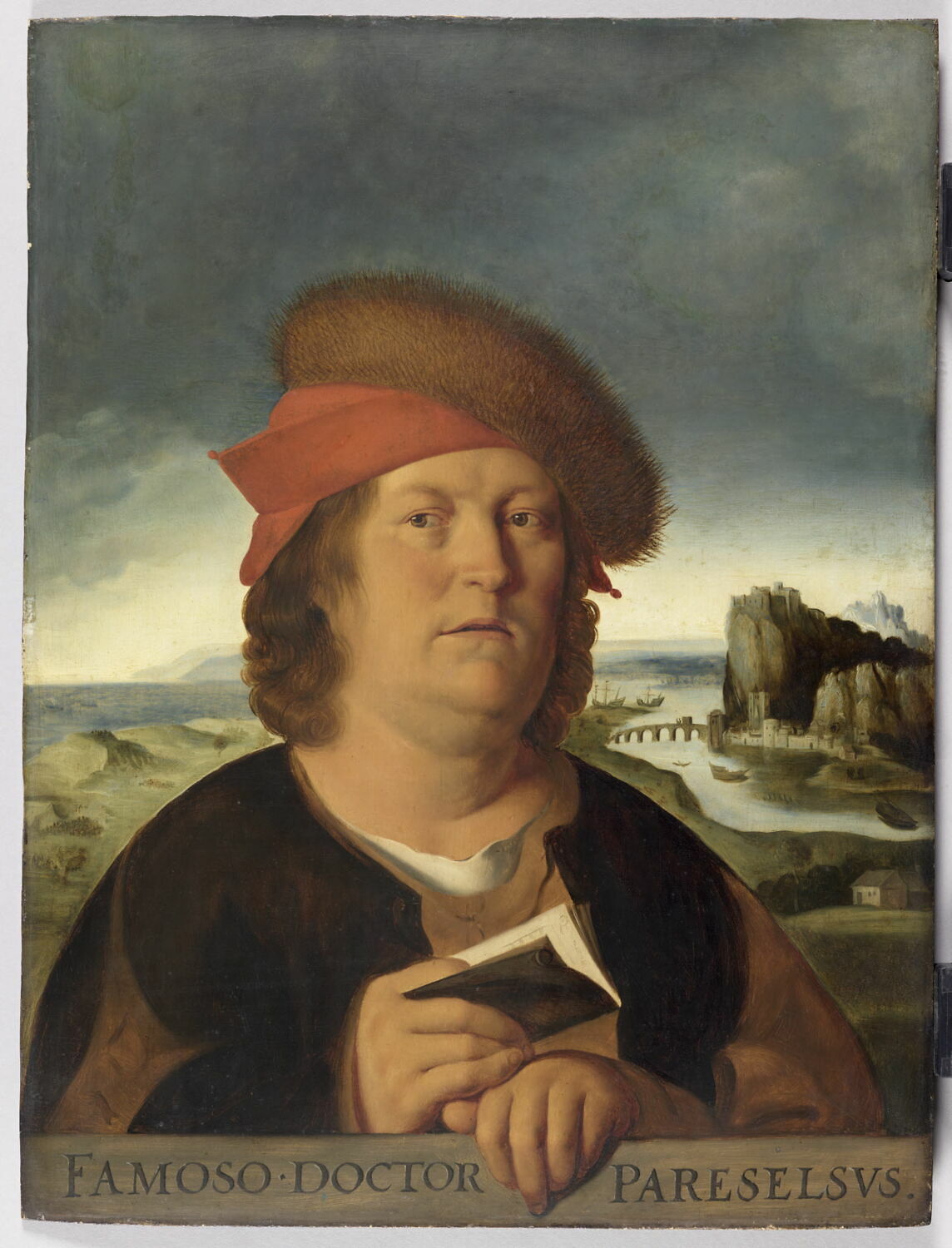
Portrait présumé du médecin Paracelse (1493-1541), Metsys, Quentin, XVIe siècle (1500 - 1600)

Portrait présumé du médecin Paracelse (1493-1541)

XVIe siècle (1500 - 1600) · Louvre

Christ Carrying the Cross, Quinten Metsys, 1510s

Christ Carrying the Cross

c. 1510 - c. 1515 · Rijksmuseum Amsterdam

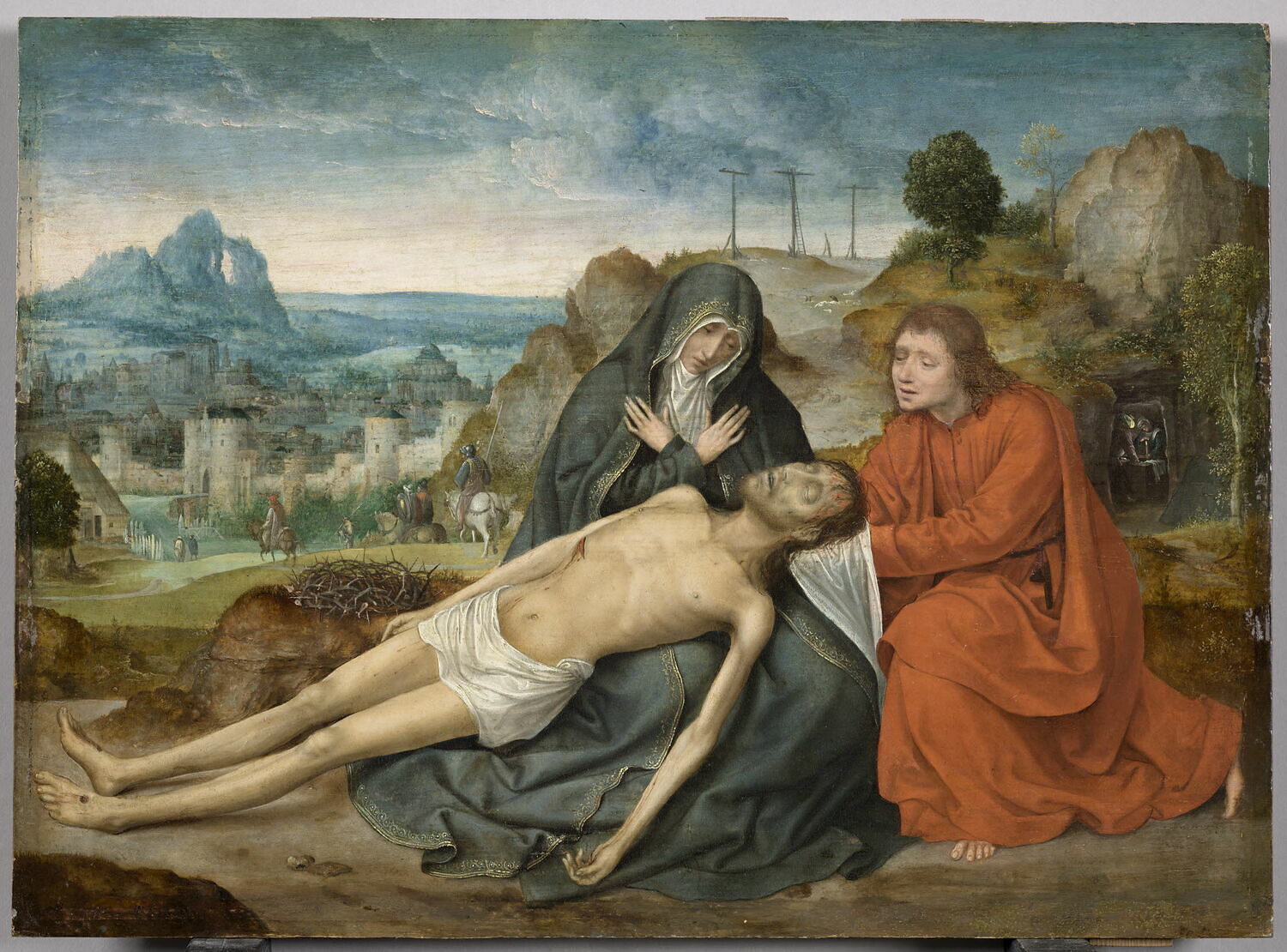
Pietà, Metsys, Quentin, Fin du XVe siècle - début du XVIe siècle (1514)

Pietà

Fin du XVe siècle - début du XVIe siècle (1514) · Louvre

Ill-Matched Lovers, Quentin Massys, c. 1520/1525

Ill-Matched Lovers

c. 1520/1525 · National Gallery of Art

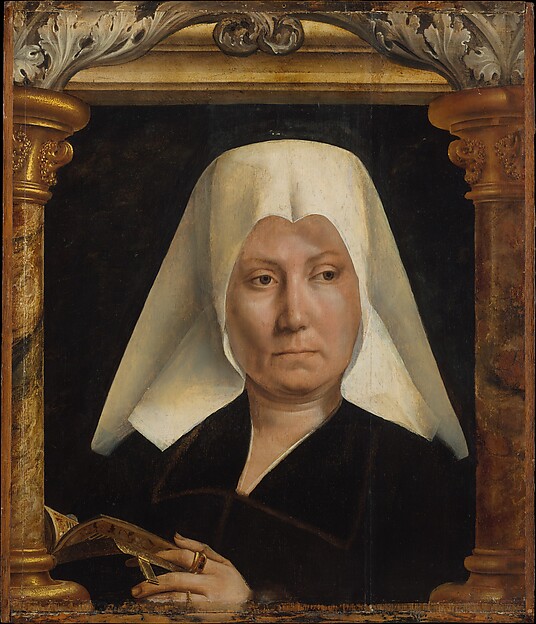
Portrait of a Woman, Quinten Massys, ca. 1520

Portrait of a Woman

ca. 1520 · Metropolitan Museum of Art

Madonna of the Cherries, Quentin Metsys, about 1520–1525

Madonna of the Cherries

about 1520–1525 · J. Paul Getty Museum

Aus der Sammlung: National Gallery

Museumsseite
Virgin of the Rocks, Leonardo da Vinci, 1490s

Leonardo da Vinci

Virgin of the Rocks, 1490s

Long Grass with Butterflies, Vincent van Gogh, 1890

Vincent van Gogh

Long Grass with Butterflies, 1890

Farms near Auvers, Vincent van Gogh, 1890

Vincent van Gogh

Strohgedeckte Häuser vor einem Hügel, 1890

A Wheatfield, with Cypresses, Vincent van Gogh, 1889

Vincent van Gogh

A Wheatfield, with Cypresses, 1889

Head of a Peasant Woman, Vincent van Gogh, 1885

Vincent van Gogh

Head of a Peasant Woman, 1885

The Entombment, Michelangelo, c. 1500s

Michelangelo

Die Grablegung Christi, c. 1500s

Manchester Madonna, Michelangelo, c. 1494

Michelangelo

Madonna Manchester, c. 1494

Irises, Claude Monet, 1910s

Claude Monet

Irises, 1910s