The Scourging of Christ
Kann ich es sehen?
Derzeit nicht ausgestellt
Wo ist „The Scourging of Christ“ heute? Sammlung: Victoria and Albert Museum, London. Derzeit nicht ausgestellt. Geprüft 25. September 2026.

London, Vereinigtes Königreich
Es gehört zur Sammlung, ist derzeit aber nicht ausgestellt.
- Geprüft
- Unverändert seit
- Quelle
- Das Museum
Über die Skulptur
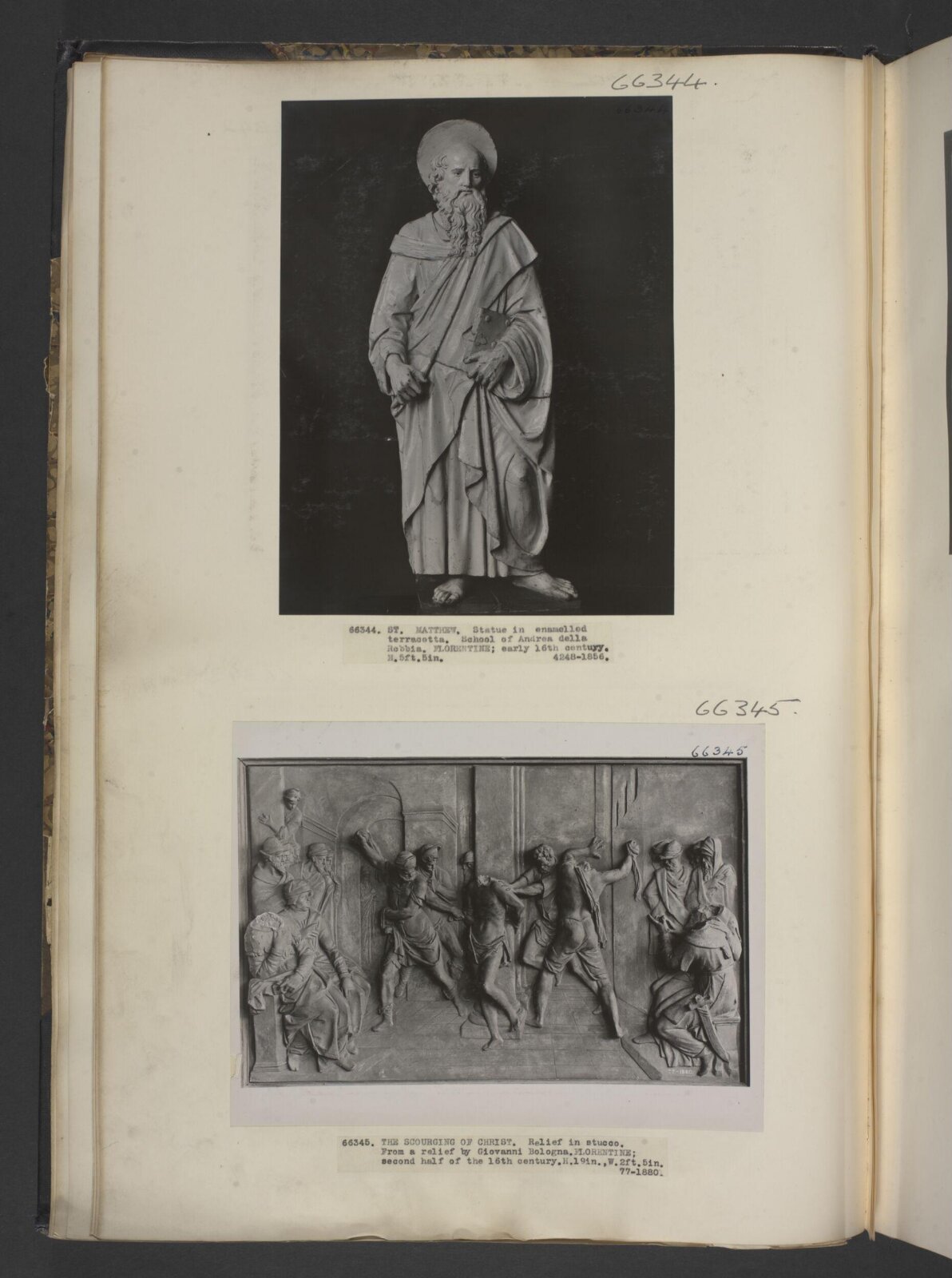
This stucco relief is cast from one of the reliefs executed by Giambologna for the church of Santissima Annunziata in Florence. The relief shows Christ with his back to a pillar, bound and held by two executioners and scourged by two others. There are groups of seated and standing spectators appear to left and right and between the arches. The heads of Christ and several of the spectators are missing.
Mehr lesen
Born in Flanders Giovanni Bologna (1524-1608), or short Giambologna went to Rome to study antique sculpture from about 1550 to 1553. He then travelled through Florence where he was persuaded to stay. He became sculptor to the Medici family and thus became one of the most influential sculptors of the late 16th and early 17th centuries. For half a century Giambologna dominated Florentine sculpture, carving an ever more impressive series of statue groups in marble: Samson Slaying a Philistine (1560–62), Florence Triumphant over Pisa (1563–75), the Rape of a Sabine (1582), Hercules Slaying a Centaur (1595–1600). In addition, Giambologna produced several extraordinary bronze statues. By ca. 1570 Giambologna had become the most influential sculptor in Europe.
Apart from the fame that his monumental statues in Florence inevitably brought, his style was disseminated in the form of small bronze reproductions of his masterworks, or statuettes, which he composed independently as elegant ornaments for the interior. These were used by the Medici as diplomatic gifts for friendly heads of state, and were also eagerly purchased by European collectors as examples of sophisticated Florentine design. They were especially favoured in Germany and the Low Countries and were prominently illustrated in paintings of fashionable gallery interiors there. For compositional subtlety, sensuous tactile values and sheer technical virtuosity, Giambologna’s work is virtually unequalled in any period or country.
Victoria and Albert Museum
Angaben
- Inventarnummer
- 77-1880
Was es zeigt
Im Katalog
Quellen
- Victoria and Albert Museum
- Bild: Victoria and Albert Museum — © Victoria and Albert Museum, London