Juan de Juni
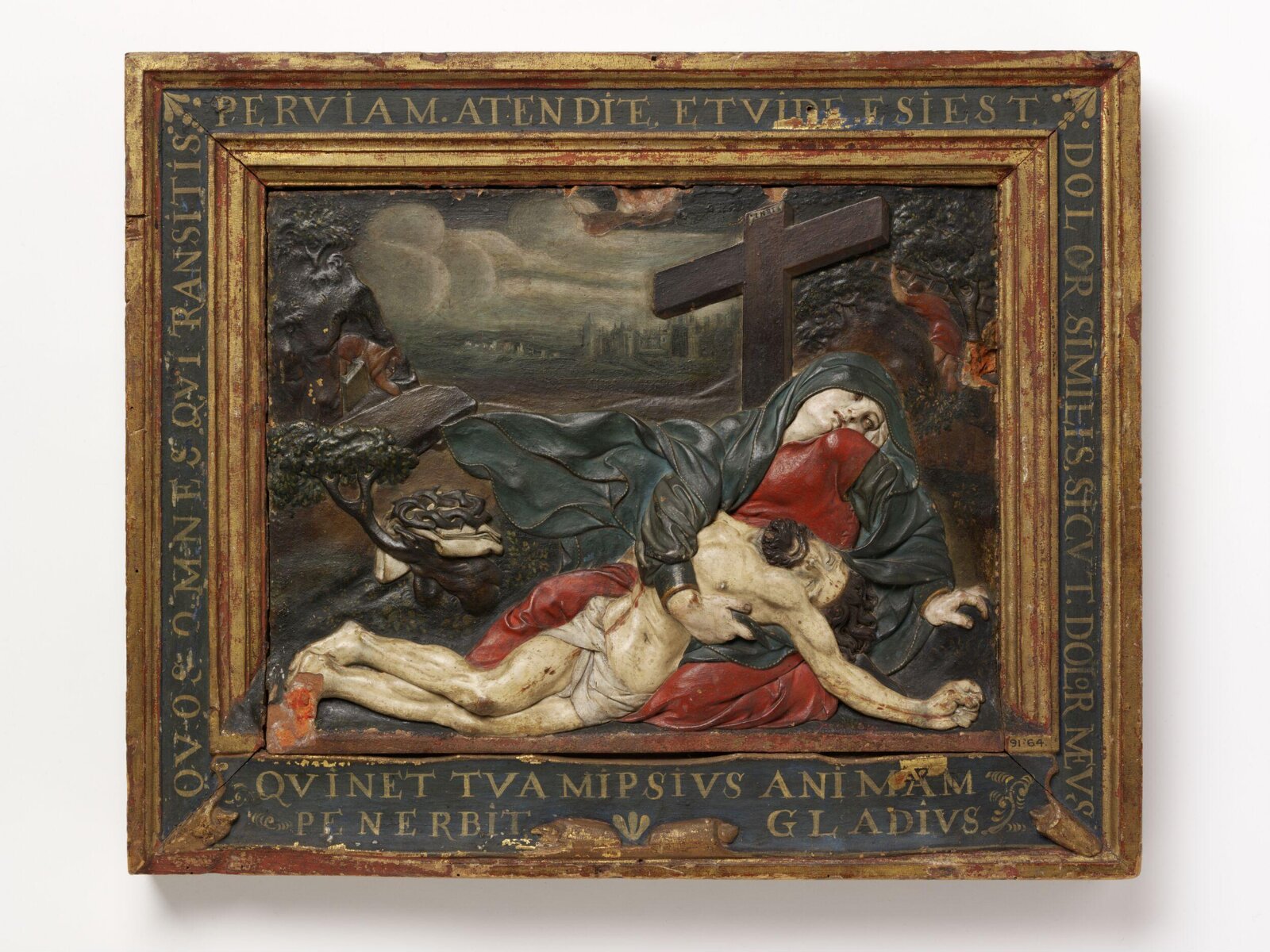
The Lamentation
Darf man es sehen?
Ja, es empfängt Besucher

Victoria and Albert Museum
London, Vereinigtes Königreich
SaalMedieval & Renaissance, Room 62, The Foyle Foundation Gallery
Öffentlich ausgestellt. Wer dafür bürgt, steht unten.
- Geprüft
- vor 10 Tagen
- Unverändert seit
- 25. Sept. 2026
- Quelle
- Sammlungsdaten des Museums selbst
About the sculpture
Juan de Juni executed several versions of this composition, all in terracotta (baked clay), and almost certainly all cast from moulds. The twisted and Mannerist-style forms are typical of this sculptor's work. Although all his known sculpture was made in Castile in Spain, Juan de Juni was probably French in origin.
The present version should be assigned to the workshop of Juan de Juni, and can be tentatively dated to the 1540s , approximately contemporary with the Salamanca relief. It was probably a devotional object, intended to be hung in a chapel or church, or in a private house. The inscription on the frame reinforces its devotional purpose.
Victoria and Albert Museum
Angaben
- Inventarnummer
- 91-1864
What it shows
Im Katalog
Quellen
- Victoria and Albert Museum: the museum's own open data · abgerufen vor 10 Tagen
- Bild: Victoria and Albert Museum — © Victoria and Albert Museum, London