 Alexander CalderVereinigte Staaten, 1898–1976
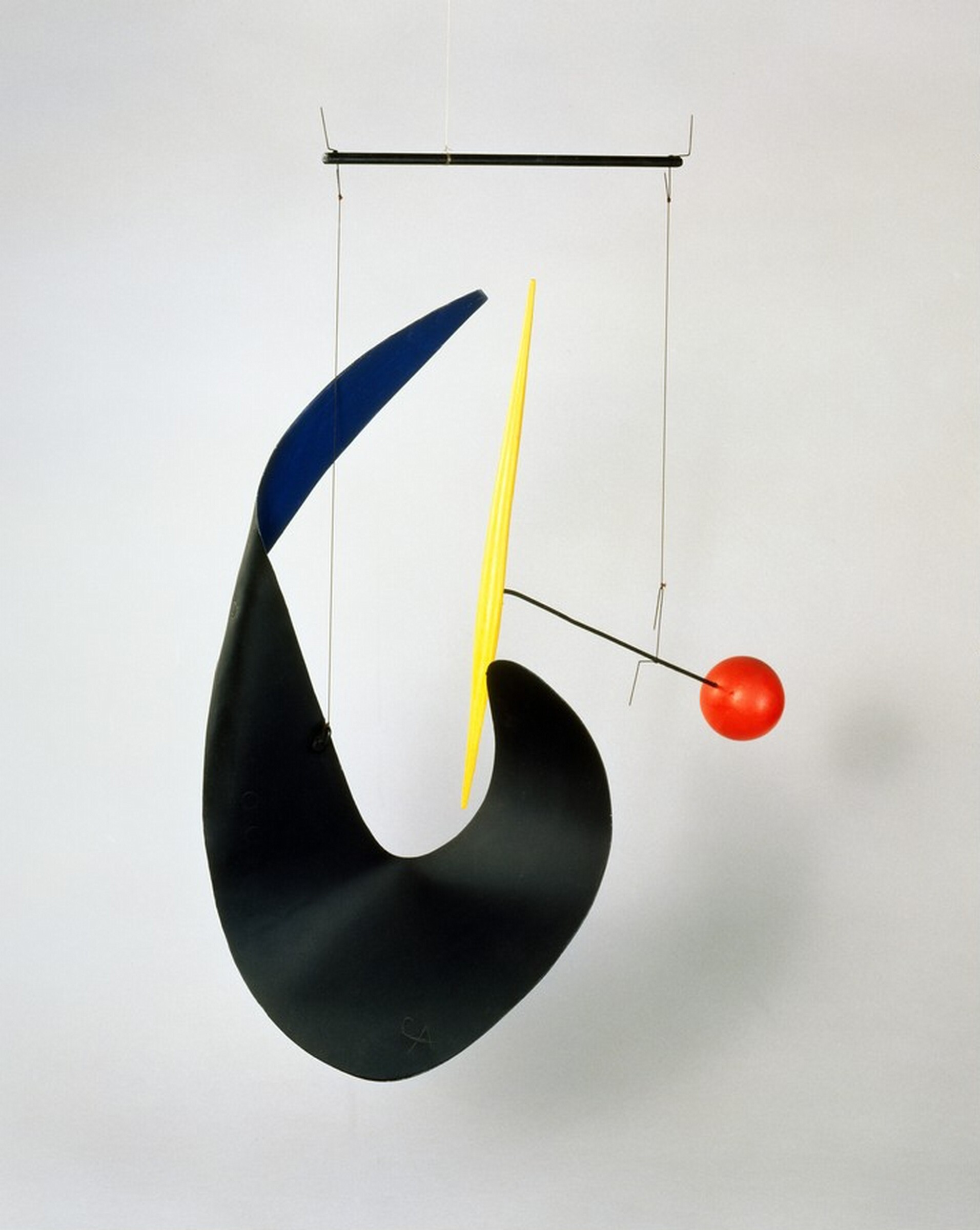
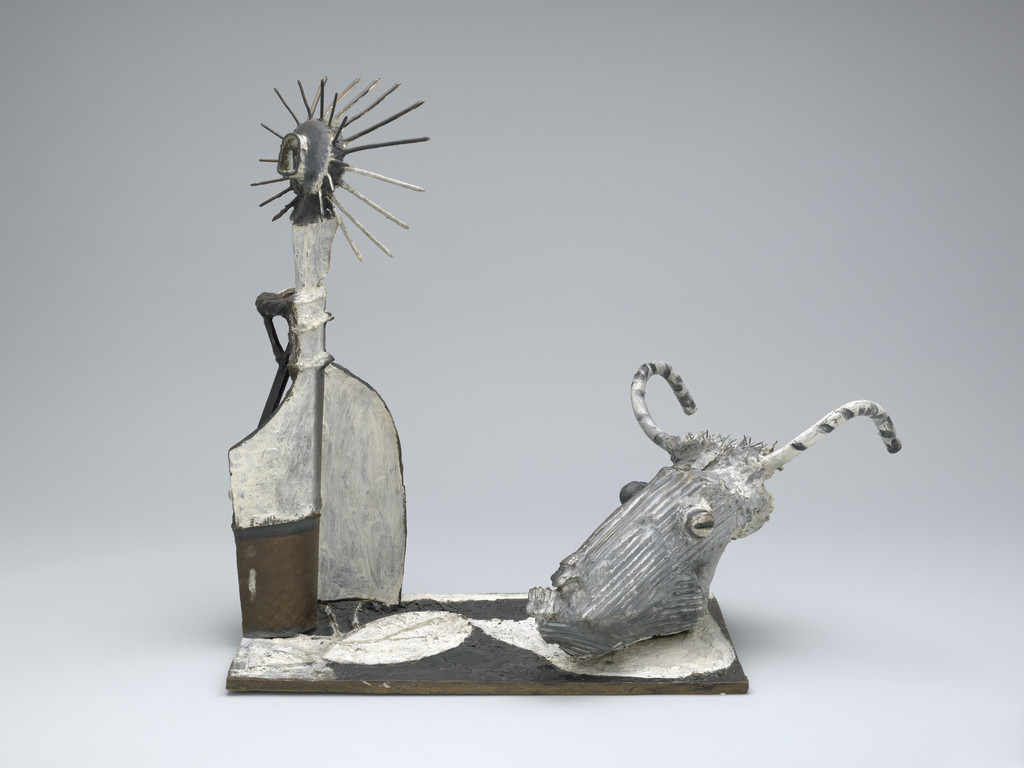
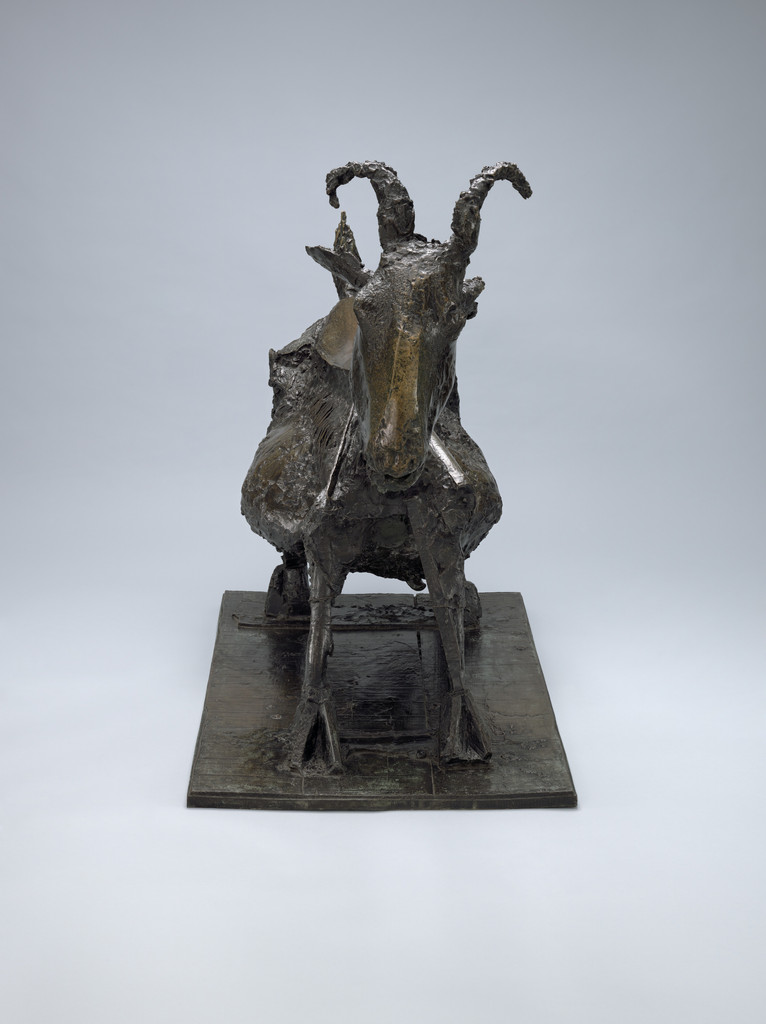
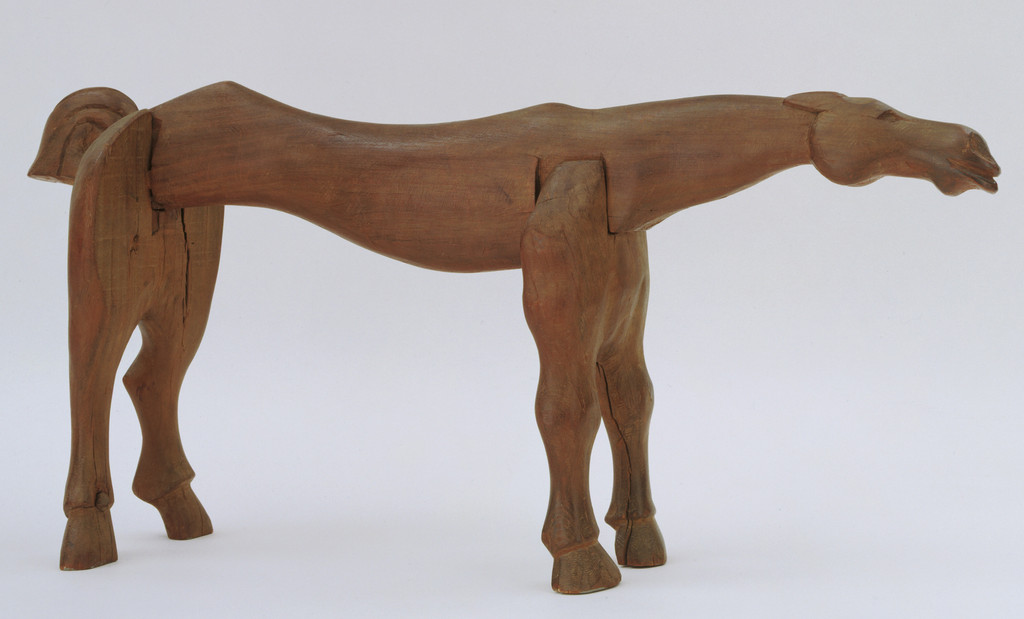
The Horse
Darf man es sehen?
Empfängt derzeit nicht

New York City, Vereinigte Staaten
Es gehört zur Sammlung, ist derzeit aber nicht ausgestellt.
- Geprüft
- Quelle
- Das Museum
Angaben
- Inventarnummer
- 747.1943
Im Katalog
Quellen
- Museum of Modern Art
- Bild: Museum of Modern Art — © the artist or rights holder
Derweil im Leben von Alexander Calder
Das ganze Leben1926
To Paris as a crew member of the cargo steamer Galileo
In July 1926 Calder sets out for Paris as a crew member of the British cargo steamship Galileo as far as Hull, continuing by train and boat. In Paris he enrols at the Académie de la Grande Chaumière and sets up a studio at 22 rue Daguerre in Montparnasse, later moving to 7 villa Brune in the same district.
1927
His first solo exhibition, in Paris
Calder’s first solo exhibition takes place in 1927 at the gallery of Jacques Seligmann in Paris.
1927
Among the Parisian avant-garde
In 1927 Calder settles in Paris and grows close to the avant-garde, including Cocteau, Man Ray, Mondrian, Desnos and Le Corbusier; he befriends Fernand Léger, Jean Arp and Marcel Duchamp, and Joan Miró becomes a friend for life.
1929
A show of wire sculptures at Galerie Billiet
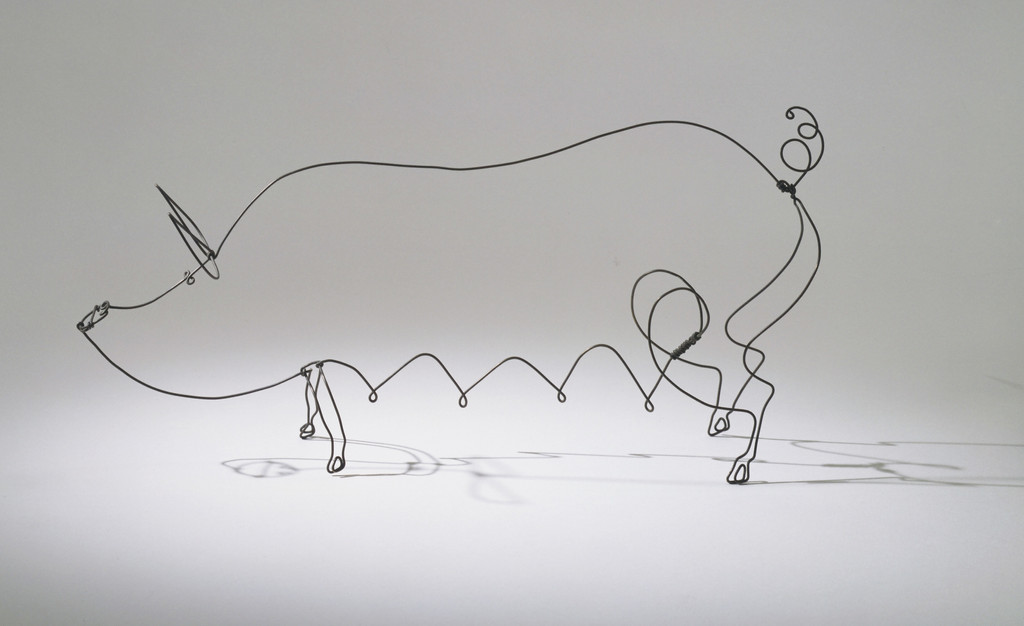
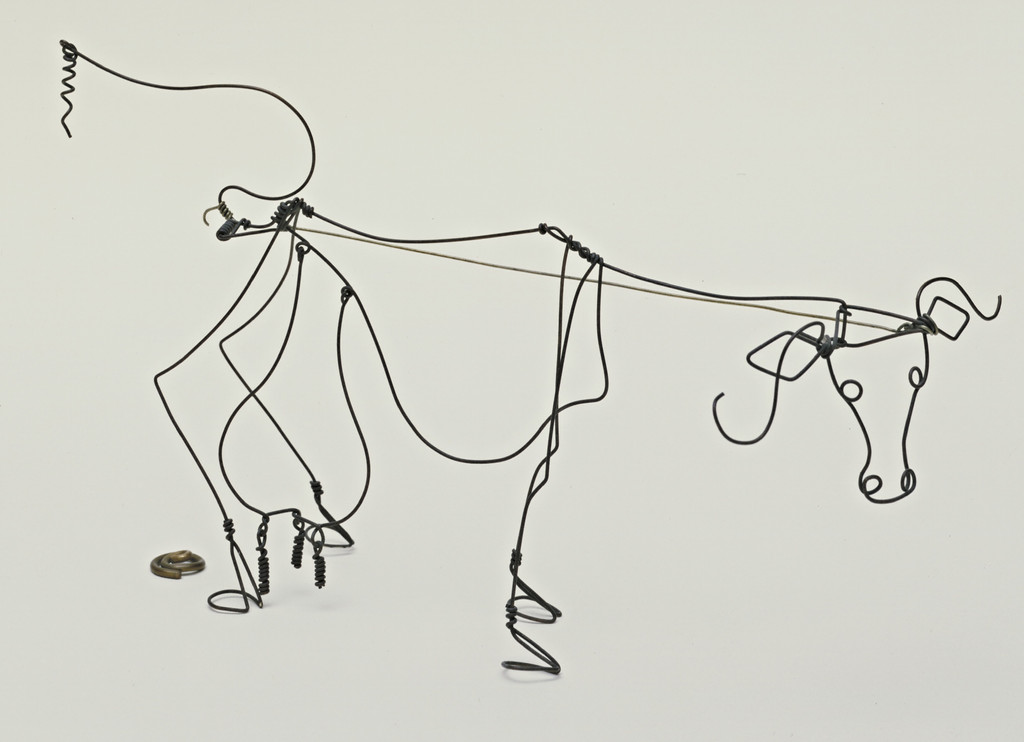
Calder invented wire sculpture, or “drawing in space”, and in 1929 he holds in Paris, at Galerie Billiet, his first solo show of such works; the preface to the catalogue is written by the painter Jules Pascin, a friend from the Montparnasse cafés. “Hi!”, an early example of his wire sculpture, is in the collection of the Honolulu Museum of Art.
June 1929
Meets Louisa James on a steamship
In June 1929, travelling by boat from Paris to New York, Calder meets his future wife, Louisa James (1905–1996), a daughter of Edward Holton James and grandniece of the author Henry James and the philosopher William James. They will marry in 1931 and stay together for the rest of his life; they will have two daughters.
1930
In Mondrian’s studio: the shock of abstraction
A visit to Piet Mondrian’s studio in 1930, with its environment-as-installation, “shocks” Calder into fully embracing abstract art, toward which he had already been tending. He abandons the static quality of Mondrian’s Neo-Plasticism and sets himself the task of creating dynamic systems that reflect the continuous changeability of nature; another stimulus toward kinetic art was a planetarium that showed the movements of celestial bodies.