 Sandro BotticelliItalien, 1445–1510
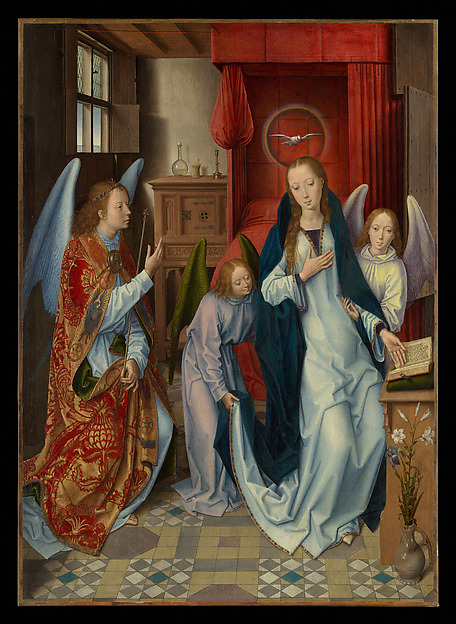
The Annunciation
Kann ich es sehen?
Ja, derzeit ausgestellt
Wo ist „The Annunciation“ heute? Metropolitan Museum of Art, Saal 952, New York City. Ja, derzeit ausgestellt. Geprüft 16. November 2026.

New York City, Vereinigte Staaten
Geschlossen· öffnet morgen um 10:00
Öffentlich ausgestellt.
- Geprüft
- Unverändert seit
- Quelle
- Das Museum
Über das Gemälde
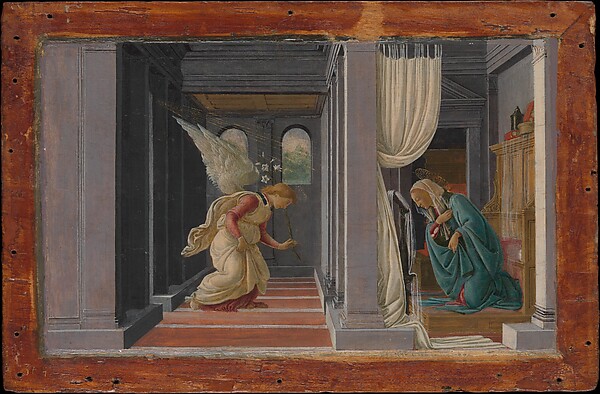
The Annunciation (c. 1485–1492) is a small painting of the Annunciation by the Italian Renaissance artist Sandro Botticelli. It is now in the collection of the Metropolitan Museum of Art in New York. The Metropolitan believe the work was painted as a single image for private devotional use, rather than as one of a set of predella scenes below the main panel of an altarpiece.
The work is known to have been in the Barberini family collection in Rome in the 17th century, and later became part of the Robert Lehman Collection that was donated to the Metropolitan Museum of Art in 1969.
Boticelli also painted the Cestello Annunciation about the same time for Santa Maria Maddalena dei Pazzi, and also an Annunciation for San Barnaba, Florence, now in the Kelvingrove Art Gallery and Museum in Glasgow, Scotland.
Angaben
- Inventarnummer
- 1975.1.74
Was es zeigt
Im Katalog
Quellen
- Metropolitan Museum of Art
- Bild: Metropolitan Museum of Art — Open Access (CC0)
Im Leben von Sandro Botticelli
Das ganze Leben1480s
Lorenzos Kreis: Ficino, Pico, Poliziano
Botticelli verkehrte in Lorenzo des Prächtigen Platonischer Akademie, wo er die Humanisten, Dichter und Philosophen Marsilio Ficino, Pico della Mirandola und Angelo Poliziano kennenlernte; der Einfluss des Neuplatonismus zeigt sich in seinen weltlichen Gemälden.
1490–1498
Savonarolas Predigten und Botticelli
Ab 1490 predigte Savonarola in Florenz; nach Vasari wurde Botticelli sein Anhänger, gab die Malerei auf und geriet in Not. Moderne Historiker weisen dies zurück, und das Ausmaß des Einflusses des Predigers bleibt ungewiss: Botticellis Bruder Simone war der eindeutigere Anhänger.
1491
Das Komitee zur Domfassade
1491 gehörte Botticelli dem Komitee an, das über eine Fassade für den Dom von Florenz entschied; im nächsten Jahr erhielt er drei Zahlungen für einen letztlich gescheiterten Entwurf, einige der Innengewölbe des Doms mit Mosaiken zu versehen.