Elisabetta SiraniItalien, 1638–1665
Святая Варвара
Kann ich es sehen?
Unbekannt
Wo ist „Святая Варвара“ heute? Sammlung: The Ostankino museum-estate, Moskau. Unbekannt.
Moskau, Russland
Der Besitzer ist bekannt; ob das Werk derzeit ausgestellt ist, nicht.
- Unverändert seit
- Quelle
- Das Museum
Angaben
- Inventarnummer
- Ж-315
Im Katalog
Quellen
- Der Staatskatalog des Museumsfonds Russlands
- Bild: The Ostankino museum-estate — © Московский музей-усадьба Останкино · Госкаталог музейного фонда РФ
Im Leben von Elisabetta Sirani
Das ganze Leben1660
Opens a painting school for women
She opens a school — the first school of painting for women in Europe outside a convent, open regardless of the women’s artistic and social connections; besides her younger sisters Barbara and Anna Maria she trains at least twelve young women, among them the wood-engraver Veronica Fontana, Caterina Pepoli, Maria Elena Panzacchi, Camelia Lanteri, Lucretia Forni, Veronica Franchi and Ginevra Cantofoli, who was portrayed as Sirani’s rival.
1660
Admitted to the Accademia di San Luca in Rome
In the same year, 1660, she is admitted to the Accademia di San Luca in Rome.
c. 1660
Turns to small devotional images of the Virgin
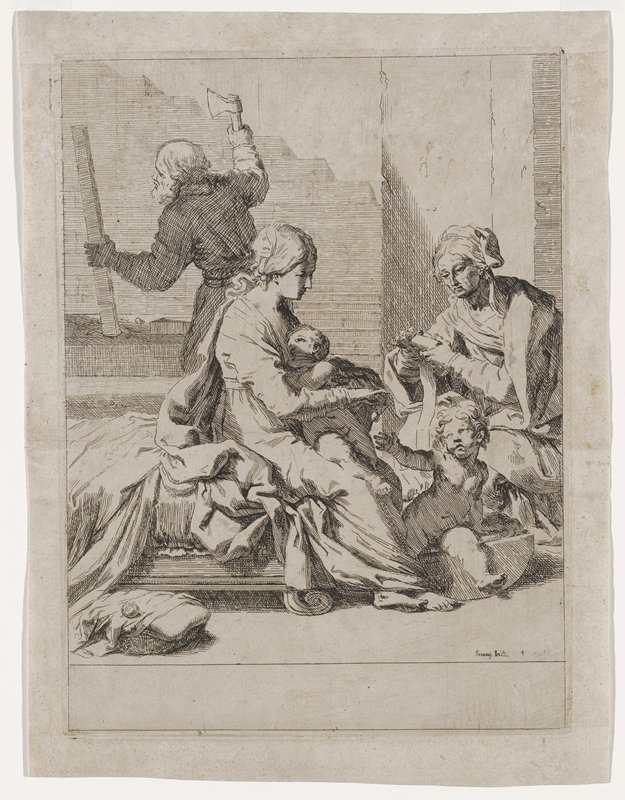
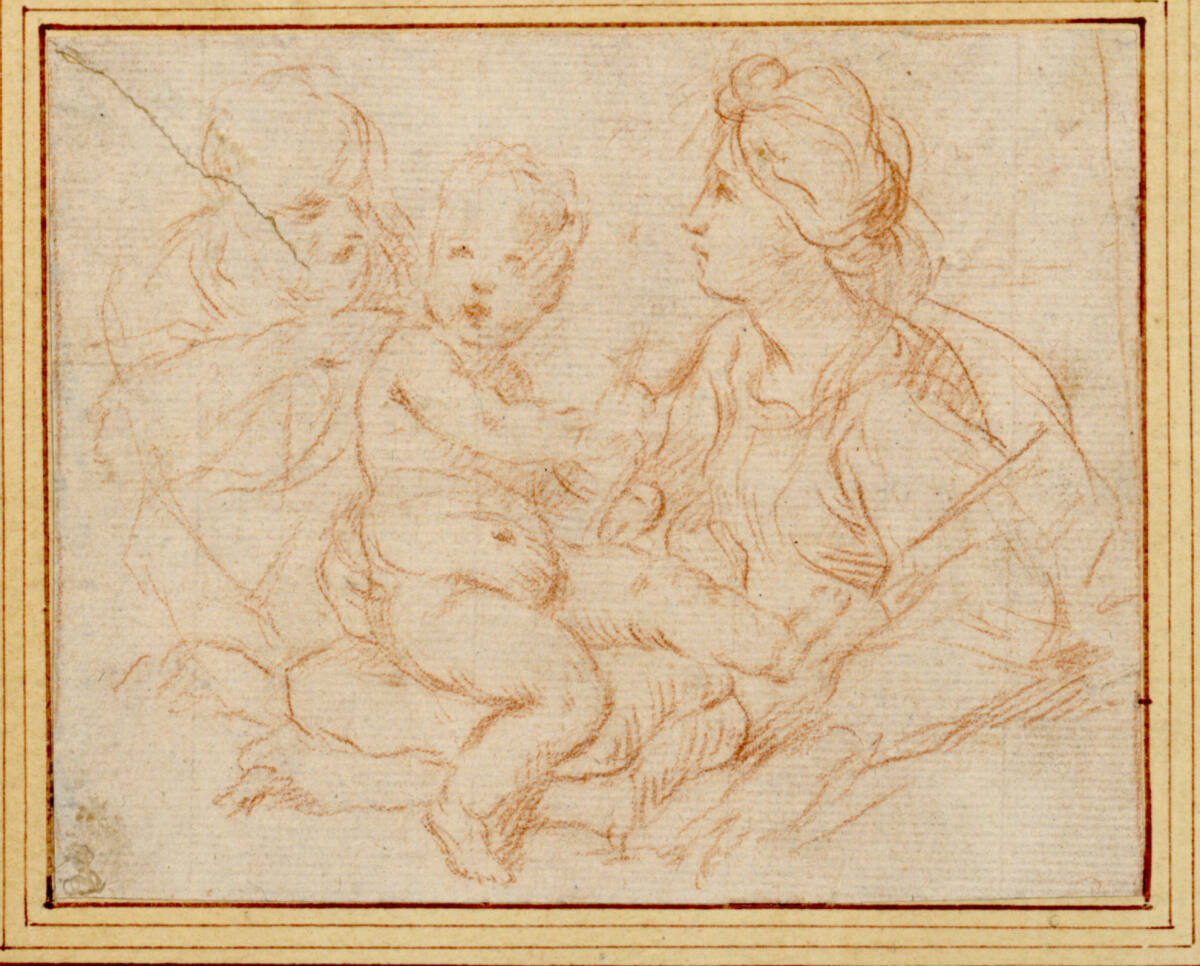
Around 1660 she begins to concentrate on small devotional images — the Virgin and Child and the Holy Family — which were enormously popular with private collectors; her patrons range from cardinals, kings, princes and dukes to merchants and academics from Bologna and across Europe. Among such works is the Virgin and Child of 1663 (National Museum of Women in the Arts, Washington).