Joseph Mallord William TurnerVereinigtes Königreich, 1775–1851
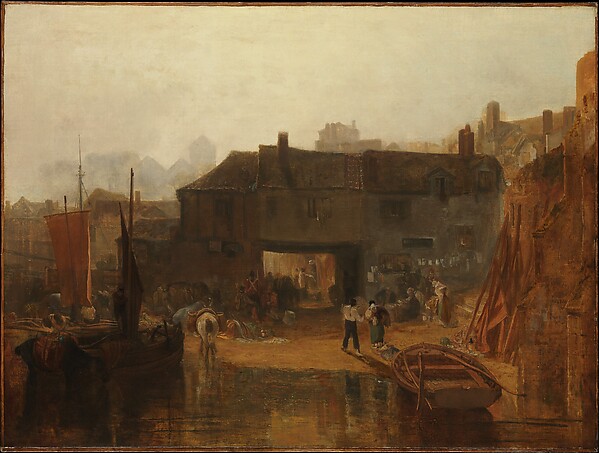
Stirling Castle
Kann ich es sehen?
Ja, derzeit ausgestellt
Wo ist „Stirling Castle“ heute? Harvard Art Museums, Gallery 3500, floor 3, Special Exhibitions Gallery, Cambridge. Ja, derzeit ausgestellt. Geprüft 29. September 2026.

Öffentlich ausgestellt.
- Geprüft
- Unverändert seit
- Quelle
- Das Museum
Angaben
- Inventarnummer
- 1907.6
Im Katalog
Quellen
- Harvard Art Museums
- Bild: Harvard Art Museums — © President and Fellows of Harvard College
Im Leben von Joseph Mallord William Turner
Das ganze Leben1799
Tears before a painting by Claude Lorrain
The collector John Julius Angerstein invited him to see his paintings; standing before Claude’s “The Embarkation of the Queen of Sheba” Turner burst into tears and explained that he would never be able to paint anything like it. Only when he finished “Dido Building Carthage” (1815) did he feel he had achieved something comparable.
4 November 1799
Elected an associate of the Royal Academy
On 4 November 1799 Turner, by then a popular artist, was elected an associate (corresponding) member of the Royal Academy.
1801
The triumph of the “Bridgewater Sea Piece” at the Academy
“Dutch Boats in a Gale” (the “Bridgewater Sea Piece”), commissioned for 250 guineas by the Duke of Bridgewater, one of the richest men in England, “took the Academy by storm” and was hung in the best location of the whole exhibition: in the Great Room, centred, opposite the entrance.
1801
Birth of Evelina, Sarah Danby’s daughter
Turner never married, but is generally believed to have been the father of the two older daughters of his housekeeper, the widow Sarah Danby — Evelina (born 1801) and Georgiana; their discreet relationship lasted twelve years.
10 February 1802
Becomes a Royal Academician
On 10 February 1802 he was granted the title of Royal Academician, which gave him the right to exhibit without passing the selection committee that previewed all works.
1802–1803
Paris and the Swiss Alps in a year of peace
In the only year without war in Europe between 1793 and 1814 (the Peace of Amiens, 1802–1803) a consortium of noblemen sponsored a visit to Paris, where he saw old master paintings in the Louvre, and then he toured the Swiss Alps; his Alpine sketches later let him represent “the sublime” in paintings such as “Snow Storm: Hannibal and his Army Crossing the Alps” (1812).