ART WIKI33.040 ausgestellt
KarteSammlungKünstlerMuseenAusstellungenJournal
Anmelden

ART WIKI

Wo das Meisterwerk hängt und wann man vorgelassen wird.

Sammlungen: Art Institute of Chicago, Cleveland Museum of Art, Eremitage, Getty Villa, Harvard Art Museums, Hirshhorn Museum and Sculpture Garden, J. Paul Getty Museum, Louvre, Metropolitan Museum of Art, Minneapolis Institute of Art, Museum of Modern Art, National Gallery of Art, National Museum of Asian Art, National Portrait Gallery, Puschkin-Museum, Rijksmuseum Amsterdam, Russisches Museum, Smithsonian American Art Museum, Statens Museum for Kunst, Tretjakow-Galerie, Victoria and Albert Museum, Whitney Museum of American Art, Staatskatalog des Museumsfonds Russlands (274 Museen), Europeana (19 Museen), Wikidata (6 Museen), Paris Musées (12 Museen) und Joconde, die Museumsdatenbank des französischen Kulturministeriums (495 Museen). Die Bilder gehören ihren Rechteinhabern.

Rubriken

  • Karte
  • Suche
  • Sammlung
  • Meisterwerke
  • Jetzt ausgestellt
  • Künstler

Mehr

  • Museen & Galerien
  • Ausstellungen
  • Journal
  • Woher die Daten stammen
  • Datenschutz & Cookies
StartseiteKarteKatalog
  1. Sammlung/
  2. Minneapolis Institute of Art/
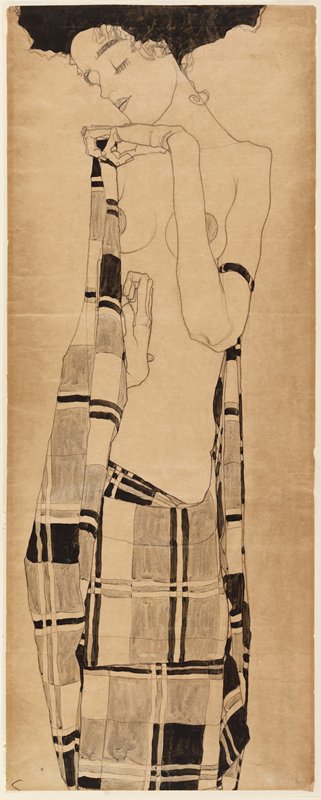
  3. Standing Girl
Standing Girl, Egon Schiele, c. 1910
Egon Schiele, PorträtEgon SchieleÖsterreich, 1890–1918

Standing Girl

c. 1910 · Drawing · 133 × 52.4 cm

Darf man es sehen?

Empfängt derzeit nicht

Minneapolis Institute of Art

Minneapolis, Vereinigte Staaten

Es gehört zur Sammlung, ist derzeit aber nicht ausgestellt.

Geprüft
vor 9 Tagen
Unverändert seit
25. Sept. 2026
Quelle
Das Museum
Auf der KarteMuseumsseite

Über das Werk

Standing Girl is the largest known drawing from Egon Schiele’s short but prolific career. His life played out against the backdrop of Sigmund Freud’s studies of the mind and intense debates about the treatment of human sexuality in the arts. Characteristic of early twentieth-century Viennese art, this provocative sheet—actually brown wrapping paper—epitomizes the era’s decorative ornamentation and decadent eroticism. Schiele’s contours, at once graceful and awkward, create a momentary confusion between bodily mass and negative space, laying open the mysterious relationship between inward and outward realities. Setting the figure’s clawlike hands against her virginal, downcast eyes, Schiele struck a balance between corruption and purity.

Minneapolis Institute of Art

Angaben

c. 1910
18901918
Inventarnummer
69.7

Im Katalog

Zeichnungen & AquarelleBleistiftModerne20. JahrhundertÖsterreich

Quellen

  • Minneapolis Institute of Art
  • Bild: Minneapolis Institute of Art — public domain

Derweil im Leben von Egon Schiele

Das ganze Leben
  1. 1908

    The first exhibition, in Klosterneuburg

    In 1908 Schiele’s first exhibition took place in the town of Klosterneuburg near Vienna, where he had earlier attended school.

  2. 1909

    Leaves the Academy and founds the Neukunstgruppe

    In 1909, after completing his third year, Schiele left the Academy and, with other dissatisfied students, founded the Neukunstgruppe (“New Art Group”). Imitations of Klimt and Oskar Kokoschka are visible in his first works, but he soon evolved his own distinctive style.

  3. 1909

    The 1909 Kunstschau: beside Klimt and Van Gogh

    In 1909 Klimt invited Schiele to exhibit some of his work at the Vienna Kunstschau, where he encountered the work of Edvard Munch, Jan Toorop, Vincent van Gogh and others.

  4. 1910

    Experiments with the nude and the birth of a style

    In 1910 Schiele began experimenting with nudes, and within a year a definitive style emerged: emaciated, sickly-coloured figures, often with strong sexual overtones. He also began painting and drawing children.

  5. 1911

    Meets Wally Neuzil

    In 1911, at the age of twenty-one, Schiele met the seventeen-year-old Wally Neuzil, who lived with him in Vienna and served as a model for some of his most striking paintings; she had previously modelled for Klimt.

  6. 1912

    Arrest, jail and trial in Neulengbach

    In April 1912 Schiele was arrested on suspicion of kidnapping and seducing a girl of thirteen: the police seized more than a hundred drawings from his studio that they considered pornographic, and while awaiting trial in custody he made a series of paintings of his jail cell. The charges were dropped, but he was found guilty of exhibiting erotic drawings in a place accessible to children: the judge burned one of the drawings over a candle flame, the 21 days already spent in custody were counted and a further three days’ imprisonment were added.
Mehr von Egon Schiele

Alle Werke
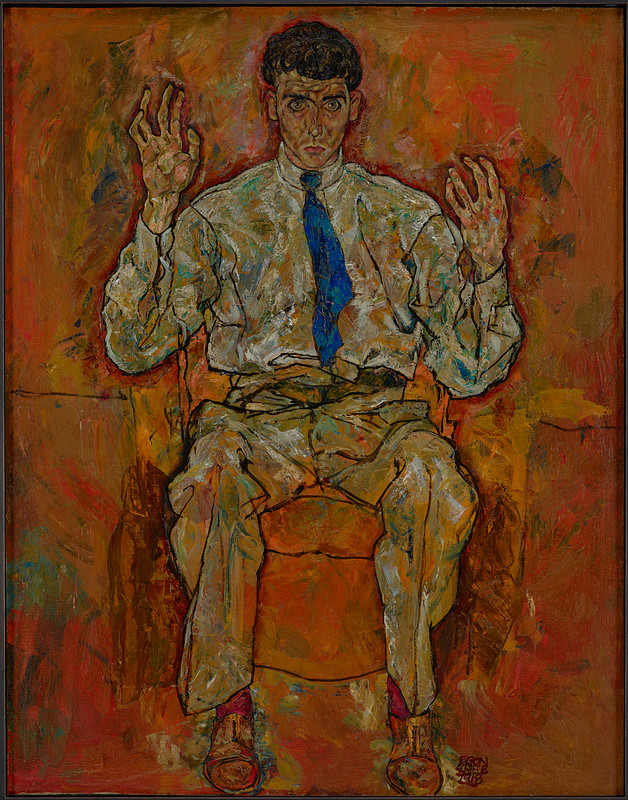
Portrait of Albert Paris von Gütersloh, Egon Schiele, 1918

Portrait of Albert Paris von Gütersloh

1918 · Minneapolis Institute of Art

Head of a Woman, Egon Schiele, 1908

Head of a Woman

1908 · Nicht ausgestellt · National Gallery of Art

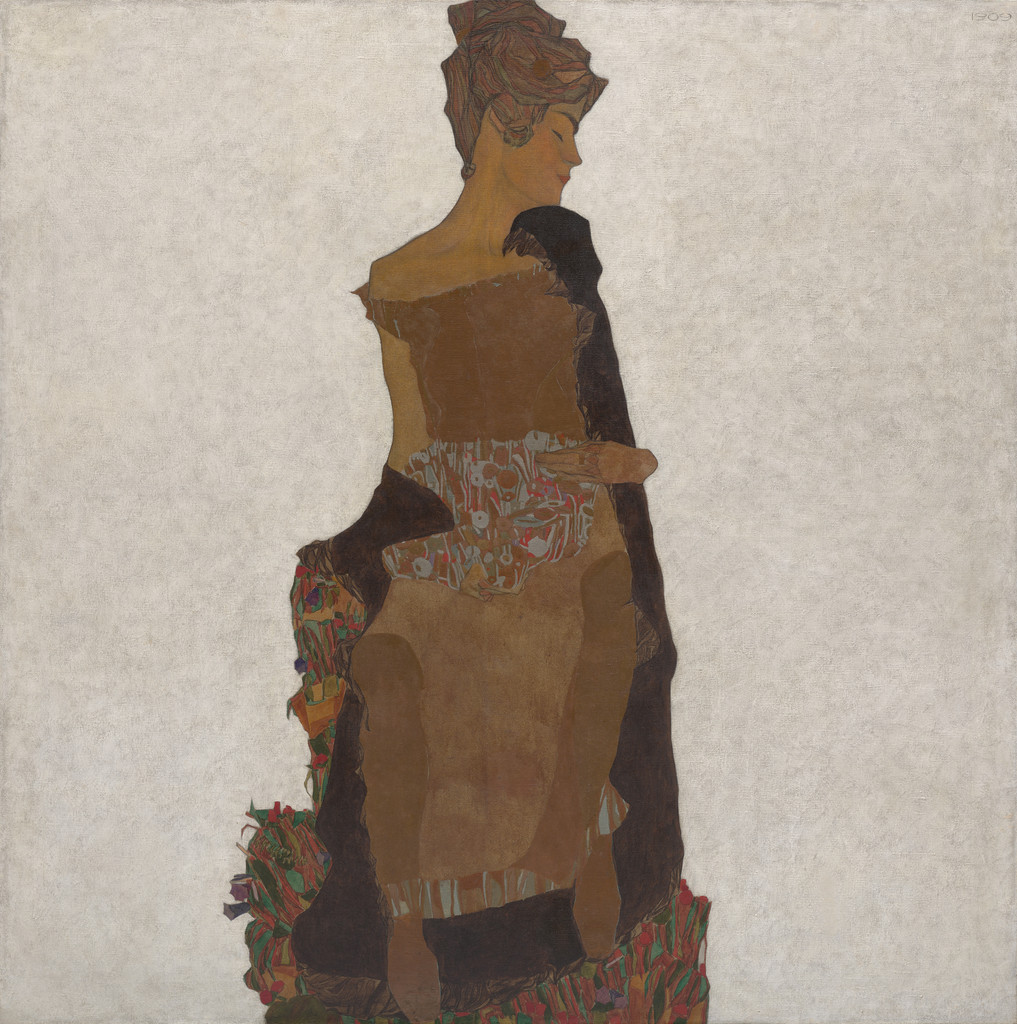
Portrait of Gerti Schiele, Egon Schiele, 1909

Portrait of Gerti Schiele

1909 · Nicht ausgestellt · Museum of Modern Art

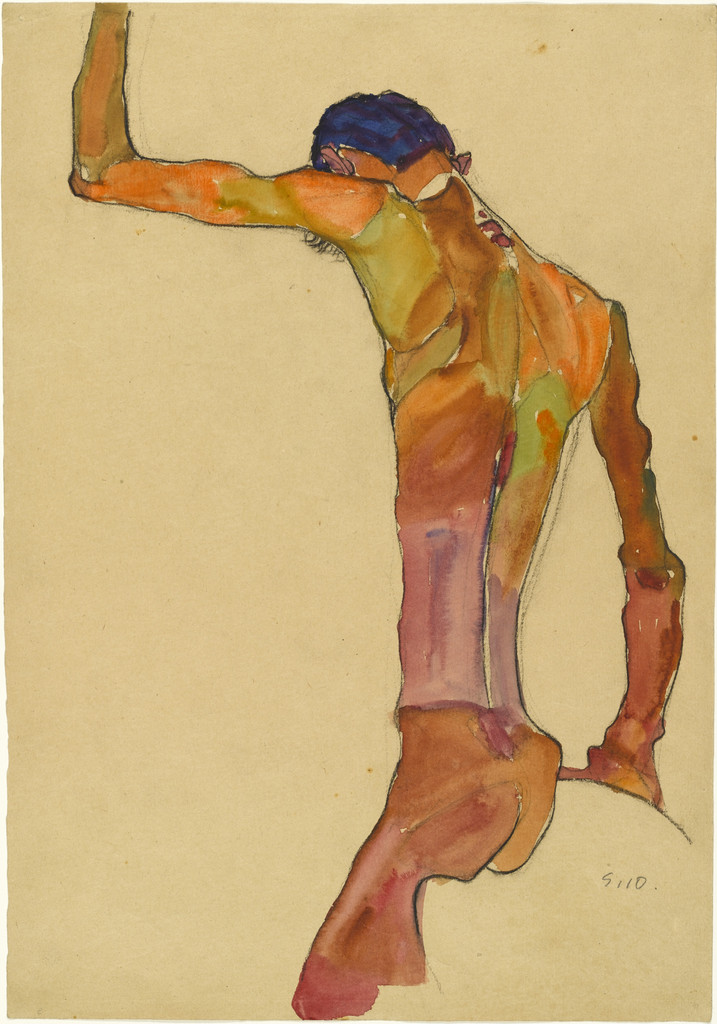
Standing Male Nude with Arm Raised, Back View, Egon Schiele, 1910

Standing Male Nude with Arm Raised, Back View

1910 · Nicht ausgestellt · Museum of Modern Art

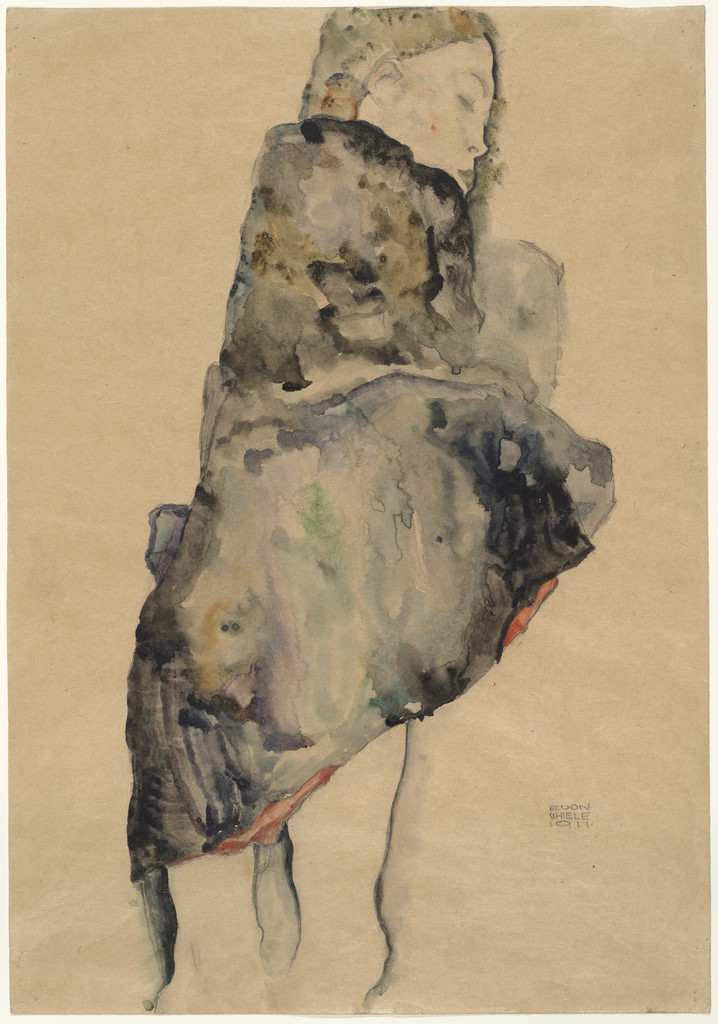
Standing Girl Wrapped in Blanket, Egon Schiele, 1911

Standing Girl Wrapped in Blanket

1911 · Nicht ausgestellt · Museum of Modern Art

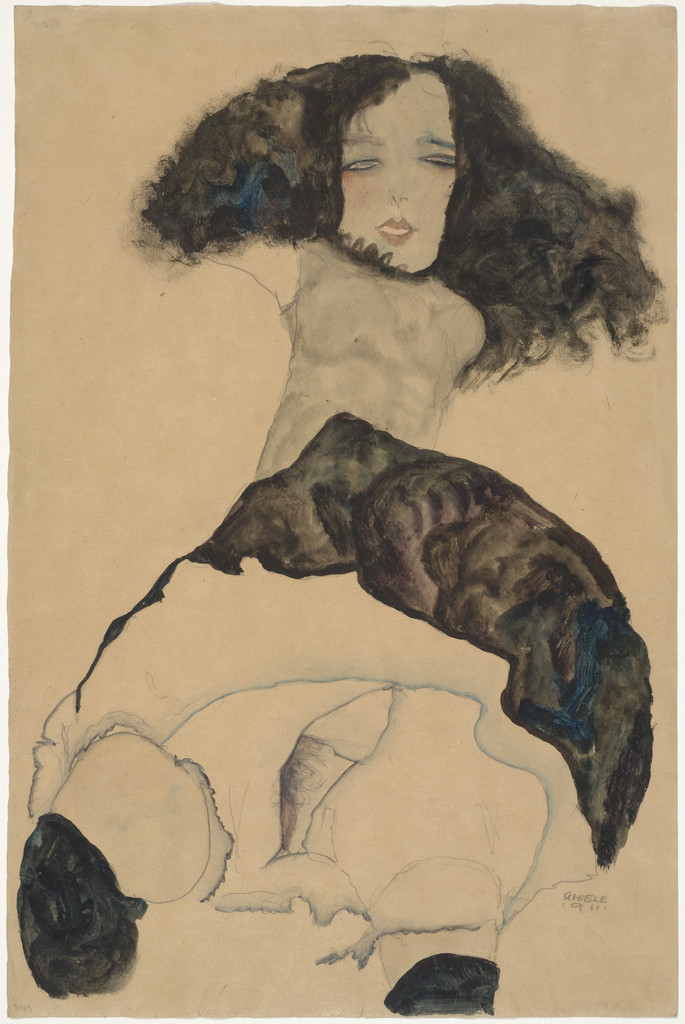
Girl with Black Hair (Mädchen mit schwarzem Haar), Egon Schiele, 1911

Girl with Black Hair (Mädchen mit schwarzem Haar)

1911 · Nicht ausgestellt · Museum of Modern Art

Self-Portrait, Egon Schiele, 1912

Self-Portrait

1912 · Nicht ausgestellt · National Gallery of Art

Nude with Violet Stockings and Black Hair (Akt mit violetten Strümpfen und schwarzem Haar), Egon Schiele, 1912

Nude with Violet Stockings and Black Hair (Akt mit violetten Strümpfen und schwarzem Haar)

1912 · Nicht ausgestellt · Museum of Modern Art

Nachbarn im Haus: Minneapolis Institute of Art

Museumsseite
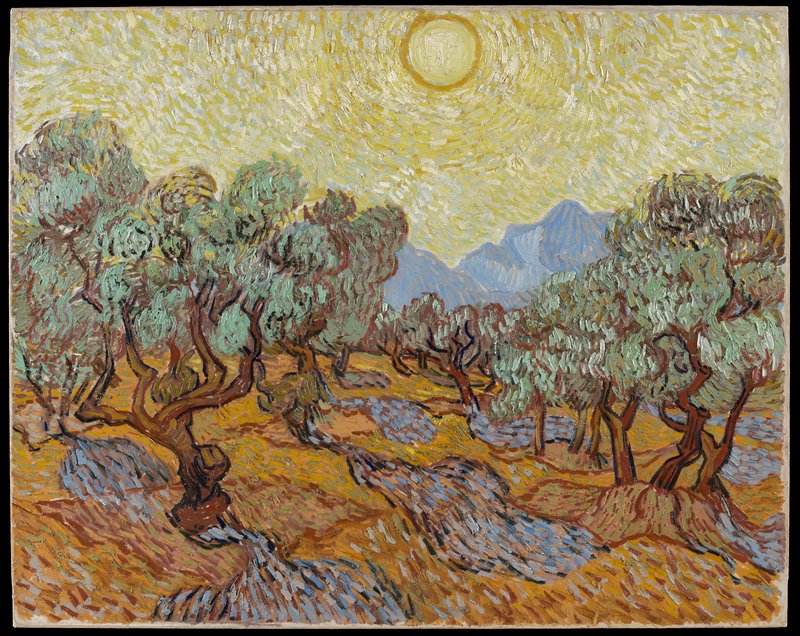
Olive Trees, Vincent van Gogh, 1889

Vincent van Gogh

Olive Trees, 1889

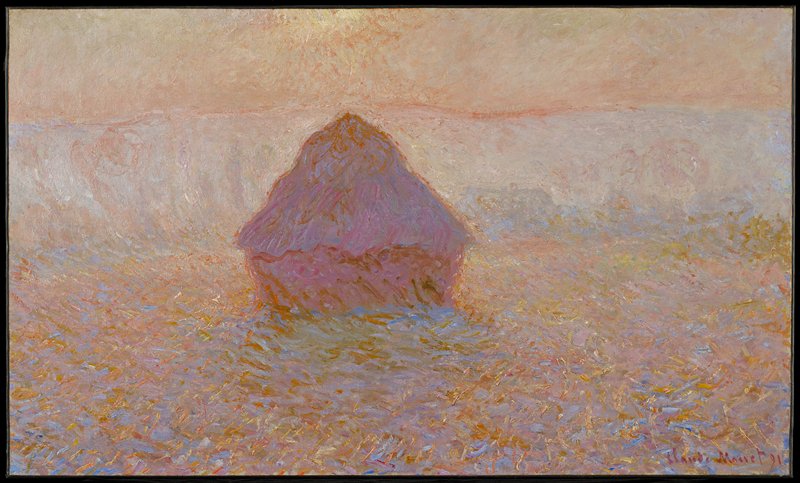
Grainstack, Sun in the Mist, Claude Monet, 1891

Claude Monet

Grainstack, Sun in the Mist, 1891

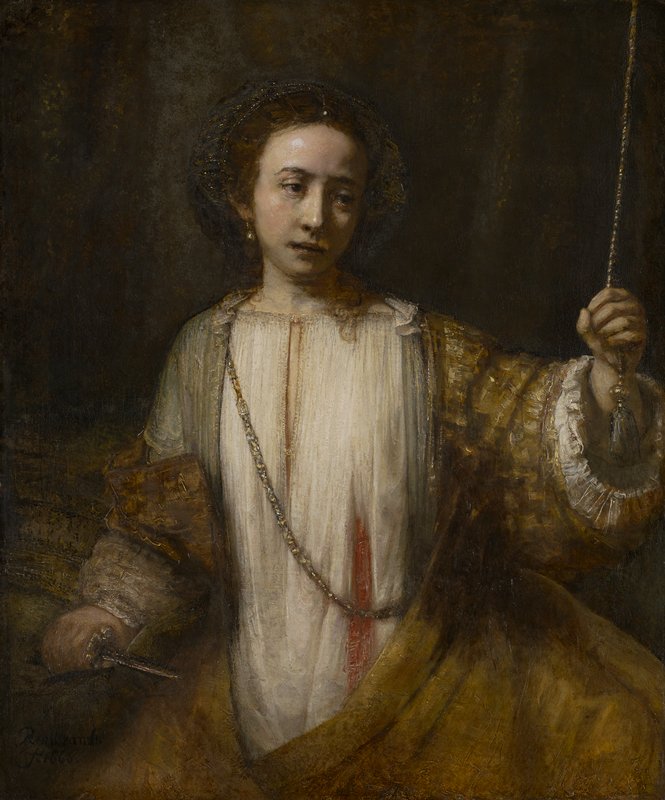
Lucretia, Rembrandt van Rijn, 1666

Rembrandt van Rijn

Lucretia, 1666

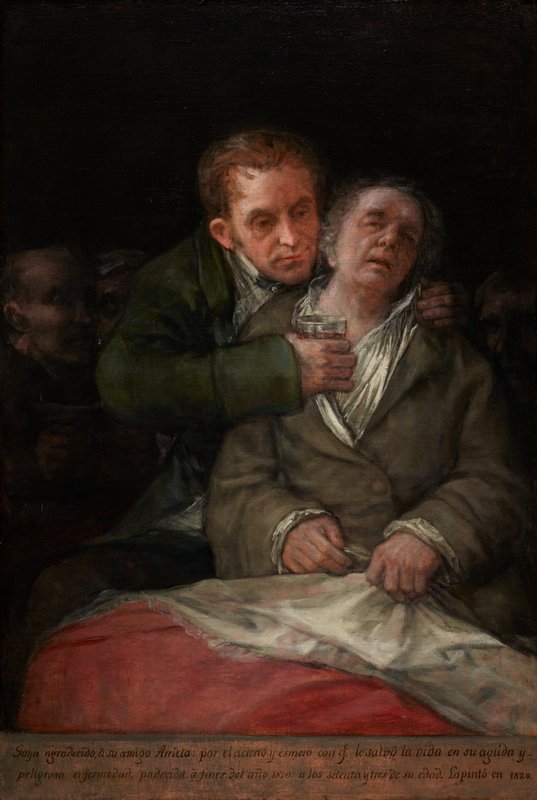
Self-Portrait with Dr. Arrieta, Francisco José de Goya y Lucientes, 1820

Francisco de Goya

Self-Portrait with Dr. Arrieta, 1820

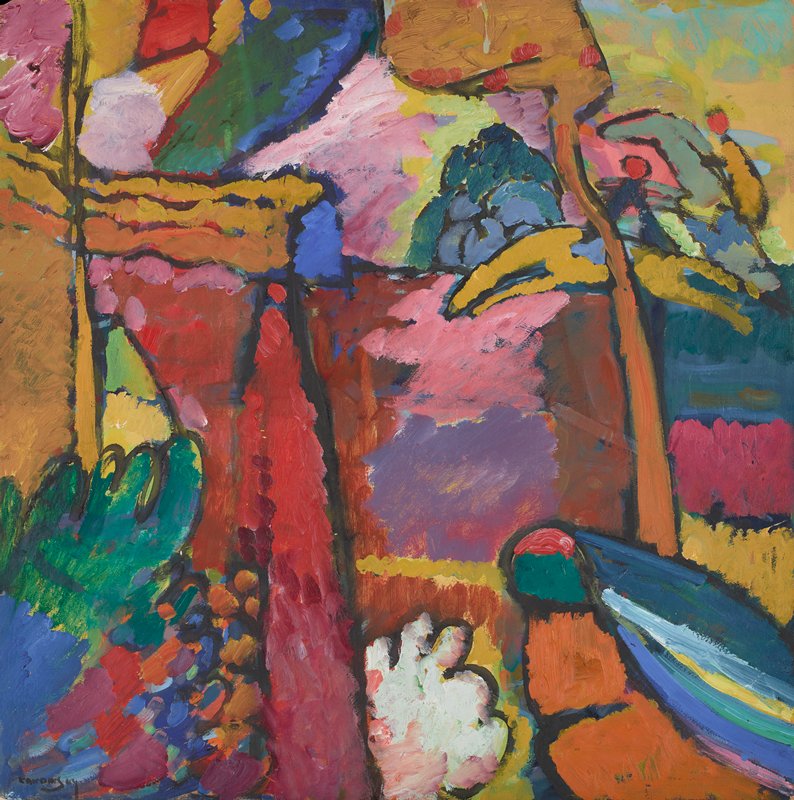
Study for Improvisation V, Vassily Kandinsky, 1910

Vasily Kandinsky

Study for Improvisation V, 1910

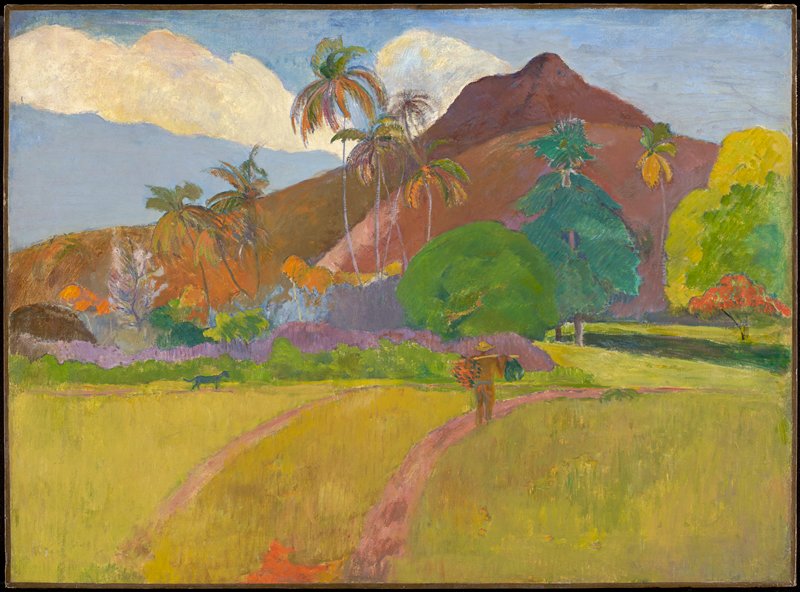
Tahitian Landscape, Paul Gauguin, 1891

Paul Gauguin

Tahitian Landscape, 1891

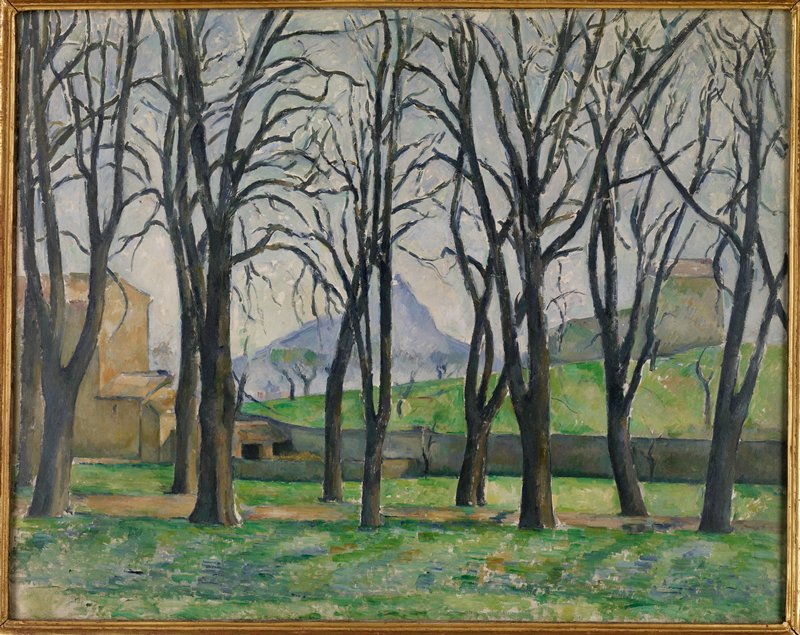
Chestnut Trees at Jas de Bouffan, Paul Cézanne, c. 1885–86

Paul Cézanne

Chestnut Trees at Jas de Bouffan, c. 1885–86

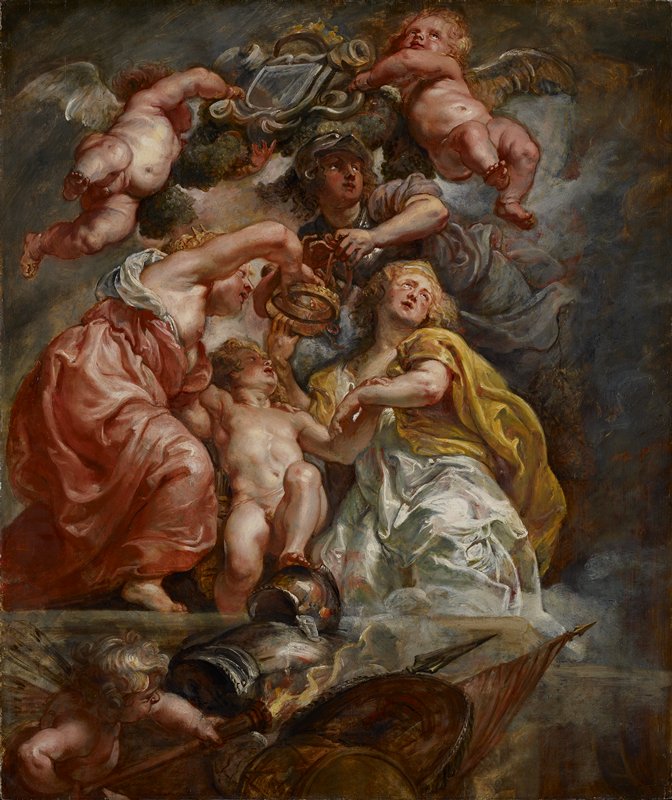
The Union of England and Scotland (Charles I as the Prince of Wales), Peter Paul Rubens, 1633–34

Peter Paul Rubens

The Union of England and Scotland (Charles I as the Prince of Wales), 1633–34