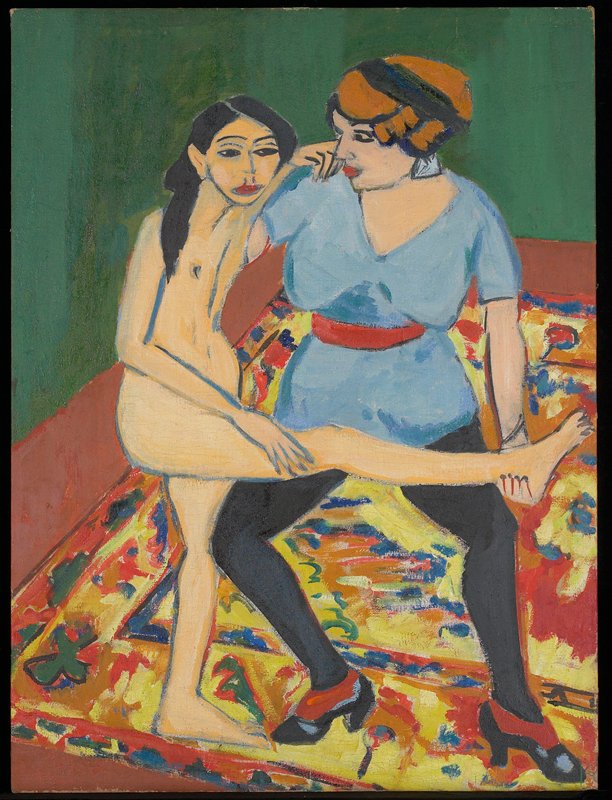
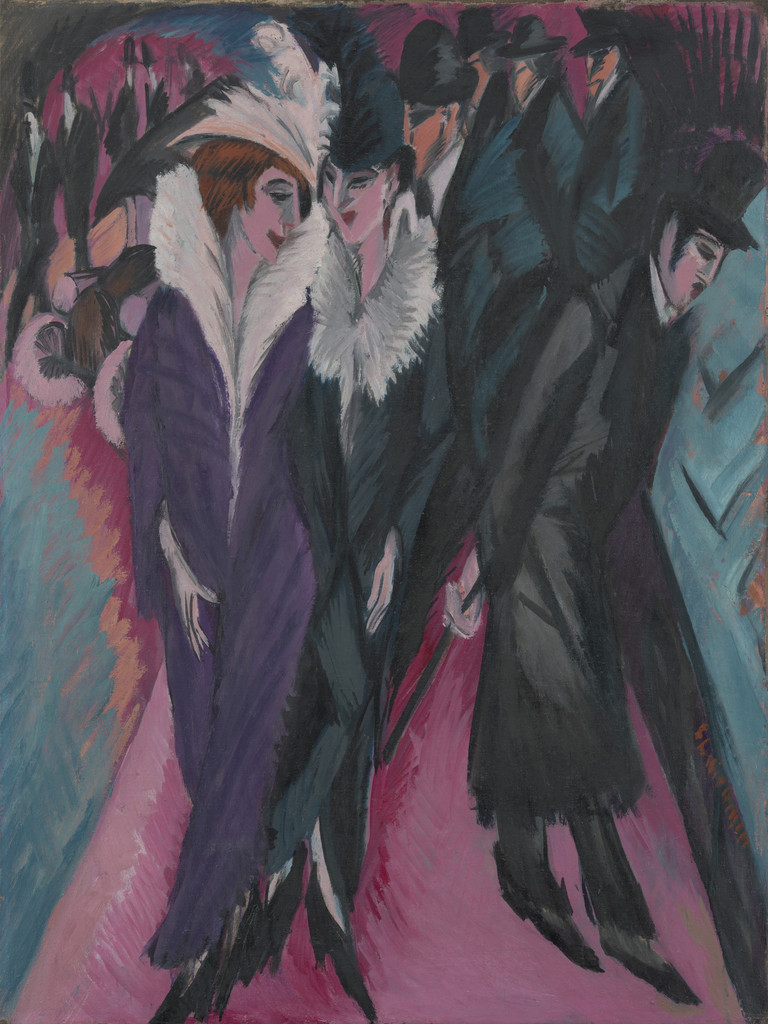
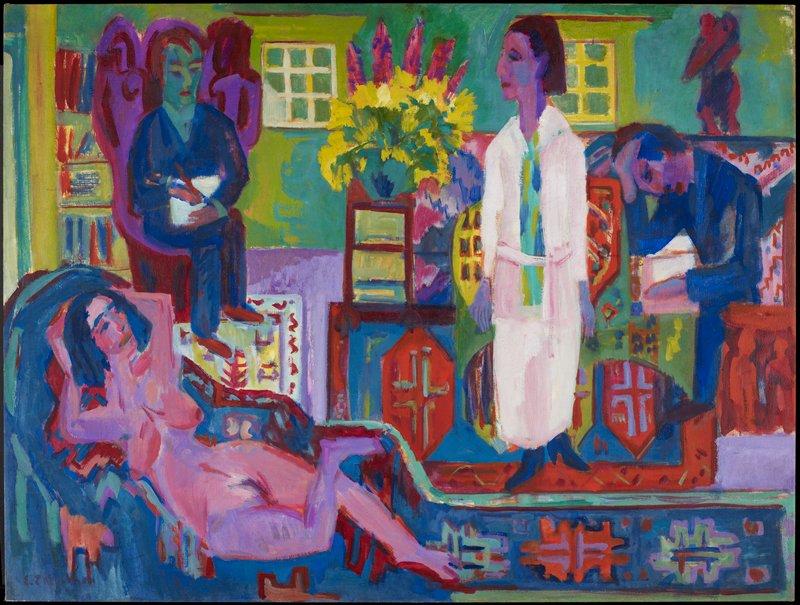
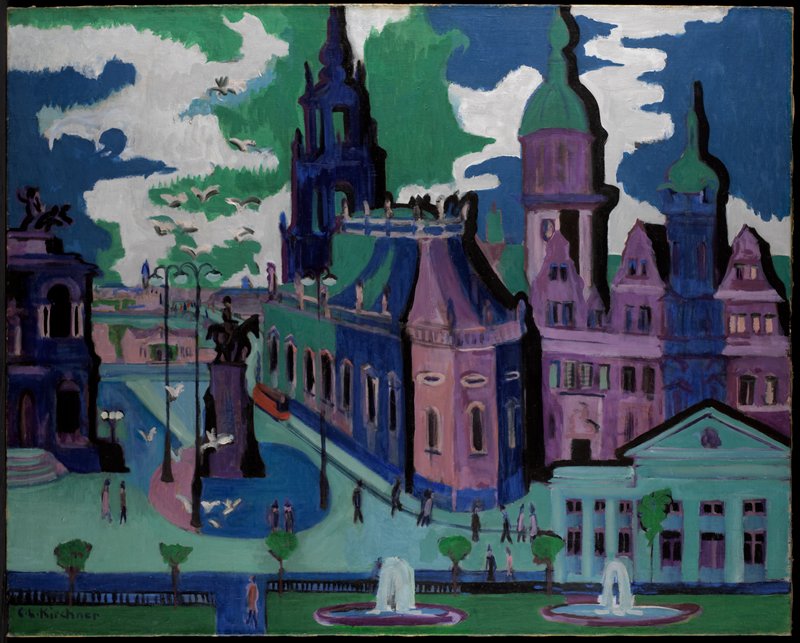
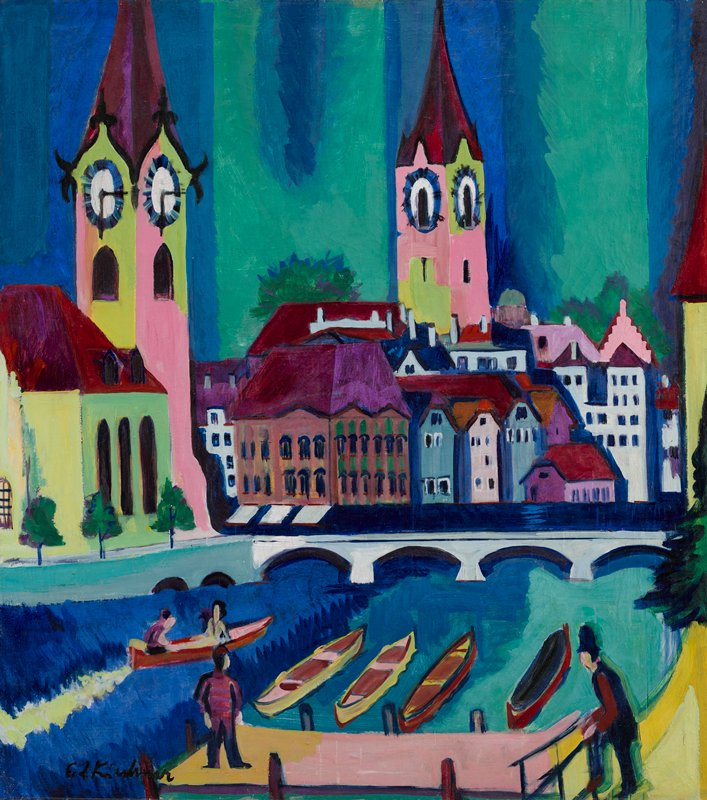
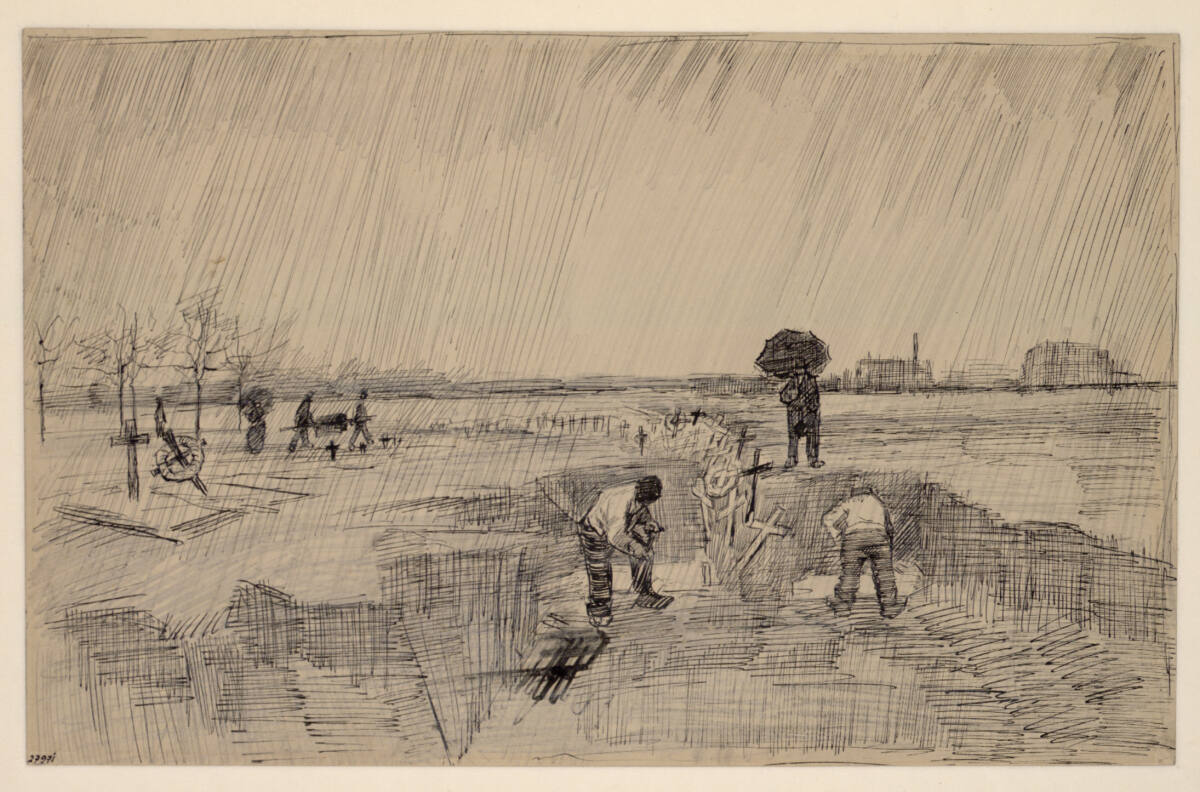
Ernst Ludwig KirchnerDeutschland, 1880–1938
Stafelalp
Darf man es sehen?
Unbekannt

Wien, Österreich
Der Besitzer ist bekannt; ob das Werk derzeit ausgestellt ist, nicht.
- Unverändert seit
- Quelle
- Das Museum
Angaben
Im Katalog
Quellen
- Albertina
- Bild: Albertina — Public Domain Mark 1.0
Derweil im Leben von Ernst Ludwig Kirchner
Das ganze Leben1914–1915
War as a “bloody carnival”
Kirchner saw the war as a “bloody carnival” and tried to cope with attacks of panic with alcohol and morphine.
1915
Driver training in Halle and discharge
In July 1915 Kirchner was sent to Halle an der Saale to train as a driver in the reserve unit of the 75th Mansfeld Field Artillery Regiment; after a mental breakdown his riding instructor, Professor Hans Fehr, arranged for Kirchner’s discharge from service.
1915
Dr. Kohnstamm’s sanatorium in Königstein
In December 1915 Kirchner was admitted to Dr. Oskar Kohnstamm’s sanatorium in Königstein (Taunus), where he was diagnosed with alcoholism and addiction to Veronal. To his friend and patron Dr. Karl Hagemann he wrote that he wanted more peace and absolute seclusion and longed more and more for his work and his studio.
1916
An exhibition in Frankfurt: many works sold
After an exhibition at Ludwig Schames’s gallery in Frankfurt am Main in October 1916 Kirchner sold many works and began to do well financially; throughout 1916 he returned to his Berlin studio for a few weeks at a time, and in Königstein he painted a series of oils and many drawings.
summer 1917
The Reusch Hut on the Stafelalp
Resenting Dr. Spengler’s constant watch and doing all he could to deceive him, Kirchner moved to the Reusch Hut on the Stafelalp in the summer of 1917; Erna Schilling stayed in Berlin, looking after the apartment and studio and keeping up commercial and personal contacts in Germany.
1918
Moves to the “In den Lärchen” farm in Davos
In 1918 Kirchner received a residence permit and moved to the “In den Lärchen” farm above Längmatte in Davos — first renting a room in the upper hut, and in 1919 the rooms above — and furnished it with furniture he carved himself; he wrote to Henry van de Velde of a beautiful old Grisons house with a kitchen like Rembrandt’s studio.
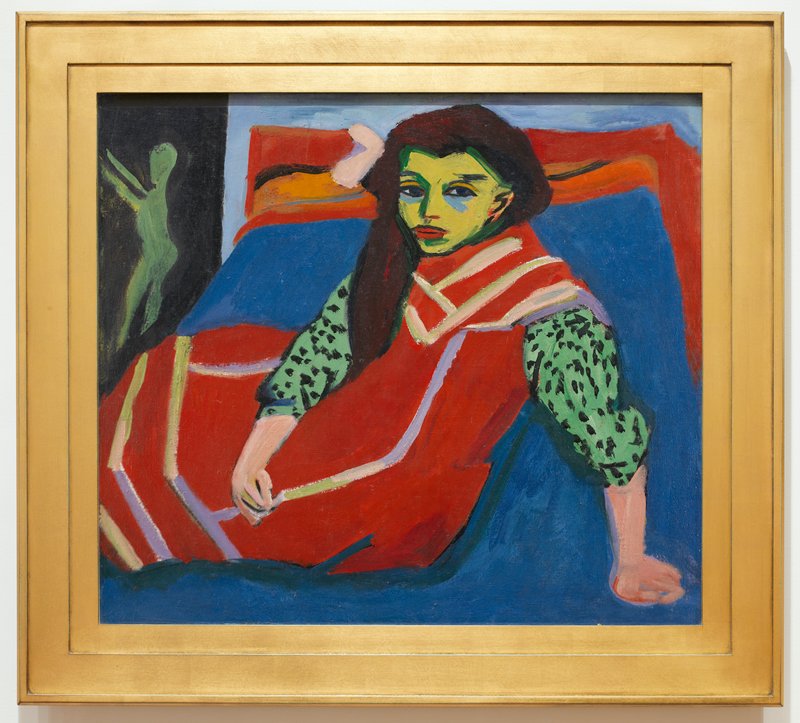
![Dance Hall Bellevue [obverse], Ernst Ludwig Kirchner, 1909/1910](https://api.nga.gov/iiif/634157b6-d0fd-4a63-b93b-0dc1eb6c03d3/full/!2400,2400/0/default.jpg)