Camille CorotFrankreich, 1796–1875
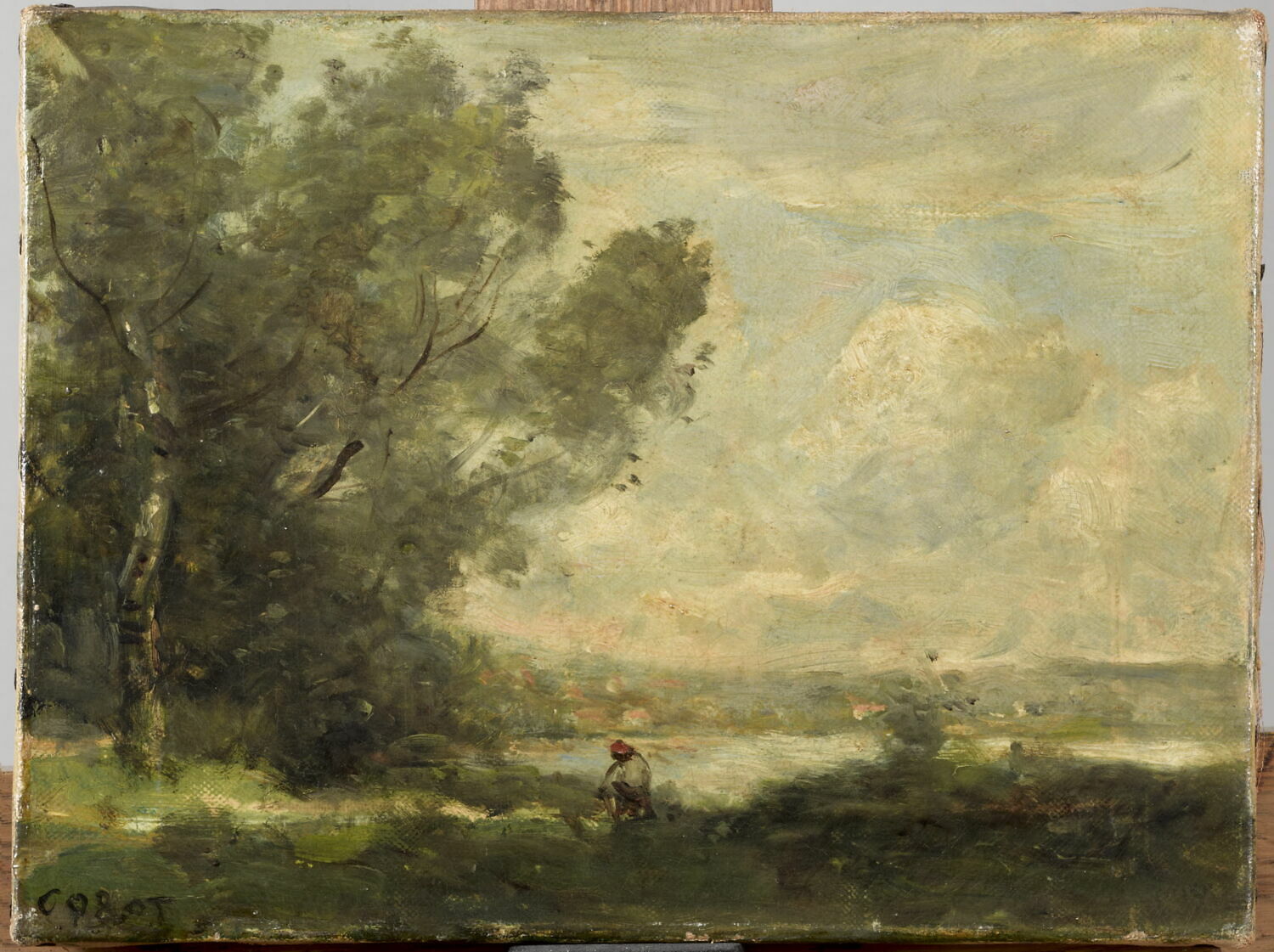
Sous bois
Kann ich es sehen?
Unbekannt
Wo ist „Sous bois“ heute? Sammlung: Musée Louis-Français, Plombières-les-Bains. Unbekannt.
Plombières-les-Bains, Frankreich
Der Besitzer ist bekannt; ob das Werk derzeit ausgestellt ist, nicht.
- Unverändert seit
- Quelle
- Das Museum
Über das Gemälde
In den Worten des Museums — auf Französisch
Le tableau représente un sous-bois. Une rivière s'écoule au premier plan et semble finir en petite cascade en bas à droite du tableau. En arrière plan, des arbres et une forêt s'étendent sur tout le reste de la surface du tableau. Un léger espace en haut à gauche est laissé pour faire apparaître le ciel bleu et quelques nuages.
Musée Louis-Français
Angaben
- Inventarnummer
- 504 ; Cat. Béthune (1913)
Was es zeigt
Im Katalog
Quellen
- Musée Louis-Français
- Bild: Musée Louis-Français — © Musée Louis Français - Plombières les Bains ?; Ministère de la Culture (France), base Joconde
Im Leben von Camille Corot
Das ganze Leben1807–1812 · Ausbildung
Lycée Pierre-Corneille
1822
His father consents to an artist's career
At 26 Corot won his father's consent to adopt the profession of art; he later recalled telling his father that business and he were simply incompatible and that he was getting a divorce.
1825–1828
First trip to Italy
With his parents' support Corot went to Italy to study the Renaissance masters and draw the crumbling monuments of antiquity; his parents' condition was that he paint a self-portrait for them, his first. In three years he completed over 200 drawings and 150 paintings, worked and travelled with several young French painters, and spent most of his time around Rome and in the Italian countryside.
1827
Salon debut: “View at Narni”
In 1827 Corot sent his first painting to the Salon, “View at Narni”. He transformed a quick study of a ruined Roman aqueduct in bright sun into an idyllic pastoral setting with giant shade trees and green lawns, a conversion meant to appeal to the Neoclassical jurors.
1835
A sensation at the Salon: “Hagar in the Wilderness”
In 1835 Corot created a sensation at the Salon with his biblical painting “Hagar in the Wilderness”, showing Hagar and the child Ishmael dying of thirst until saved by an angel; his bold, fresh statement of the Neoclassical ideal succeeded with the critics. The biblical and mythological subjects that followed did not succeed as well, as the critics found him wanting in comparison with Poussin.
22. Februar 1875
Died