Käthe KollwitzDeutschland, 1867–1945
Self-Portrait at a Table
Darf man es sehen?
Unbekannt: Das Museum schweigt sich aus

Rijksmuseum Amsterdam
Amsterdam, Niederlande
Der Eigentümer ist bekannt. Ob es heute ausgestellt ist, sagt das Museum nicht, und Raten haben wir nicht gelernt.
- Quelle
- Sammlungsdaten des Museums selbst
Über das Werk
Käthe Kollwitz is one of the most famous female artists of the early 20th century, best known for her socially engaged work and numerous, penetrating self-portraits. This one dates from the beginning of her career. Kollwitz depicted herself at a table, seated under a bright lamp. In this way she was able to work out the strong contrasts of light and dark in the etching.
Rijksmuseum Amsterdam
Angaben
- Inventarnummer
- RP-P-2011-36-129
What it shows
Im Katalog
Quellen
- Rijksmuseum Amsterdam: the museum's own open data · abgerufen vor 7 Tagen
- Bild: Rijksmuseum Amsterdam — public domain
Derweil im Leben von Käthe Kollwitz
Das ganze Leben1891
Marries the physician Karl Kollwitz
She married Karl Kollwitz, a doctor who tended the poor of Berlin; the couple moved into a large apartment that remained her home until it was destroyed in the Second World War. Her husband’s nearby practice supplied motifs from the lives of workers, which, in her own words, she found beautiful.
13. Juni 1891
Married: Karl Kollwitz
1892
Birth of her son Hans
In 1892 Käthe and Karl Kollwitz’s elder son, Hans, was born.
14. Mai 1892
Son born: Hans Kollwitz
1892–1896
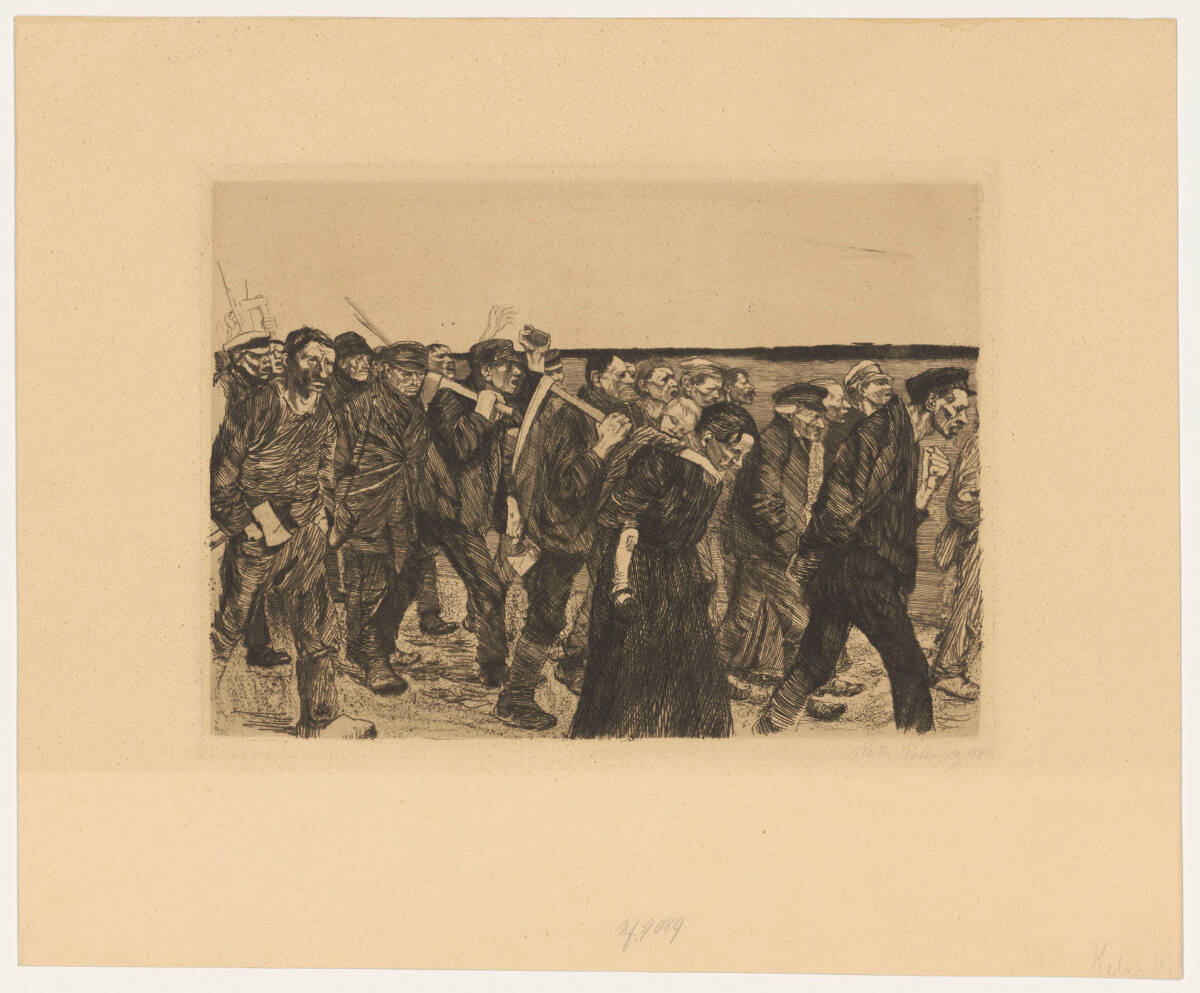
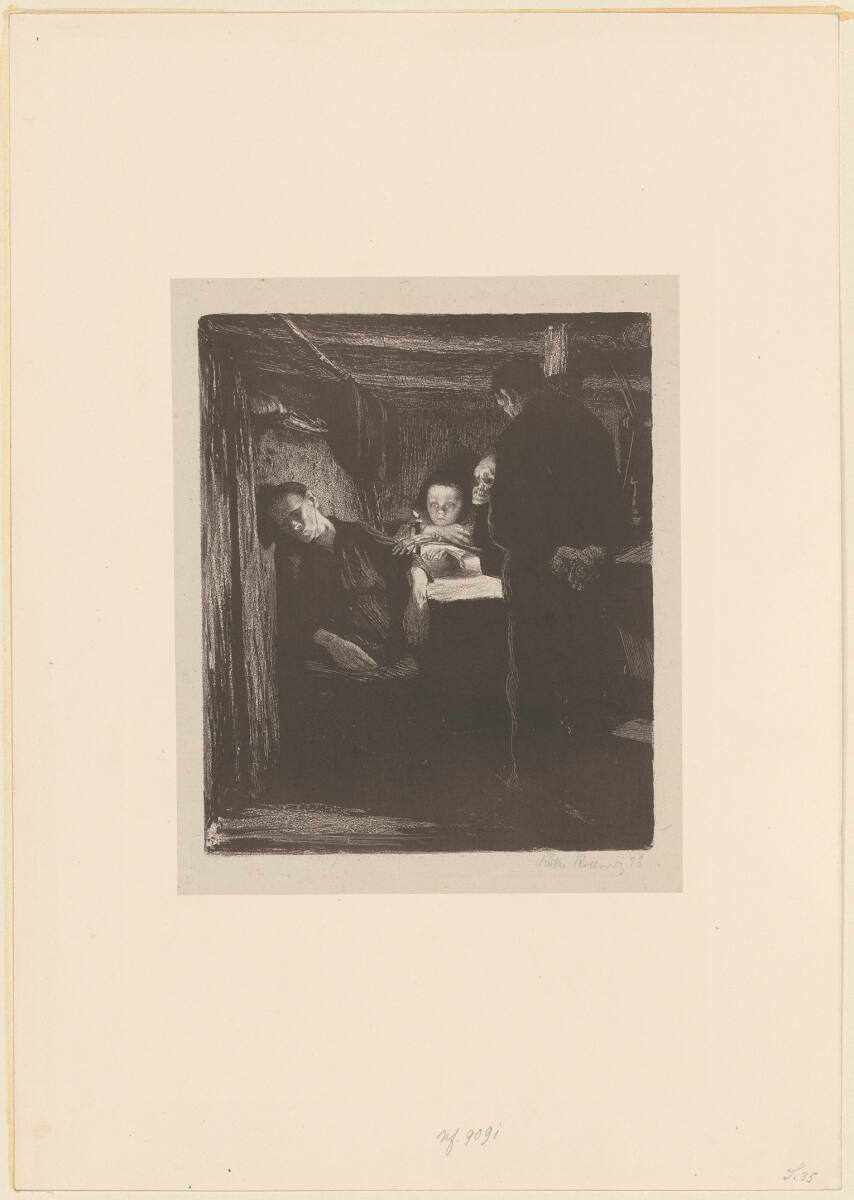
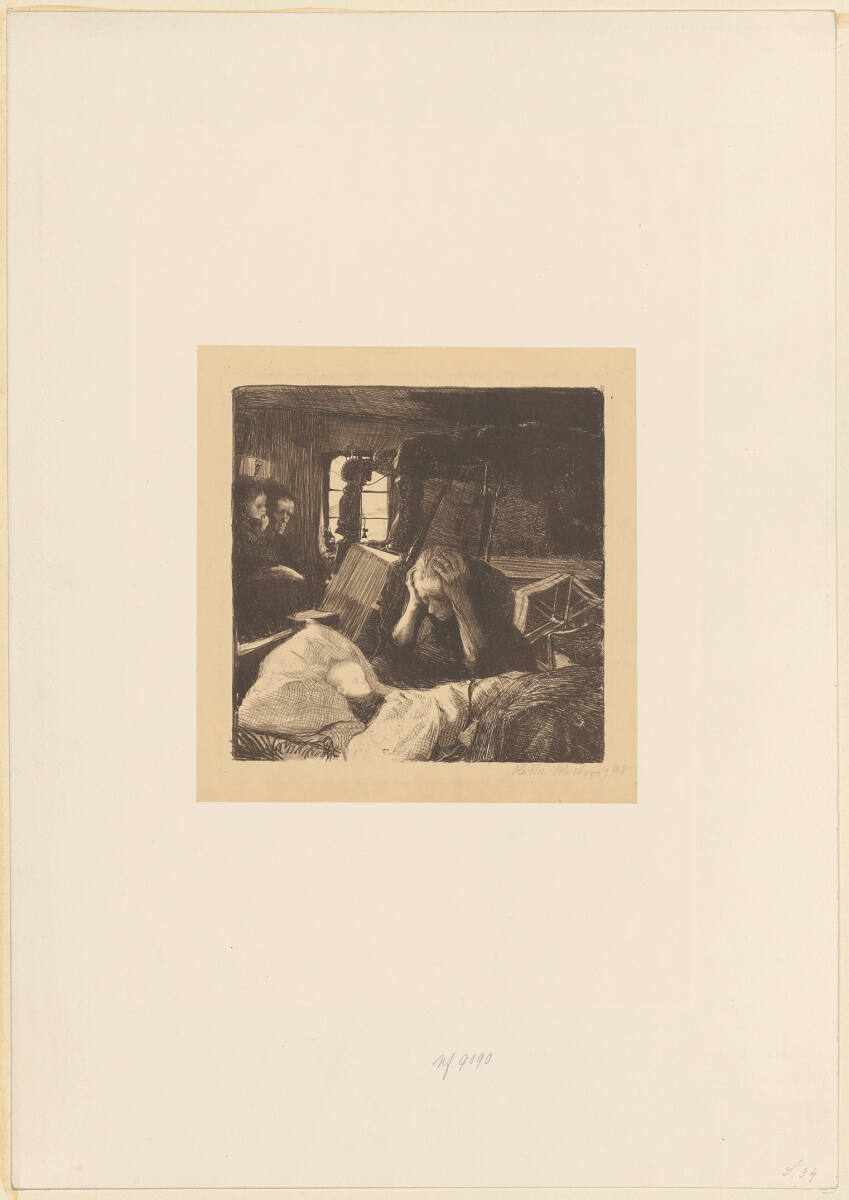
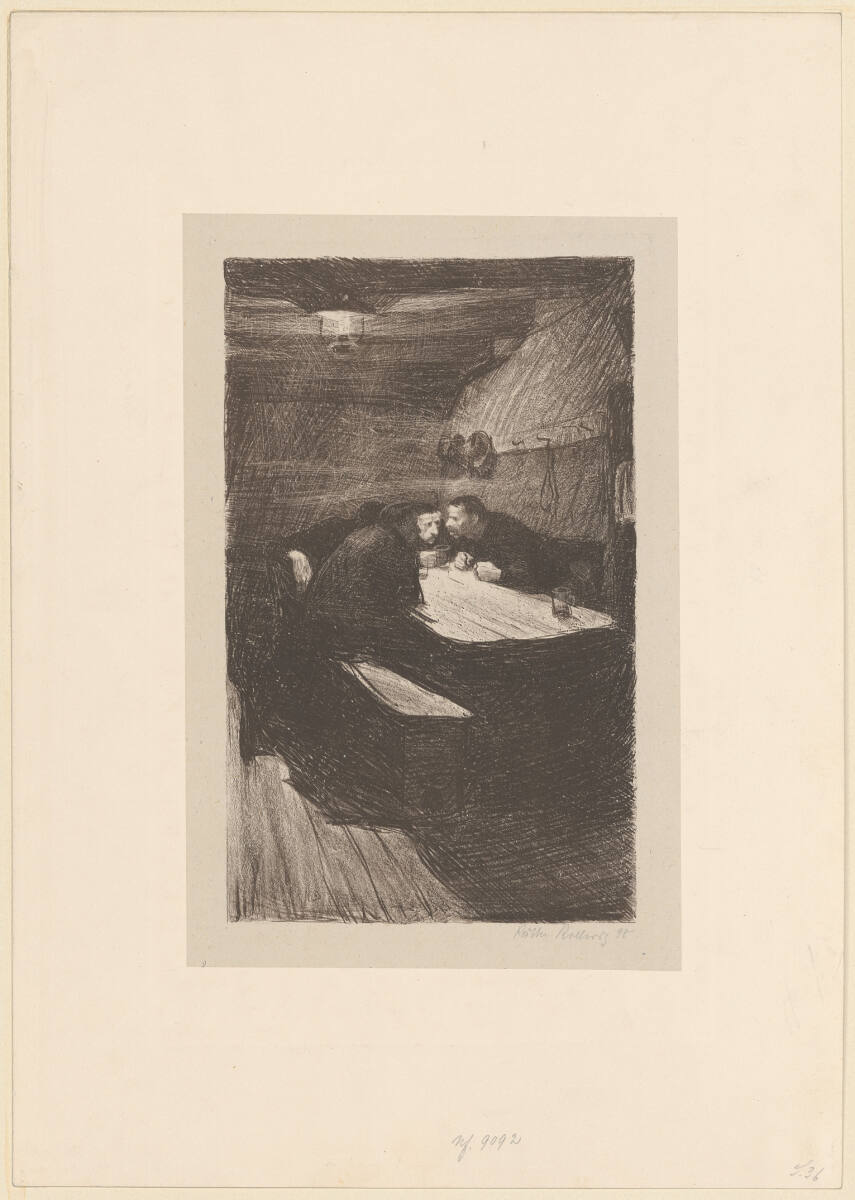
Hauptmann’s “The Weavers” inspires a new cycle
Between the births of her sons Hans and Peter she saw Gerhart Hauptmann’s play The Weavers, about the failed revolt of the Silesian weavers in Langenbielau in 1844. It inspired her to drop a series of etchings she had planned to illustrate Émile Zola’s Germinal and to produce a cycle on the weavers instead.