ART WIKI32.963 ausgestellt
KarteSammlungKünstlerMuseenAusstellungenJournal
Anmelden

ART WIKI

Wo das Meisterwerk hängt und wann man vorgelassen wird.

Sammlungen: Art Institute of Chicago, Cleveland Museum of Art, Eremitage, Getty Villa, Harvard Art Museums, Hirshhorn Museum and Sculpture Garden, J. Paul Getty Museum, Louvre, Metropolitan Museum of Art, Minneapolis Institute of Art, Museum of Modern Art, National Gallery of Art, National Museum of Asian Art, National Portrait Gallery, Puschkin-Museum, Rijksmuseum Amsterdam, Russisches Museum, Smithsonian American Art Museum, Statens Museum for Kunst, Tretjakow-Galerie, Victoria and Albert Museum, Whitney Museum of American Art, Staatskatalog des Museumsfonds Russlands (274 Museen), Europeana (19 Museen), Wikidata (6 Museen), Paris Musées (12 Museen) und Joconde, die Museumsdatenbank des französischen Kulturministeriums (495 Museen). Die Bilder gehören ihren Rechteinhabern.

Rubriken

  • Karte
  • Suche
  • Sammlung
  • Meisterwerke
  • Jetzt ausgestellt
  • Künstler

Mehr

  • Museen & Galerien
  • Ausstellungen
  • Journal
  • Woher die Daten stammen
  • Datenschutz & Cookies
StartseiteKarteKatalog
  1. Sammlung/
  2. Cleveland Museum of Art/
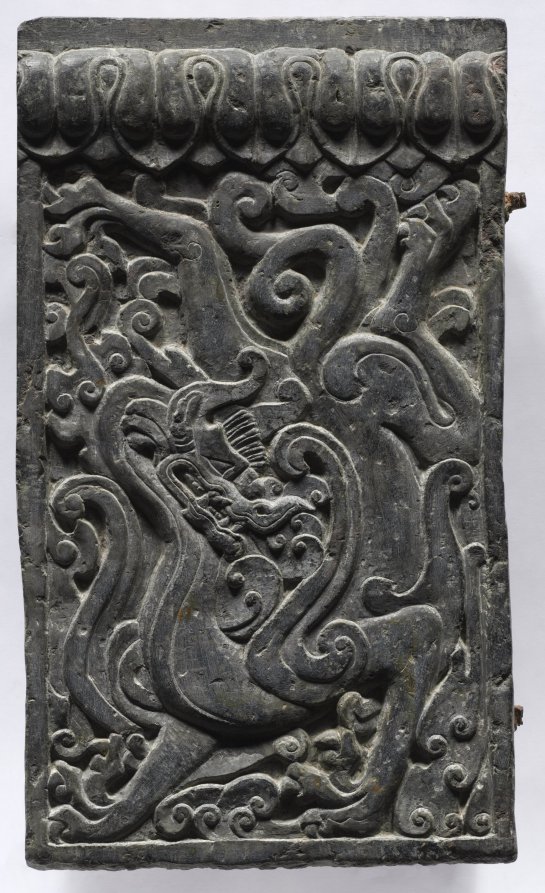
  3. Section of a Coffin Platform: Dragon
Section of a Coffin Platform: Dragon, 550–77

Section of a Coffin Platform: Dragon

550–77 · Sculpture

Über die Skulptur

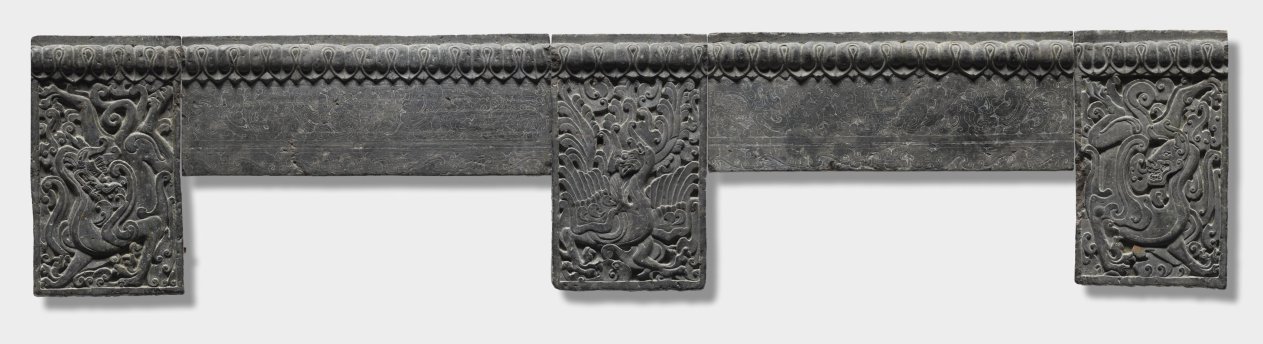
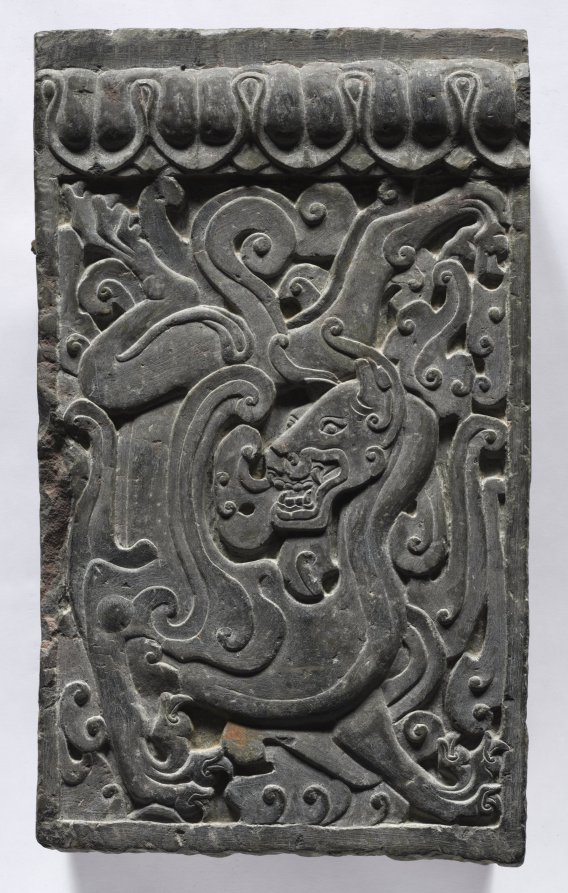
This richly ornamented stone construction is the long, front side of a coffin platform ultimately derived from raised wooden beds that are still popular in China today. Now in five pieces (presumably cut to facilitate transportation after it was excavated in the 1900s), the three legs and horizontal spans may have originally been created as a single massive slab. Sockets cut in the top of the stone (some of which overlap the modern divisions) show how this slab would have been linked to the back with crosspieces also capable of supporting a top surface of flat stone planks.

Weiterlesen

Like the few examples discovered intact in northern Chinese aristocratic tombs, the most elaborate decoration occurs on the front surface of the coffin platform. The design is dominated by the three large vertical panels, corresponding to the legs, that contain animated high-relief depictions of three directional guardians: the White Tiger of the West, the Red Bird of the South, and the Green Dragon of the East. These three, along with the Snake-Entwined Tortoise of the North and the Yellow Dragon of the Center, were mainstays of Chinese cosmology linked, in a system devised as early as the Han dynasty, to elements (wood, fire, earth, metal, and water), functions, planets, and musical tones, among others.

Not only illustrating the persistent appeal of these traditional apotropaic symbols, this scheme suggests that the platform was placed against the back, northern wall of a tomb that would have been entered from the south. The layered carving technique of these principal motifs as well as the shallow relief dragons, masks, and tendrils engraved in the horizontal spans recall forms found in both imperially sponsored tombs and cave chapels of the late sixth century.

Cleveland Museum of Art

Angaben

Inventarnummer
1982.260.e

Im selben Saal · 241B Arts of Ancient China, Cleveland Museum of Art

Museumsseite

Darf man es sehen?

Ja, es empfängt Besucher

Cleveland Museum of Art

Cleveland, Vereinigte Staaten

Saal241B Arts of Ancient China

Öffentlich ausgestellt. Wer dafür bürgt, steht unten.

Geprüft
vor 3 Tagen
Unverändert seit
19. Aug. 2026
Quelle
Das Museum
Auf der KarteMuseumsseite

Im Katalog

SkulpturSteinChina, Northern Qi dynasty (550-577)

Quellen

  • Cleveland Museum of Art
  • Bild: Cleveland Museum of Art — Museum open access
Sections of a Coffin Platform, 550–577

Sections of a Coffin Platform, 550–577

Winged Chimera (Bixie), 400s CE

Winged Chimera (Bixie), 400s CE

Dog, 25–220 CE

Dog, 25–220 CE

Fang Xuanling Pedestal, 647

Fang Xuanling Pedestal, 647

Section of a Coffin Platform: Feline, 550–77

Section of a Coffin Platform: Feline, 550–77

Seated Amitayus Buddha, c. 570s

Seated Amitayus Buddha, c. 570s

Mat Weight in the Form of a Bear, 202 BCE–9 CE

Mat Weight in the Form of a Bear, 202 BCE–9 CE