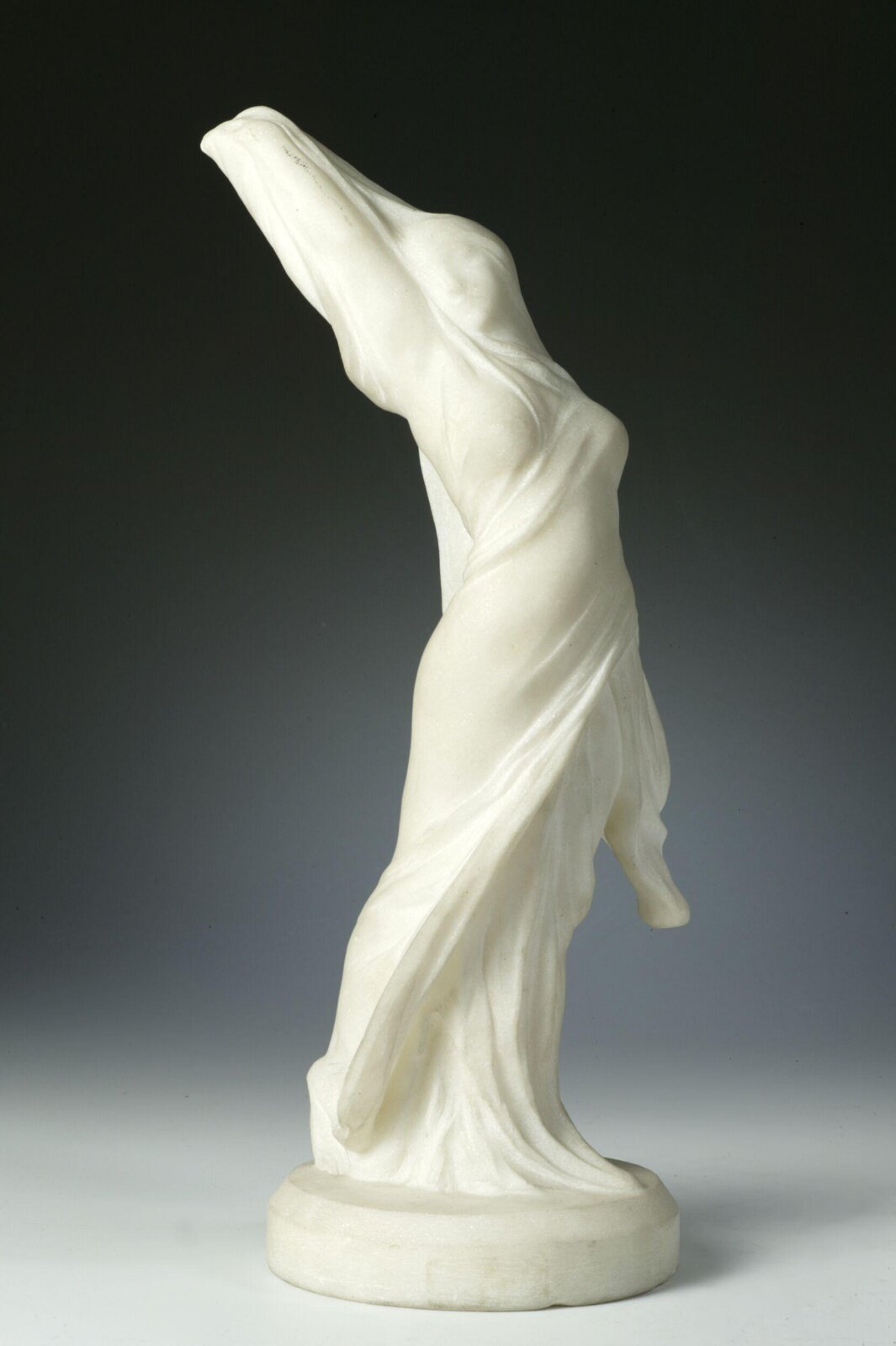
 Théodore RivièreFrankreich, 1857–1912
Sculpture
Darf man es sehen?
Empfängt derzeit nicht

Victoria and Albert Museum
London, Vereinigtes Königreich
Es gehört zur Sammlung, ist derzeit aber nicht ausgestellt.
- Geprüft
- Unverändert seit
- Quelle
- Sammlungsdaten des Museums selbst
About the sculpture
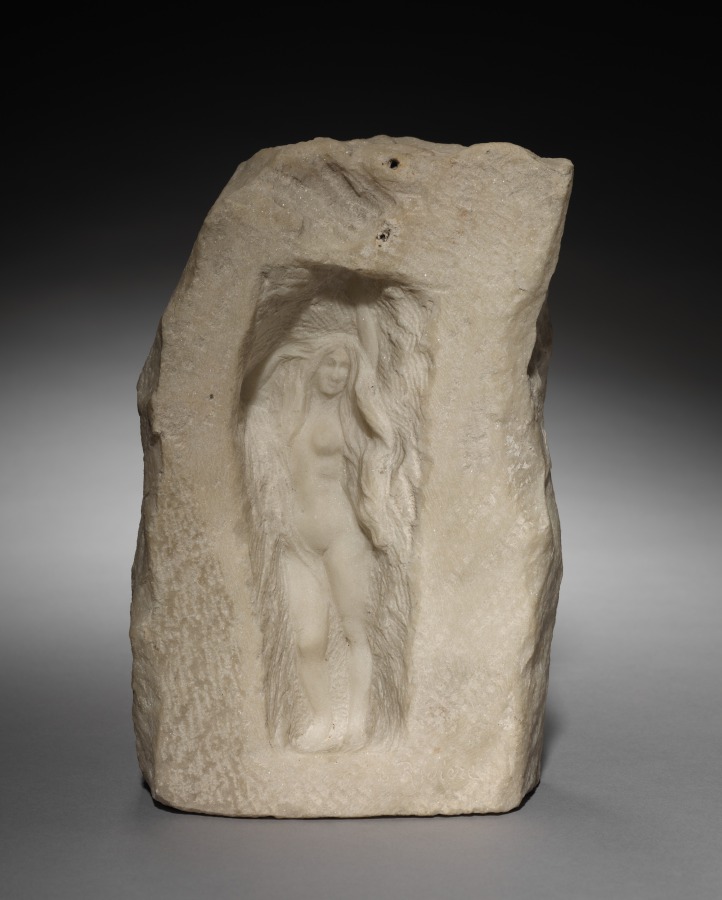
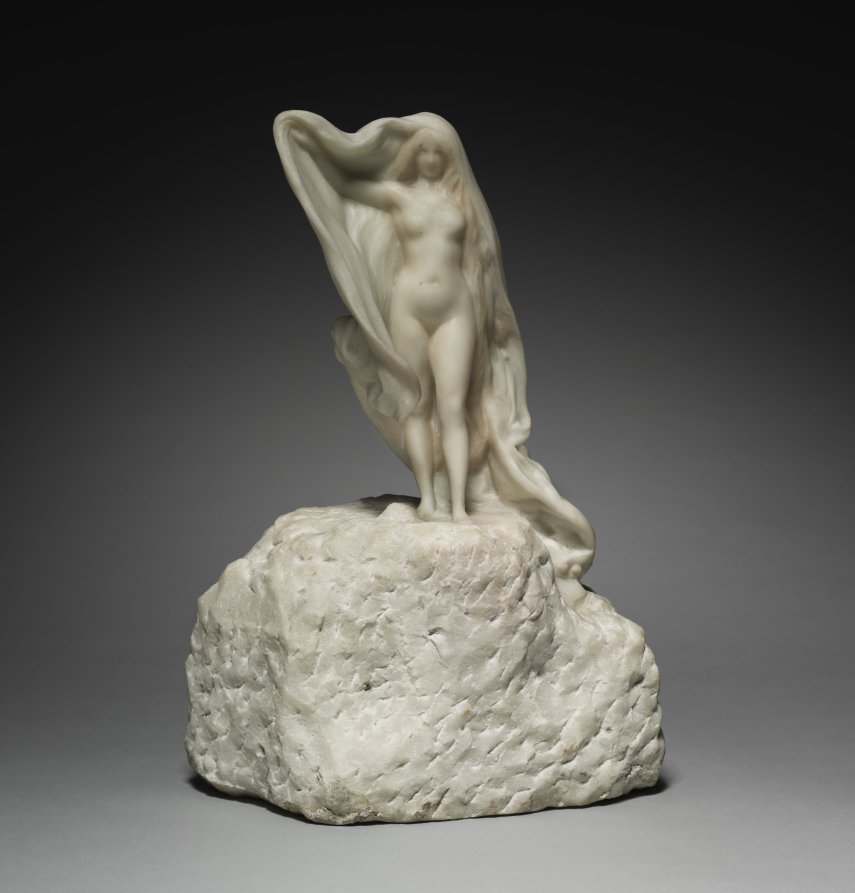
The American dancer Loïe Fuller (1870-1928) in her diaphanous white costume is the subject of this marble by the French sculptor Théodore Rivière (1857-1912). Rivière took advantage of the relatively new art of photography to make it, using reference photographs which he took of her dancing in a park in Paris in 1896.
Read on
Loïe Fuller made her Paris début at the Folies Bergères in 1893, performing the Serpent Dance, the Violet Dance, the Butterfly Dance and the White Dance - abstract dances which had made her famous in New York as an 'artistic, scientific and revolutionary spectacle'. Her dances depended on the changing effects of coloured spotlights on the white drapery which she formed into flowing shapes as she danced, sometimes by manipulating long batons attached to the fabric. The French poster artist Jules Chéret created his first poster for her in four colour combinations to reflect the various lighting effects of each dance. Modern audiences are so used to sophisticated theatre lighting that it is easy to underestimate the spectacular and revolutionary effect of Loïe Fuller's lighting to audiences of the 1890s, barely a decade after electric lighting was first used in the theatre. Loïe 'the triumph of electricity', was lit by spotlights from above, below, and behind.
Victoria and Albert Museum
Angaben
- Inventarnummer
- S.43-1976
What it shows
Im Katalog
Quellen
- Victoria and Albert Museum: the museum's own open data · abgerufen vor 10 Tagen
- Bild: Victoria and Albert Museum — © Victoria and Albert Museum, London