ART WIKI32.963 ausgestellt
KarteSammlungKünstlerMuseenAusstellungenJournal
Anmelden

ART WIKI

Wo das Meisterwerk hängt und wann man vorgelassen wird.

Sammlungen: Art Institute of Chicago, Cleveland Museum of Art, Eremitage, Getty Villa, Harvard Art Museums, Hirshhorn Museum and Sculpture Garden, J. Paul Getty Museum, Louvre, Metropolitan Museum of Art, Minneapolis Institute of Art, Museum of Modern Art, National Gallery of Art, National Museum of Asian Art, National Portrait Gallery, Puschkin-Museum, Rijksmuseum Amsterdam, Russisches Museum, Smithsonian American Art Museum, Statens Museum for Kunst, Tretjakow-Galerie, Victoria and Albert Museum, Whitney Museum of American Art, Staatskatalog des Museumsfonds Russlands (274 Museen), Europeana (19 Museen), Wikidata (6 Museen), Paris Musées (12 Museen) und Joconde, die Museumsdatenbank des französischen Kulturministeriums (495 Museen). Die Bilder gehören ihren Rechteinhabern.

Rubriken

  • Karte
  • Suche
  • Sammlung
  • Meisterwerke
  • Jetzt ausgestellt
  • Künstler

Mehr

  • Museen & Galerien
  • Ausstellungen
  • Journal
  • Woher die Daten stammen
  • Datenschutz & Cookies
StartseiteKarteKatalog
  1. Sammlung/
  2. Rijksmuseum Amsterdam/
  3. Schetsje van boomstammen
Schetsje van boomstammen, Théodore Rousseau, 1822 - 1867
Théodore Rousseau, PorträtThéodore RousseauFrankreich, 1812–1867

Schetsje van boomstammen

1822 - 1867 · Drawing

Darf man es sehen?

Unbekannt

Rijksmuseum Amsterdam

Amsterdam, Niederlande

Der Besitzer ist bekannt; ob das Werk derzeit ausgestellt ist, nicht.

Quelle
Das Museum
Auf der KarteMuseumsseite

Angaben

1822 - 1867
18121867
Inventarnummer
RP-T-1960-218

Was es zeigt

Forest, woodGroups of trees

Im Katalog

Zeichnungen & AquarelleBleistiftKlassizismusRomantik19. Jahrhundert

Quellen

  • Rijksmuseum Amsterdam
  • Bild: Rijksmuseum Amsterdam — public domain

Derweil im Leben von Théodore Rousseau

Das ganze Leben
  1. 1831

    Salon debut: a landscape of the Auvergne

    The nineteen-year-old Rousseau submitted work to the Paris Salon, and his landscape of the wild Auvergne won recognition for its lively brushwork. At the Salons of 1831, 1833, 1834 and 1835 he showed six works.

  2. 1836

    The Salon rejects “Landscape of the Jura”

    In 1836 the Salon jury rejected Rousseau's great work “Landscape of the Jura” (“The Descent of the Cattle”), and of the eight works he sent to the Salon between 1836 and 1841 none was accepted. By other accounts, the four Salons after his 1831 debut had already gone badly.

  3. winter 1836 – 1837

    First winter at Barbizon

    Rousseau spent the winter of 1836–1837 at Barbizon with the painters Narcisse Díaz de la Peña and Théodore Caruelle d'Aligny; the nature there impressed him so deeply that from then on he came back every year. In time a circle of painters who, like him, painted nature from life gathered around him — Cabat, Daubigny, Dupré — and so the Barbizon school gradually took shape.

  4. 1848

    Settles in Barbizon for good

    Until then Rousseau had lived at Barbizon only occasionally, but in 1848 he settled in the forest village (with his wife, by some accounts) and spent most of his remaining days in its vicinity. His neighbour, the landscape painter Jules Dupré, recalled how hard Rousseau found it to know when a picture was finished, and how he would sometimes carry off a canvas on which his friend had laboured too long.

  5. 1849

    Returns to the Salon

    In 1849 Rousseau sent work to the Salon again, and all three of his submissions were accepted. He could now obtain fair sums for his pictures, though only about a tenth of their value thirty years after his death, and his admirers grew in number.

  6. 22. Dezember 1867

    Died

Mehr von Théodore Rousseau

Alle Werke
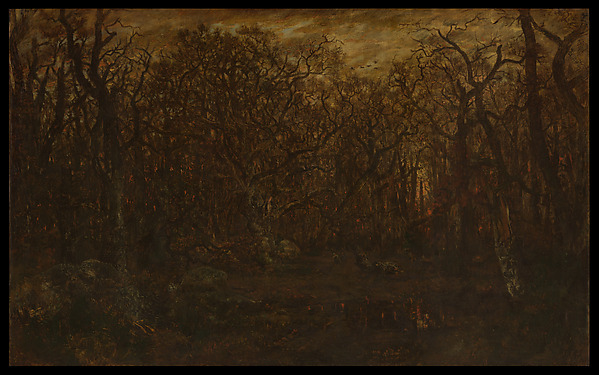
The Forest in Winter at Sunset, Théodore Rousseau, ca. 1846–67

The Forest in Winter at Sunset

ca. 1846–67 · Metropolitan Museum of Art

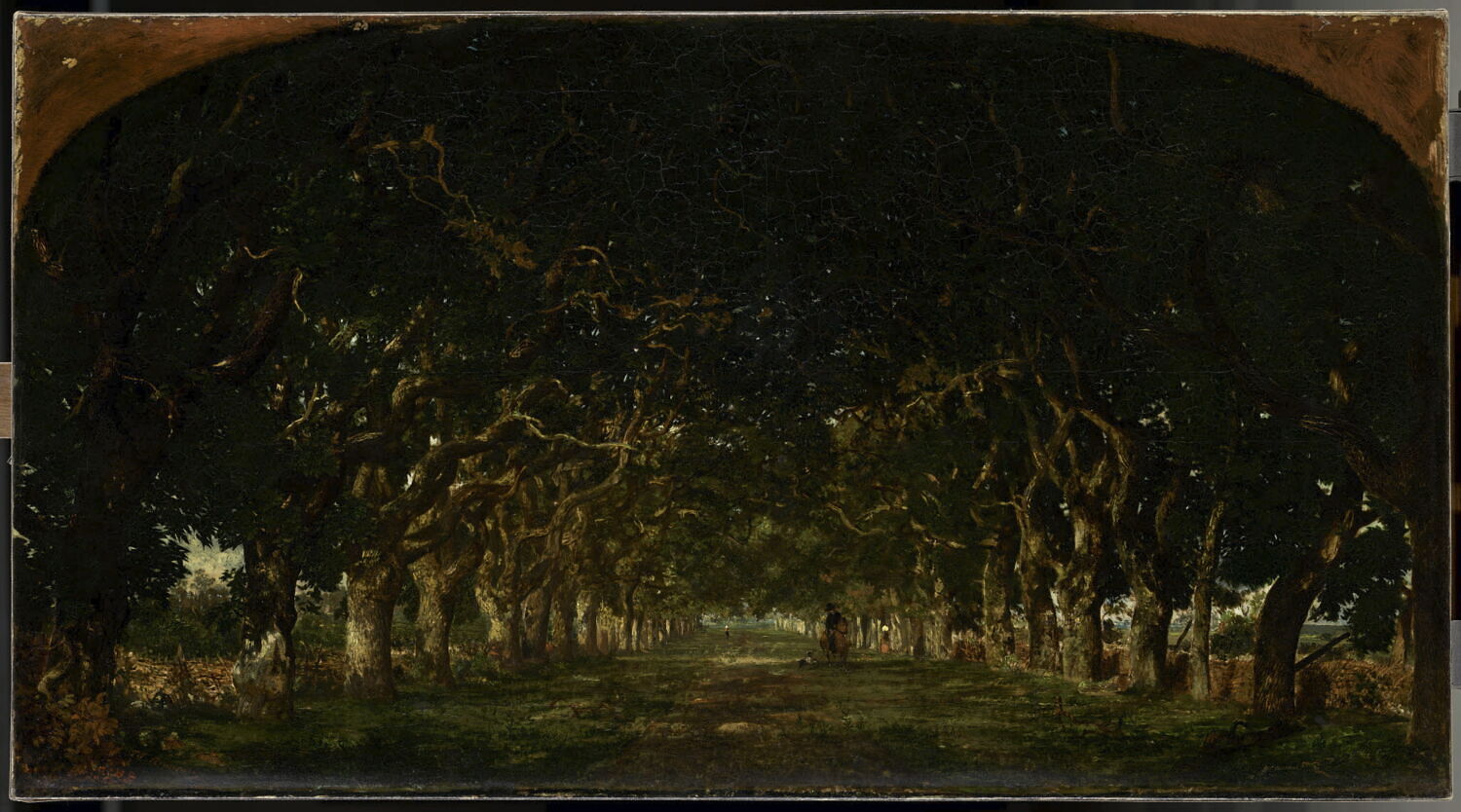
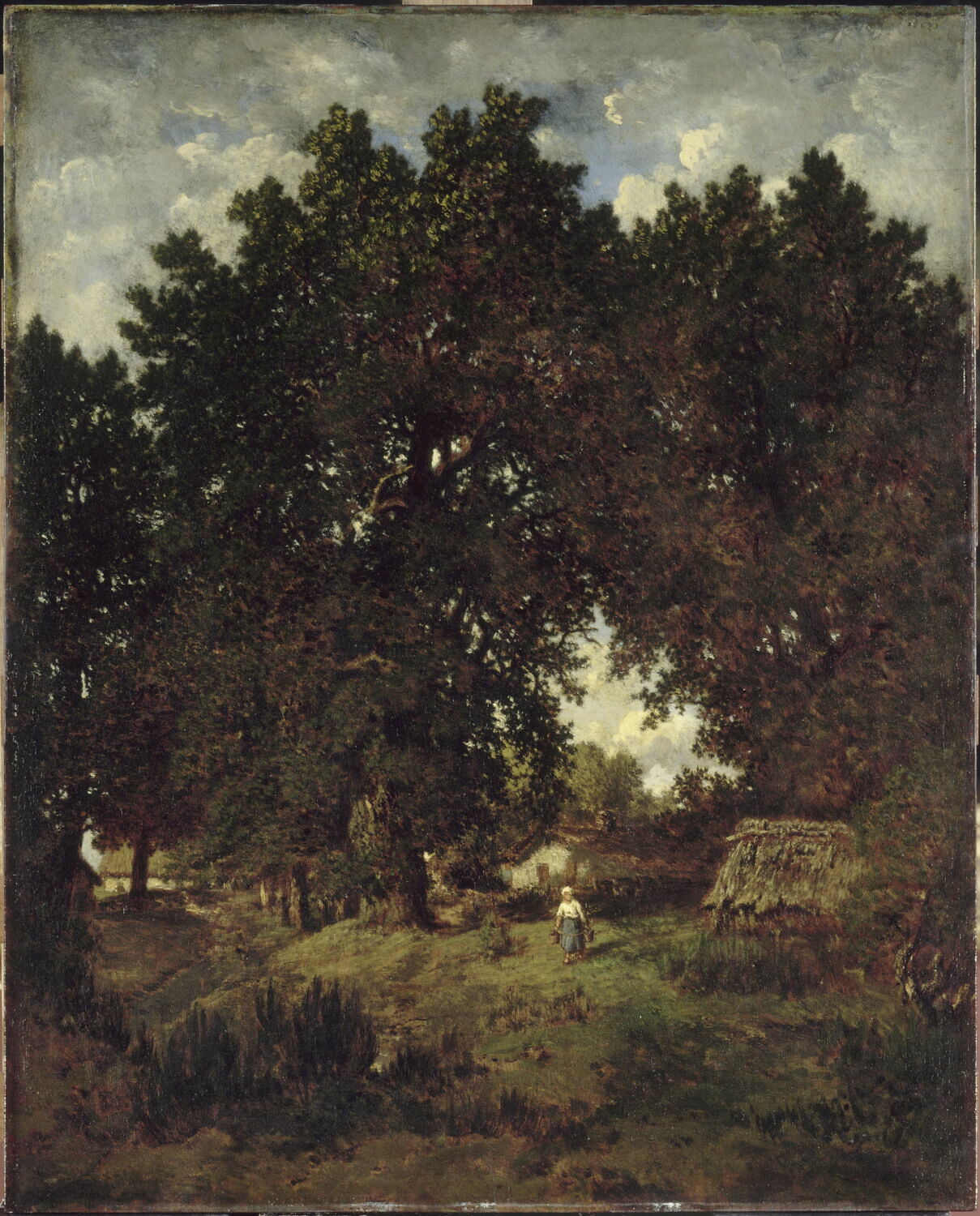
L'allée des châtaigniers, Rousseau, Théodore, 2e quart du XIXe siècle (1825 - 1850)

L'allée des châtaigniers

2e quart du XIXe siècle (1825 - 1850) · Louvre

Panoramic Landscape near the River Moselle, Théodore Rousseau, c. 1830

Panoramic Landscape near the River Moselle

c. 1830 · National Gallery of Art

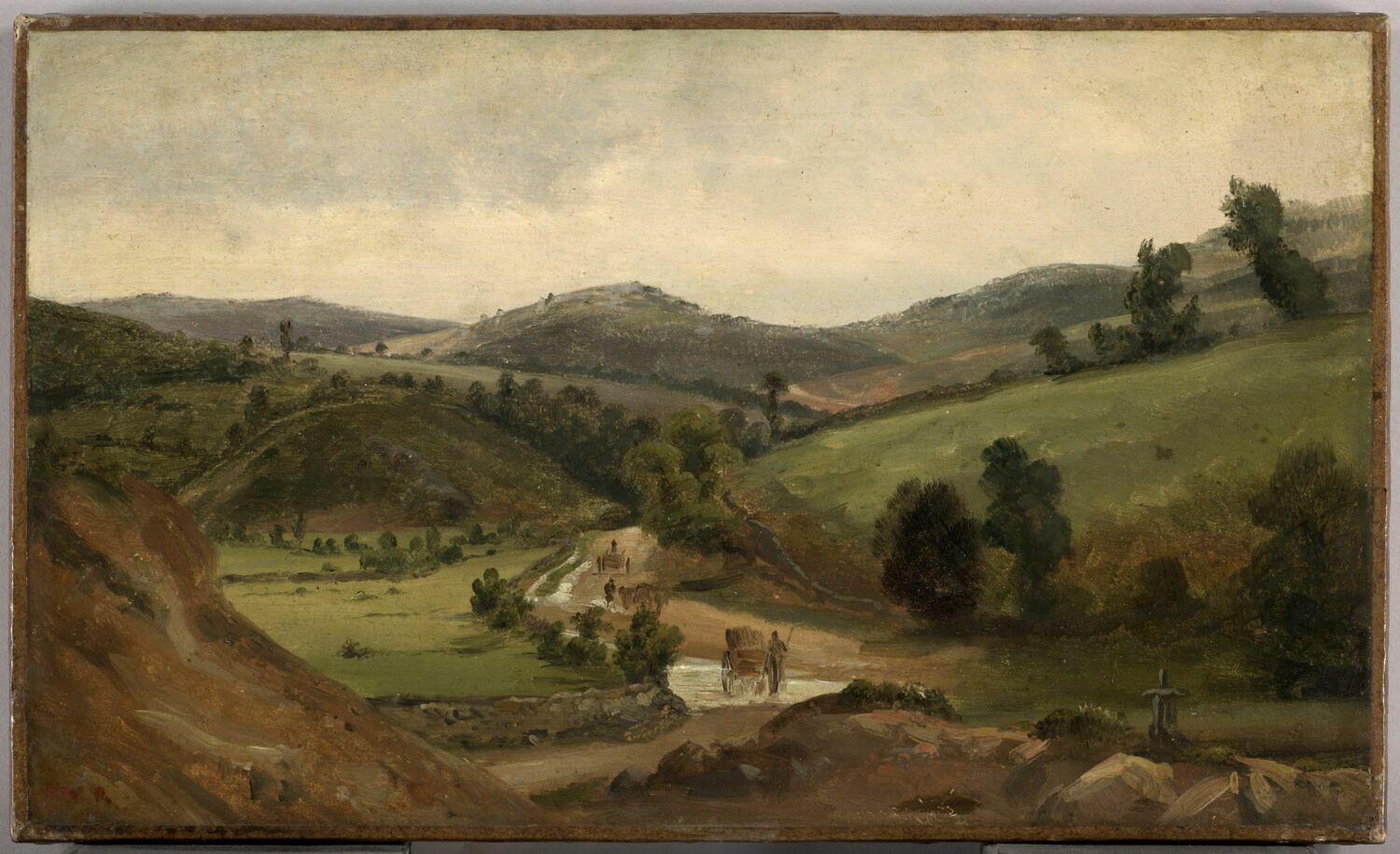
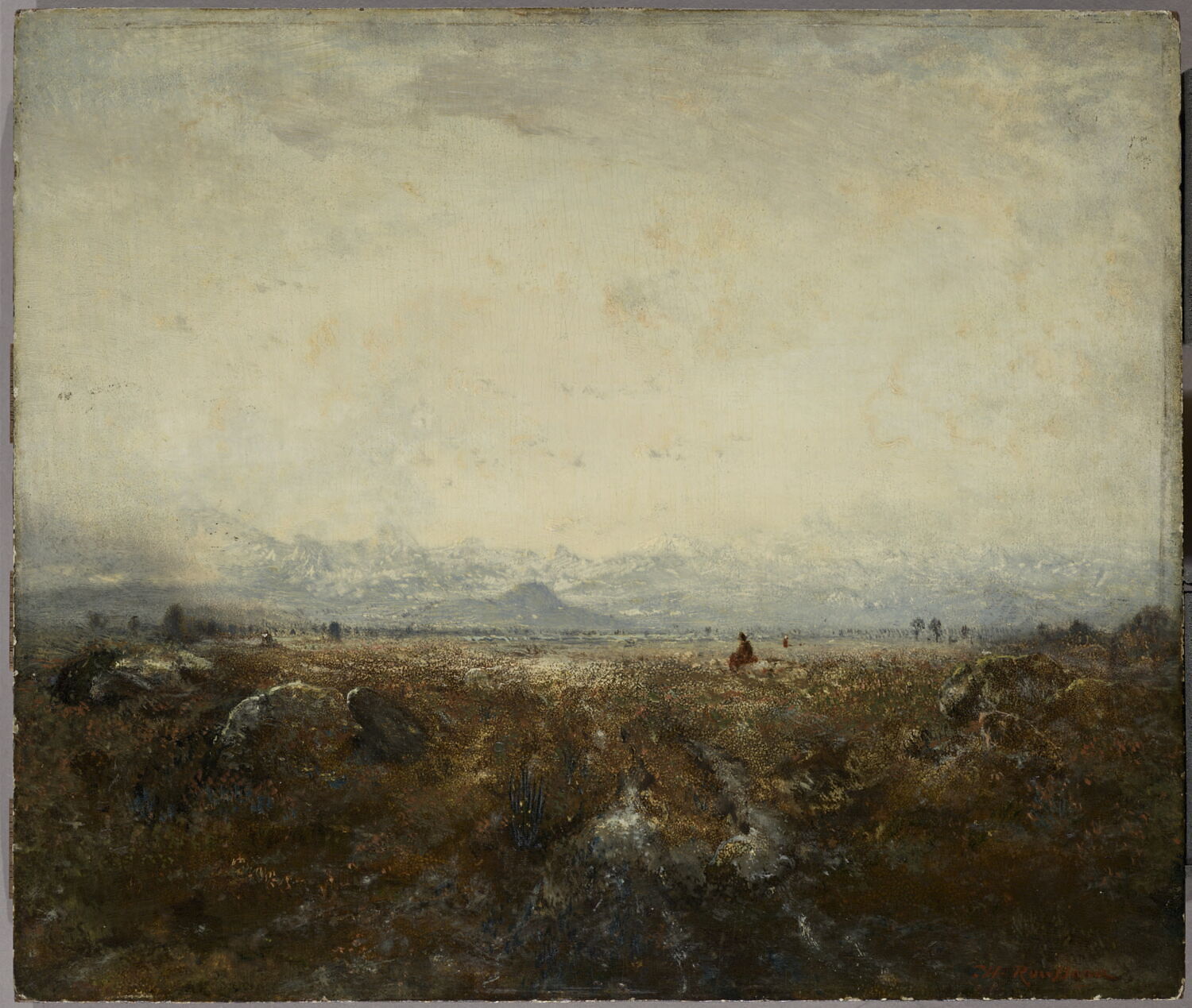
Paysage (Auvergne?), Rousseau, Théodore, 2e quart du XIXe siècle (vers 1830)

Paysage (Auvergne?)

2e quart du XIXe siècle (vers 1830) · Louvre

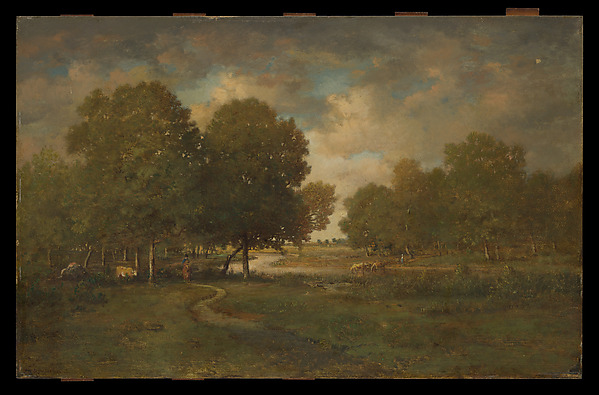
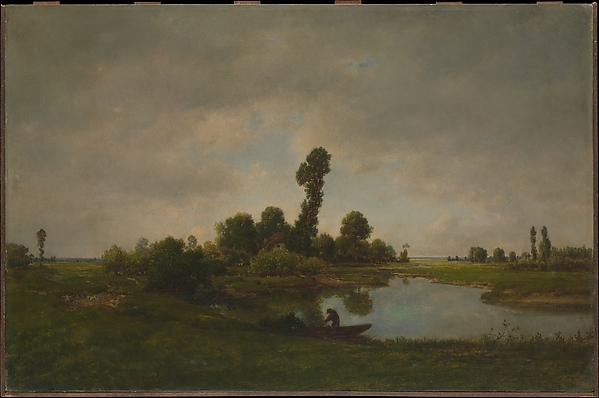
A River in a Meadow, Théodore Rousseau, ca. 1840

A River in a Meadow

ca. 1840 · Metropolitan Museum of Art

Village sous les arbres, Rousseau, Théodore, Milieu du XIXe siècle (1840 - 1860)

Village sous les arbres

Milieu du XIXe siècle (1840 - 1860) · Louvre

La plaine en avant des Pyrénées, Rousseau, Théodore, 2e quart du XIXe siècle (1844)

La plaine en avant des Pyrénées

2e quart du XIXe siècle (1844) · Louvre

A River Landscape, Théodore Rousseau, ca. 1845–50

A River Landscape

ca. 1845–50 · Metropolitan Museum of Art

Nachbarn im Haus: Rijksmuseum Amsterdam

Museumsseite
Self-portrait, Vincent van Gogh, 1887

Vincent van Gogh

Self-portrait, 1887

La Corniche near Monaco, Claude Monet, 1884

Claude Monet

La Corniche bij Monaco, 1884

De Nachtwacht, Rembrandt van Rijn, 1642

Rembrandt van Rijn

Die Nachtwache, 1642

Portrait of a Woman, Probably Maria Trip (1619-1683), Rembrandt van Rijn, 1639

Rembrandt van Rijn

Porträt von Maria Trip, 1639

Still Life with Peacocks, Rembrandt van Rijn, c. 1639

Rembrandt van Rijn

Still Life with Peacocks, c. 1639

Landscape with a Stone Bridge, Rembrandt van Rijn, c. 1638

Rembrandt van Rijn

landschap met stenenbrug, c. 1638

Man in Oriental Dress, Rembrandt van Rijn, 1635

Rembrandt van Rijn

Man in Oriental Dress, 1635

Portrait of Haesje Jacobsdr van Cleyburg, Rembrandt van Rijn, 1634

Rembrandt van Rijn

Portrait of Haesje Jacobsdr van Cleyburg, 1634