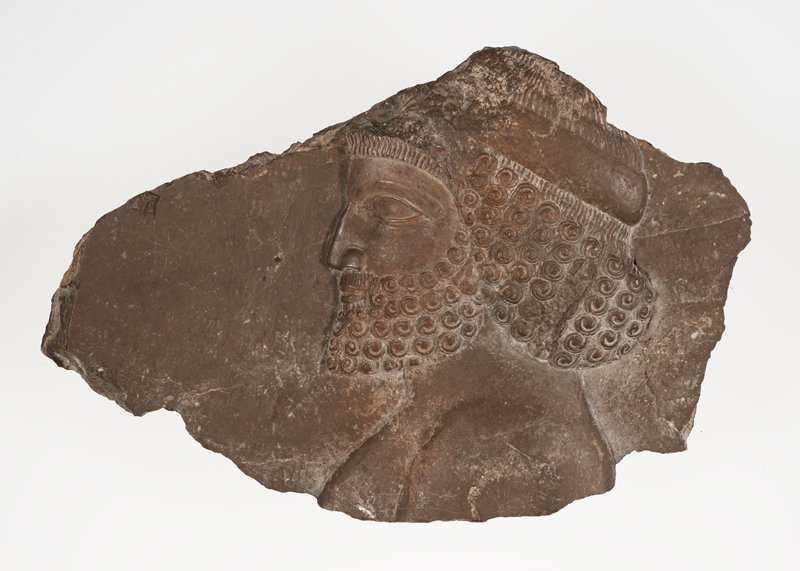
Relief-carved Fragment from Persepolis
Kann ich es sehen?
Derzeit nicht ausgestellt
Wo ist „Relief-carved Fragment from Persepolis“ heute? Sammlung: Minneapolis Institute of Art, Minneapolis. Derzeit nicht ausgestellt. Geprüft 29. September 2026.

Minneapolis, Vereinigte Staaten
Es gehört zur Sammlung, ist derzeit aber nicht ausgestellt.
- Geprüft
- Unverändert seit
- Quelle
- Das Museum
Über die Skulptur
This rare stone fragment bearing the carved profile head of a “foreign delegate” is from the north staircase of the great audience hall known as the Apadana at Persepolis; the magnificent ceremonial palace complex of the ancient Persian kings, Darius I (522-486 B.C.) and Xerxes I (486-456 B.C.). By the time of Xerxes I, the huge Persian empire included Lydia, Babylon, Syria, Palestine, Phoenicia, Egypt, parts of Central Asia and, for a time, Attica in Greece. Darius seems to have personally selected the pictorial theme of all the low-relief sculpture decorating his palace. Peoples of all the subject nations of the Persian empire paid yearly tribute to the great kings at Persepolis and many of these foreign dignitaries and delegates were represented in the extensive sculptural scenes of the major stairways. The largest stone palace of the ancient world, Persepolis was destroyed by Alexander the Great in 330 B.C. Its imposing remains in southwestern Iran are a testament to the power and wealth of one of the greatest empires of antiquity.
Minneapolis Institute of Art
Angaben
- Inventarnummer
- 2000.88
Im Katalog
Quellen
- Minneapolis Institute of Art
- Bild: Minneapolis Institute of Art — public domain







