ART WIKI32.963 ausgestellt
KarteSammlungKünstlerMuseenAusstellungenJournal
Anmelden

ART WIKI

Wo das Meisterwerk hängt und wann man vorgelassen wird.

Sammlungen: Art Institute of Chicago, Cleveland Museum of Art, Eremitage, Getty Villa, Harvard Art Museums, Hirshhorn Museum and Sculpture Garden, J. Paul Getty Museum, Louvre, Metropolitan Museum of Art, Minneapolis Institute of Art, Museum of Modern Art, National Gallery of Art, National Museum of Asian Art, National Portrait Gallery, Puschkin-Museum, Rijksmuseum Amsterdam, Russisches Museum, Smithsonian American Art Museum, Statens Museum for Kunst, Tretjakow-Galerie, Victoria and Albert Museum, Whitney Museum of American Art, Staatskatalog des Museumsfonds Russlands (274 Museen), Europeana (19 Museen), Wikidata (6 Museen), Paris Musées (12 Museen) und Joconde, die Museumsdatenbank des französischen Kulturministeriums (495 Museen). Die Bilder gehören ihren Rechteinhabern.

Rubriken

  • Karte
  • Suche
  • Sammlung
  • Meisterwerke
  • Jetzt ausgestellt
  • Künstler

Mehr

  • Museen & Galerien
  • Ausstellungen
  • Journal
  • Woher die Daten stammen
  • Datenschutz & Cookies
StartseiteKarteKatalog
  1. Sammlung/
  2. Museo Sorolla/
  3. Recolector, Elche
Recolector, Elche, Joaquín Sorolla Bastida, 1918
Joaquín Sorolla, PorträtJoaquín SorollaSpanien, 1863–1923

Recolector, Elche

1918 · Drawing

Darf man es sehen?

Unbekannt: Das Museum schweigt sich aus

Museo Sorolla

Madrid, Spanien

Der Eigentümer ist bekannt. Ob es heute ausgestellt ist, sagt das Museum nicht, und Raten haben wir nicht gelernt.

Unverändert seit
27. Sept. 2026
Quelle
Sammlungsdaten des Museums selbst
Auf der KarteMuseumsseite

Über das Werk

In den Worten des Museums — auf Spanisch

Figura masculina de perfil a la derecha cargando con grandes alforjas. En la parte inferior izquierda dos esbozos de cabezas.

Museo Sorolla

Angaben

1918 · mit 55 Jahren
18631923

Was es zeigt

RecolecciónElche. El palmeral

Im Katalog

Zeichnungen & AquarelleModerne20. Jahrhundert

Quellen

  • Museo Sorolla: die offenen Daten des Museums · abgerufen vor 8 Tagen
  • Bild: Museo Sorolla — In Copyright

Derweil im Leben von Joaquín Sorolla

Das ganze Leben
  1. 1911–1919

    Through the provinces of Spain to paint from life

    Huntington had envisioned a history of Spain; Sorolla preferred a “Vision of Spain” and finally images of the regions of the peninsula, “The Provinces of Spain”. He painted all but one of the huge canvases en plein air, travelling to Navarre, Aragon, Catalonia, Valencia, Elche, Seville, Andalusia, Extremadura, Galicia, Guipúzcoa, Castile, León and Ayamonte and posing models in local costume.

  2. 1917

    Exhausted by the murals

    By 1917, by his own admission, Sorolla was exhausted by the work on “The Provinces of Spain”.

  3. 1920

    A stroke at the easel in his own garden

    Sorolla suffered a stroke at his easel in his garden in Madrid while painting a portrait. He was paralysed for the last three years of his life and died on 10 August 1923 in Cercedilla.
Mehr von Joaquín Sorolla

Alle Werke
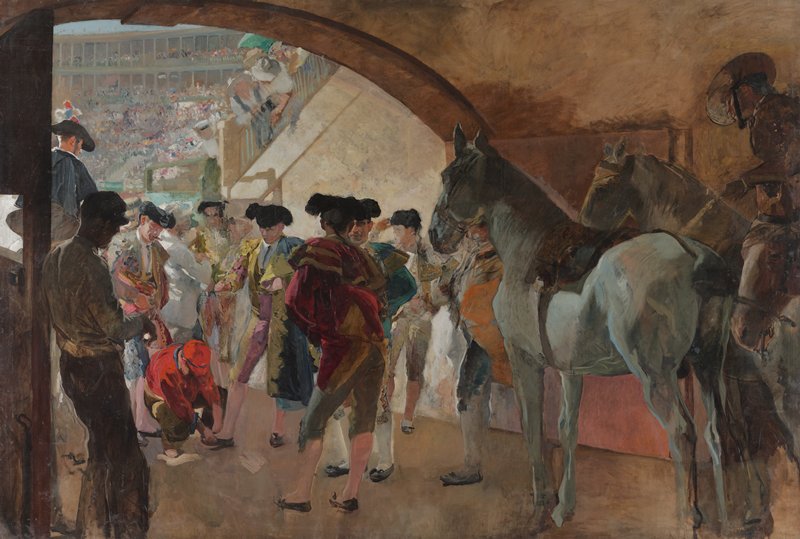
Before the Bullfight, Joaquin Sorolla y Bastida, c. 1900

Before the Bullfight

c. 1900 · Minneapolis Institute of Art

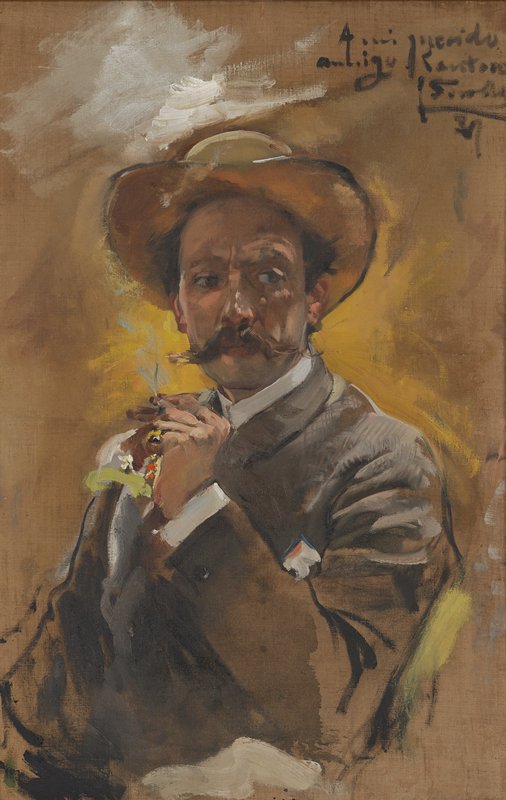
Portrait of the Painter Francesco Santoro, Rome, Joaquin Sorolla y Bastida, 1887

Portrait of the Painter Francesco Santoro, Rome

1887 · Minneapolis Institute of Art

The Wounded Foot, Joaquín Sorolla y Bastida, 1909

The Wounded Foot

1909 · J. Paul Getty Museum

Hall of the Ambassadors, Alhambra, Granada, Joaquín Sorolla y Bastida, 1909

Hall of the Ambassadors, Alhambra, Granada

1909 · J. Paul Getty Museum

Corner of the Garden, Alcazar, Sevilla, Joaquín Sorolla y Bastida, 1910

Corner of the Garden, Alcazar, Sevilla

1910 · J. Paul Getty Museum

Court of the Dances, Alcázar, Sevilla, Joaquín Sorolla y Bastida, 1910

Court of the Dances, Alcázar, Sevilla

1910 · J. Paul Getty Museum

Isabelita and Thor, Joaquin Sorolla y Bastida, 1893

Isabelita and Thor

1893 · National Gallery of Art

The Return from Fishing, Joaquín Sorolla, 1894

The Return from Fishing

1894 · Musée d’Orsay