Vasily Vereshchagin1842–1904
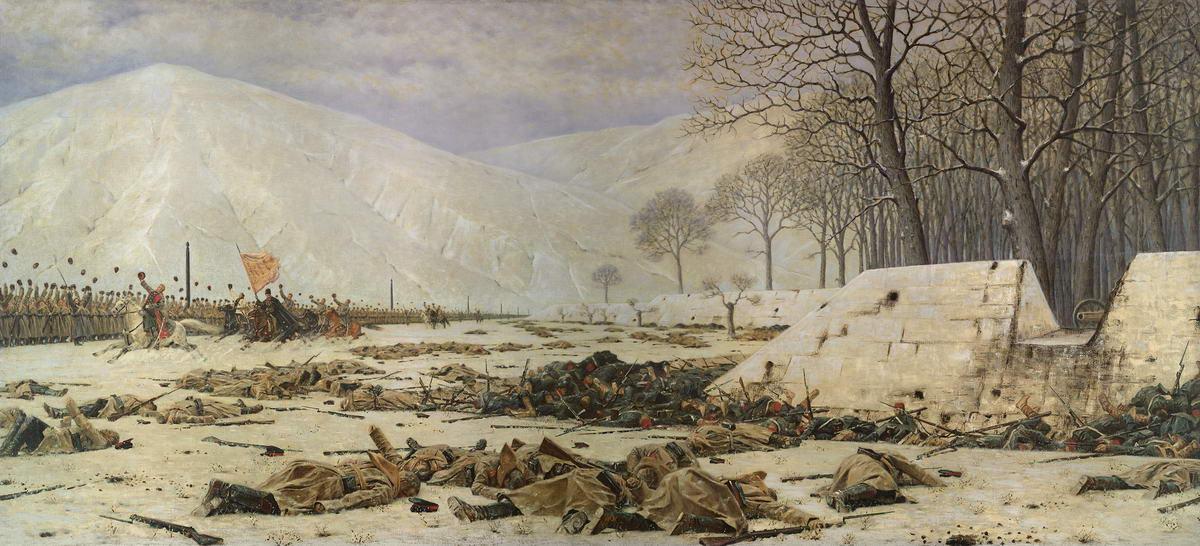
Проход Барскаун
Kann ich es sehen?
Unbekannt
Wo ist „Проход Барскаун“ heute? Sammlung: Kaluga Museum der Schönen Künste, Kaluga. Unbekannt.
Kaluga, Russland
Der Besitzer ist bekannt; ob das Werk derzeit ausgestellt ist, nicht.
- Unverändert seit
- Quelle
- Das Museum
Über das Gemälde
In den Worten des Museums — auf Russisch
Окаймленная деревьями речка, протекающая среди высоких гор. Склон горы слева в тени, гора справа и половина реки освещена солнцем.
Kaluga Museum der Schönen Künste
Angaben
- Inventarnummer
- Ж 0038
Im Katalog
Quellen
- Der Staatskatalog des Museumsfonds Russlands
- Bild: Kaluga Museum der Schönen Künste — © Калужский музей изобразительных искусств · Госкаталог музейного фонда РФ
Im Leben von Vasily Vereshchagin
Das ganze Leben1867
Artist to General Kaufman
He gladly accepted the invitation of Konstantin Kaufman, Governor-General of Turkestan, to serve as artist on his staff — the beginning of his Turkestan period.
2 – 8 June 1868
Defense of the Samarkand Citadel
He received his baptism of fire, enduring with a handful of Russian soldiers the grueling siege of the Samarkand citadel; for his heroism in its defense he was awarded the Cross of St. George, 4th class.
early 1869
The Turkestan Exhibition
With Kaufman's assistance he organized a "Turkestan exhibition" in the capital, showing works painted in Tashkent, Samarkand, the Kazakh steppes, and Turkestan.
1873
Solo Exhibition at the Crystal Palace
He mounted a solo exhibition of his Turkestan works at the Crystal Palace in London.
spring 1874
St. Petersburg Exhibition and Accusations of Anti-Patriotism
An exhibition was held in St. Petersburg, after which Vereshchagin was accused of anti-patriotism and sympathy for the enemy; Emperor Alexander II "expressed his displeasure very sharply."
1877
Departure for the Russo-Turkish War
On learning of the outbreak of the Russo-Turkish War, he immediately set off for the active army, leaving his studio in Paris; he was attached to the adjutants of the commander-in-chief of the Danube Army with the right to move freely among the troops.