 Viktor Vasnetsov1848–1926
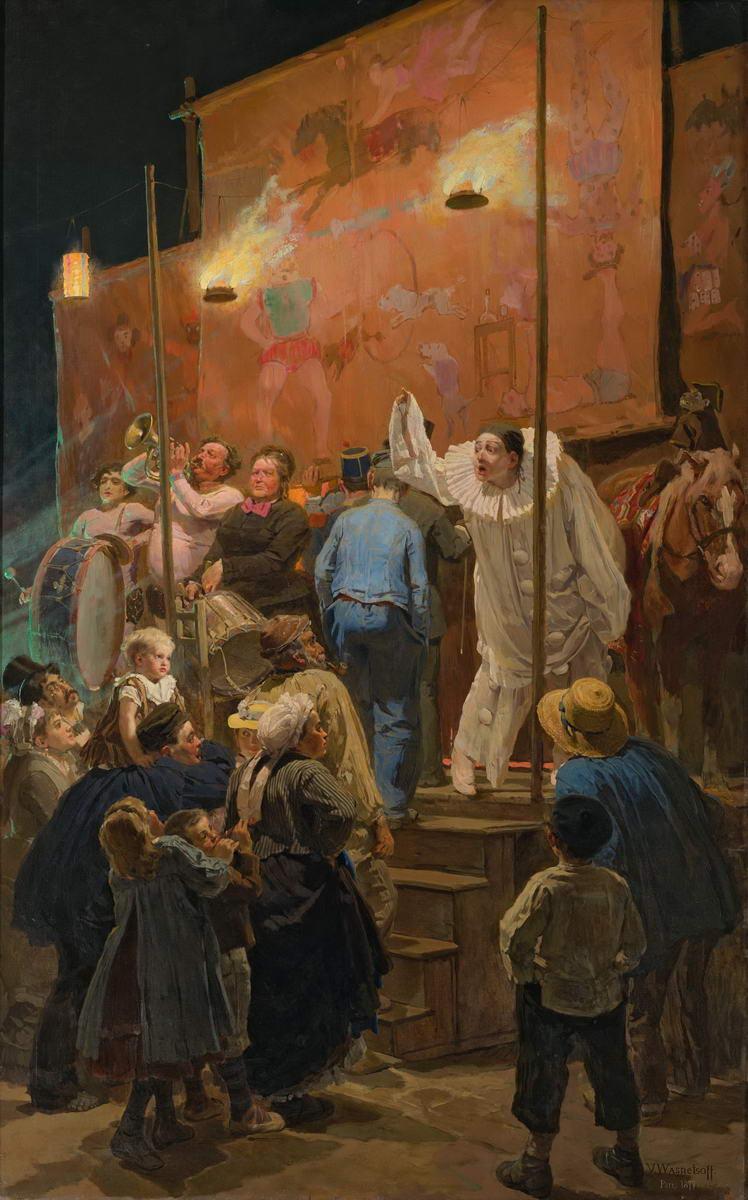
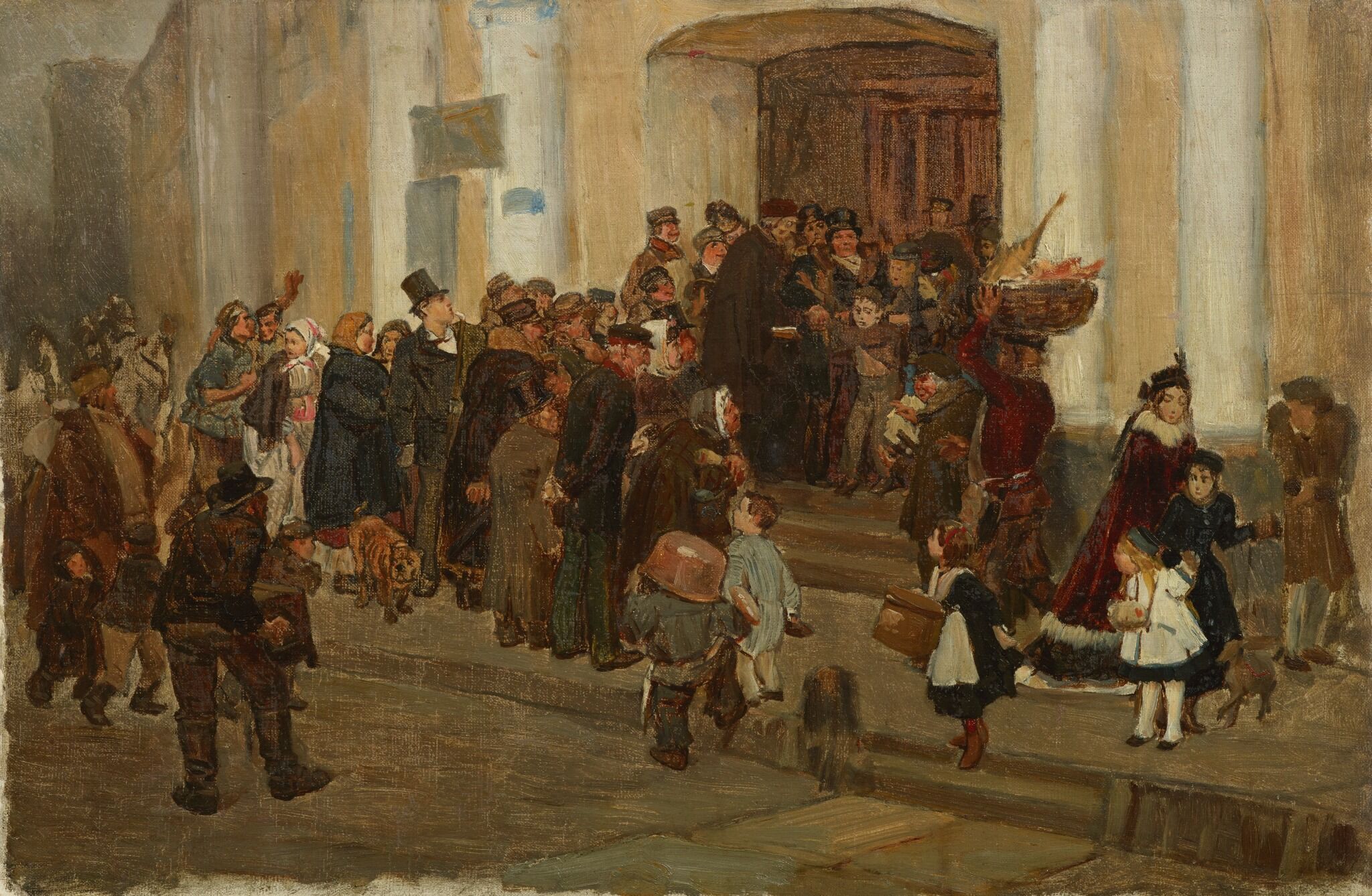
Поймали воришку
Darf man es sehen?
Unbekannt: Das Museum schweigt sich aus

Tretjakow-Galerie
Moskau, Russland
Der Eigentümer ist bekannt. Ob es heute ausgestellt ist, sagt das Museum nicht, und Raten haben wir nicht gelernt.
- Quelle
- Sammlungsdaten des Museums selbst
About the painting
In the museum's own words — the original
В начале 1870-х годов Васнецов сделал первые шаги в области жанровой живописи. Особенностью его работ в области бытового жанра был глубокий интерес к типажам и характерам каждого персонажа. Именно эта особенность прослеживается в эскизе неосуществленной картины «Поймали воришку».
Read on
Основную часть композиции занимают горожане – зеваки и случайные прохожие, в окружении которых совершенно теряется главный герой задуманной картины – маленький бедный мальчуган, которого крепко держат распаленные «праведным» гневом взрослые. Художник не стремился дать психологическую характеристику сюжета, его в большей степени интересовало изображение толпы: людей разных сословий и родов занятий, которые едва ли могли одновременно оказаться на одной улице, – мещанин, рабочий, прислуга, знатная дама и гувернантка с маленькой девочкой, мальчик с тазиком на голове и слуга с корзиной продуктов и т.д. Художник создал своеобразный «коллаж» из городских типажей.
Эскиз так и остался неосуществленным. Почти полностью сохранив композицию, Васнецов изменил замысел и вместо «Поймали воришку» написал «Застрелился. Трагическое происшествие» (1875, местонахождение неизвестно).
Tretjakow-Galerie
Angaben
- Inventarnummer
- ДМВ Ж-7
Quellen
- Tretjakow-Galerie: the museum's own open data · abgerufen vor 5 Tagen
- Bild: Tretjakow-Galerie — © State Tretyakov Gallery
Derweil im Leben von Viktor Vasnetsov
Das ganze Leben1868–1876
Friendship with Repin and the “evenings” at Antokolsky’s
In St Petersburg he grew very close to Ilya Repin; he attended the “evenings” at the apartment of Repin and the sculptor Mark Antokolsky, where the student Ivan Savenkov read bylinas in a slow chant, in the northern accent so familiar to Vasnetsov — and so his interest in early Russian culture and folk epic finally took shape.
1868–1876
Friendship with Arkhip Kuindzhi
In St Petersburg he grew especially close to Arkhip Kuindzhi: the taciturn Vasnetsov found the key to his reserved nature, and when Kuindzhi painted “Ukrainian Night” he exclaimed that it was the very night Gogol had spoken of — “now we see it”.
summer 1871
He meets his future wife, Alexandra Ryazantseva
In the summer of 1871, home in Vyatka on academic leave, he met Alexandra Ryazantseva in the local library — a merchant’s daughter who would become one of the first women from Vyatka with a higher medical education; he was struck by “her eyes — stern and extraordinarily kind”.
autumn 1871
“The Rooks Have Returned” at the Peredvizhniki exhibition
In the autumn of 1871, at the first exhibition of the Peredvizhniki, he was deeply struck by Savrasov’s “The Rooks Have Returned”: “Here she is, my beloved homeland. Unadorned, just as she is” — the picture, with its poetry of the Russian spring, became for him a symbol of the revival of Russian art.
1873–1875
He leaves the Academy before graduating
In 1873, a year before the end of the course, he almost stopped attending the Academy and went only to Chistyakov’s studio: Chistyakov told him he had already got from the Academy all it could give, and Kramskoi advised the same; on 4 (16) February 1875 he was formally discharged, receiving a certificate that listed two small silver medals and one large one.
1874
“Tea-drinking in a Tavern” with the Peredvizhniki
In 1874 he took part for the first time in an exhibition of the Peredvizhniki, showing “Tea-drinking in a Tavern” (“Over Tea”).