Edward SteichenVereinigte Staaten, 1879–1973
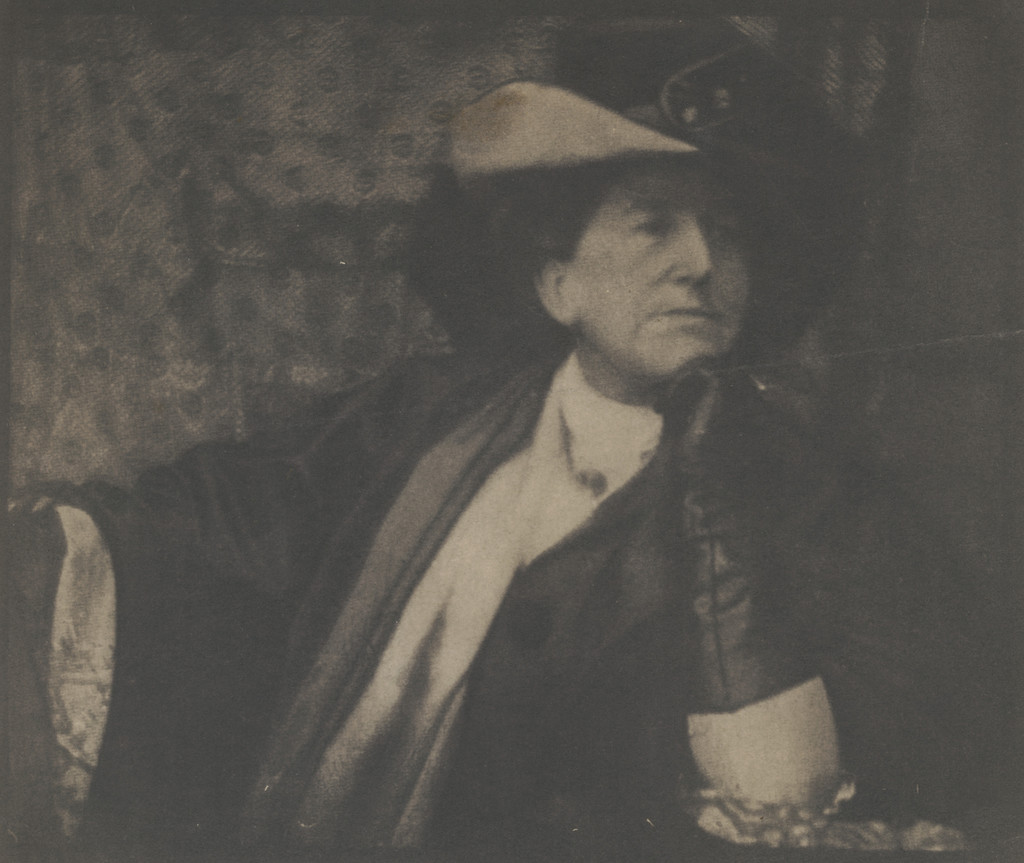
Portret van Clarence Hudson White
Kann ich es sehen?
Unbekannt
Wo ist „Portret van Clarence Hudson White“ heute? Sammlung: Rijksmuseum Amsterdam, Amsterdam. Unbekannt.

Amsterdam, Niederlande
Der Besitzer ist bekannt; ob das Werk derzeit ausgestellt ist, nicht.
- Quelle
- Das Museum
Angaben
- Inventarnummer
- RP-F-2001-7-1668-59
Was es zeigt
Im Katalog
Quellen
- Rijksmuseum Amsterdam
- Bild: Rijksmuseum Amsterdam — © the artist or rights holder
Im Leben von Edward Steichen
Das ganze Leben1899
Photographs at the Philadelphia Salon
His photographs are exhibited at the second Philadelphia Photographic Salon.
1900
Meets Stieglitz on the way to Paris
He leaves Milwaukee for Paris to study art; on a letter of introduction from Clarence H. White he meets Alfred Stieglitz in New York, who praises his background in painting and buys three of his photographic prints. He will spend several years in Paris and discover avant-garde art there.
1900
American citizenship
He becomes a US citizen and signs the naturalization papers as Edward J. Steichen, but goes on using his birth name, Éduard, until after the First World War.
1902
The Camera Work logo and the Photo-Secession
When Stieglitz is planning the magazine that becomes Camera Work, he asks Steichen to design its logo with a custom typeface; Steichen becomes the most frequently shown photographer in the journal. In the same year he is one of the founders of the Photo-Secession in New York.
1904
First experiments with colour photography
He begins experimenting with colour photography and becomes one of the earliest in the United States to use the Autochrome Lumière process.
1905
The Little Galleries of the Photo-Secession
With Stieglitz he creates the Little Galleries of the Photo-Secession in what had been Steichen’s portrait studio; the gallery later becomes known as 291 after its address and presents some of the first American exhibitions of Rodin, Matisse, Cézanne, Picasso and Brâncuși. Constantly crossing between Europe and the US by steamship, he becomes, in the art historian William A. Ewing’s words, one of the earliest “jet setters,” bringing European art to America.