 PisanelloItalien, 1395–1455
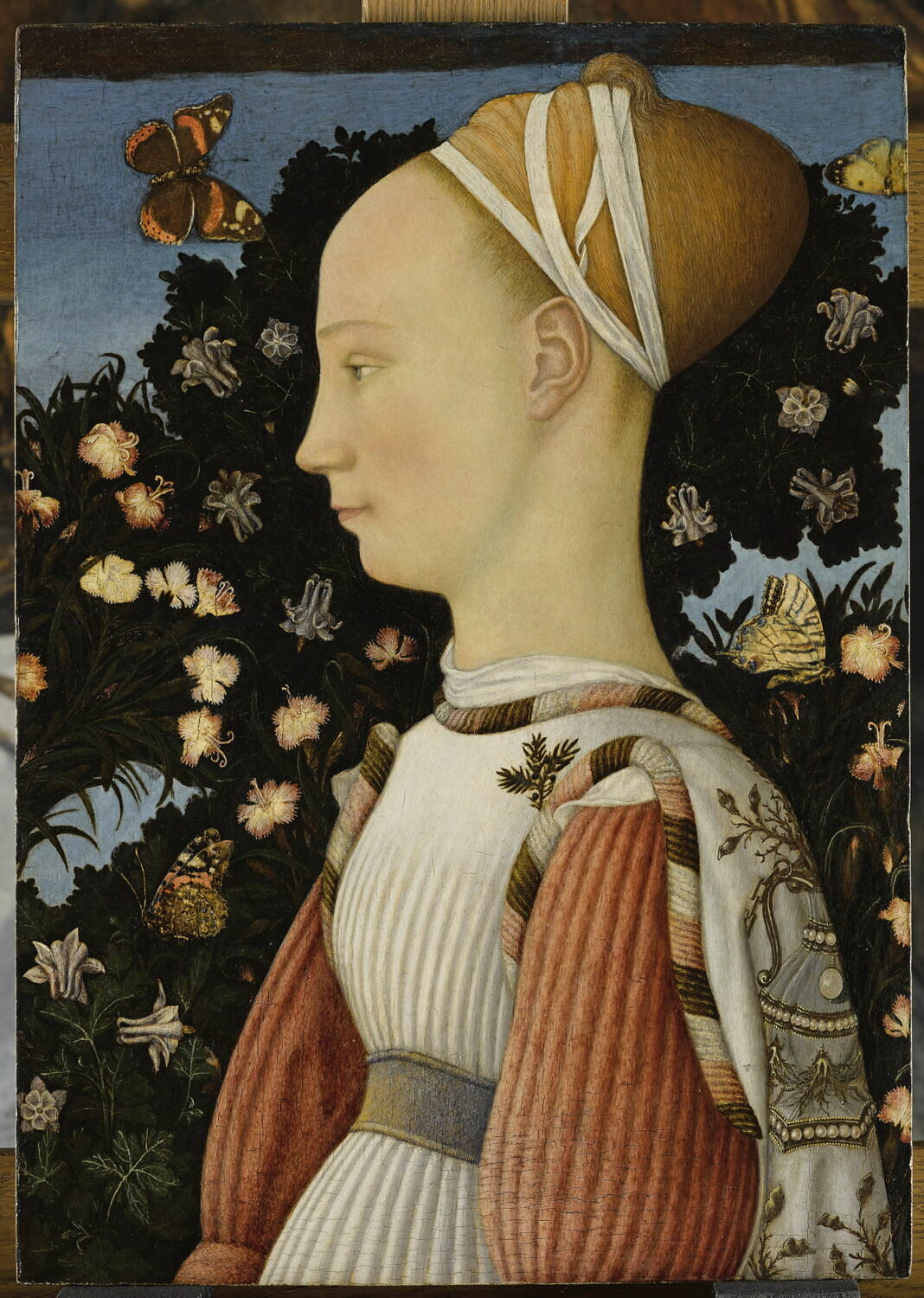
Porträt einer Prinzessin
Portrait d'une princesse de la Maison d'Este
Kann ich es sehen?
Derzeit nicht ausgestellt
Wo ist „Porträt einer Prinzessin“ heute? Sammlung: Louvre, Paris. Derzeit nicht ausgestellt. Geprüft 26. September 2026.

Paris, Frankreich
Es gehört zur Sammlung, ist derzeit aber nicht ausgestellt.
- Geprüft
- Unverändert seit
- Quelle
- Das Museum
Über das Gemälde
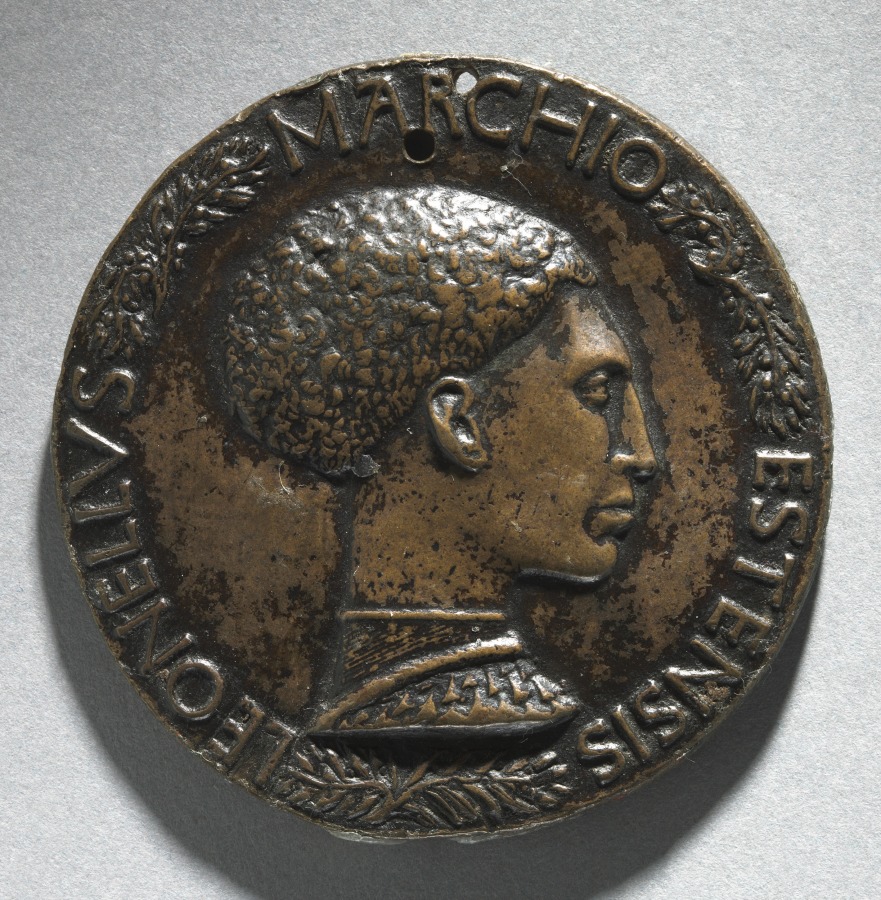
Portrait of Princess is a tempera painting on panel attributed to the Italian Late-Gothic master Pisanello. It was probably executed between 1435 and 1445 and is also known as Portrait of a Princess of the House of Este. It is firmly attributed to Pisanello on stylistic grounds and because he stayed in Ferrara in the period, where he also finished a portrait and a celebrative medal of Marquis Leonello d'Este.
The princess is shown in profile against a background of numerous butterflies and columbine flowers. The butterfly (Vanessa atalanta) near the princess' brow is a symbol of the soul.
The painting is currently housed and exhibited in the Musée du Louvre in Paris, France.
Angaben
- Inventarnummer
- RF 766
Im Katalog
Quellen
- Louvre
- Bild: Louvre — © 2016 GrandPalaisRmn (musée du Louvre) / Franck Raux
Im Leben von Pisanello
Das ganze LebenAugust – October 1427
Sudden death of his mentor Gentile da Fabriano
Gentile da Fabriano, Pisanello's teacher and friend, died suddenly in Rome, leaving his frescoes in the Basilica of St. John Lateran unfinished. It fell to his pupil to complete them.
1431–1432
Completes Gentile's frescoes at the Lateran
Pisanello completed the frescoes his master had begun in the Basilica of St. John Lateran; they were destroyed when Francesco Borromini rebuilt the basilica in the 17th century, and a faint sketch of them by Borromini is kept in the Kupferstichkabinett in Berlin. In Rome he saw the monuments of antiquity, made many drawings after ancient works and came increasingly under the influence of the classical style.
1439
Besieges Verona with the Gonzaga troops
In the war against the Republic of Venice, Pisanello joined the troops of Gianfrancesco I Gonzaga besieging Verona. Other accounts place the decision, taken together with Gonzaga, in 1438, when war broke out between Milan and Venice.
1441–1444
At the court of Leonello d'Este in Ferrara
Barred from Venetian lands, Pisanello worked at the court of Leonello d'Este in Ferrara after a stay in Milan in 1440–1441. There he grew close to the humanist Guarino da Verona, giving him a “Saint Jerome”; Guarino answered with an enthusiastic Latin poem in his honor.
1442
Venice sentences him in absentia to lose his tongue
Soon after Verona was relieved, the Venetian authorities banned the artist from their territory and then sentenced him in absentia to the confiscation of his property and the loss of his tongue “for slandering the republic and uttering words defaming the government”. Only highly placed friends saved him from the punishment.
1448
Moves to Naples, to the court of Alfonso of Aragon
Invited by King Alfonso of Aragon, Pisanello lived in Naples from December 1448 until the end of his life, enjoying great repute at the Aragonese court; the poet Porcellio wrote an ode in his honor.