ART WIKI33.040 ausgestellt
KarteSammlungKünstlerMuseenAusstellungenJournal
Anmelden

ART WIKI

Wo das Meisterwerk hängt und wann man vorgelassen wird.

Sammlungen: Art Institute of Chicago, Cleveland Museum of Art, Eremitage, Getty Villa, Harvard Art Museums, Hirshhorn Museum and Sculpture Garden, J. Paul Getty Museum, Louvre, Metropolitan Museum of Art, Minneapolis Institute of Art, Museum of Modern Art, National Gallery of Art, National Museum of Asian Art, National Portrait Gallery, Puschkin-Museum, Rijksmuseum Amsterdam, Russisches Museum, Smithsonian American Art Museum, Statens Museum for Kunst, Tretjakow-Galerie, Victoria and Albert Museum, Whitney Museum of American Art, Staatskatalog des Museumsfonds Russlands (274 Museen), Europeana (19 Museen), Wikidata (6 Museen), Paris Musées (12 Museen) und Joconde, die Museumsdatenbank des französischen Kulturministeriums (495 Museen). Die Bilder gehören ihren Rechteinhabern.

Rubriken

  • Karte
  • Suche
  • Sammlung
  • Meisterwerke
  • Jetzt ausgestellt
  • Künstler

Mehr

  • Museen & Galerien
  • Ausstellungen
  • Journal
  • Woher die Daten stammen
  • Datenschutz & Cookies
StartseiteKarteKatalog
  1. Sammlung/
  2. J. Paul Getty Museum/
  3. Poppy
Poppy, Philipp Otto Runge, about 1800–1803
Philipp Otto Runge, PorträtPhilipp Otto RungeDeutschland, 1777–1810

Poppy

about 1800–1803 · Drawing · 25 × 10 cm

Darf man es sehen?

Empfängt derzeit nicht

JPG
J. Paul Getty Museum

Los Angeles, Vereinigte Staaten

Es gehört zur Sammlung, ist derzeit aber nicht ausgestellt.

Geprüft
gestern
Unverändert seit
7. Okt. 2026
Quelle
Das Museum
Auf der KarteMuseumsseite

Über das Werk

Throughout his career, Philipp Otto Runge used scissors to cut remarkable freehand silhouettes of plants. Here he renders the curving slender stem of a poppy, its spiky leaves, and the individual scallops of each petal with astounding precision. In the unlikely medium of flat-white paper he captures the living specimen's vitality and individuality. While Runge's early black silhouettes conform to the Romantic tradition of commemorating a sitter's face by recording the shadow of his or her unique profile, his plant cutouts were made with white paper, which is more consistent with traditional depictions of animate vegetation.

JPGJ. Paul Getty Museum

Angaben

about 1800–1803
17771810
Inventarnummer
2013.58

Im Katalog

Zeichnungen & AquarelleKlassizismusRomantik19. JahrhundertDeutschland

Quellen

  • J. Paul Getty Museum
  • Bild: J. Paul Getty Museum — Open Content

Derweil im Leben von Philipp Otto Runge

Das ganze Leben
  1. 1798–1801

    Studies at the Royal Academy in Copenhagen

    Having decided to become an artist, Runge studies at the Copenhagen Academy under Jens Juel and Nicolai Abildgaard with the financial support of his brother Daniel; Caspar David Friedrich had studied there shortly before him. He draws from the nude and studies anatomy, geometry and perspective. Some accounts date the start of his studies to 1799.

  2. 1801

    Meets Pauline Bassenge

    In Dresden Runge meets the sixteen-year-old Pauline Bassenge, his future wife.

  3. 1801–1804

    The Dresden Academy and the circle of Romantics

    In 1801 Runge moves to Dresden and studies at the Academy under Anton Graff until 1804. He grows close to the “Dresden Romantics” — Caspar David Friedrich, Johann Gottfried Quistorp and Ludwig Tieck; Tieck introduces him to the mystical treatises of Jakob Böhme and to the ideas of Novalis.

  4. 14 – 19 November 1803

    Meets Goethe in Weimar

    On a trip to Weimar Runge meets Goethe at the house of Christian Gottlob von Voigt and visits the poet with Ludwig Tieck on 17 and 18 November; they discuss art and natural philosophy at length. It is the start of a friendly and working relationship based on their shared interest in color and art.

  5. 3. April 1804

    Married: Pauline Runge

  6. 3 April 1804

    Marries Pauline Bassenge

    On 3 April 1804 Runge marries Pauline Susanne Bassenge (1785–1881) in Dresden and soon moves back to Hamburg with her; they have four children.
Mehr von Philipp Otto Runge

Alle Werke
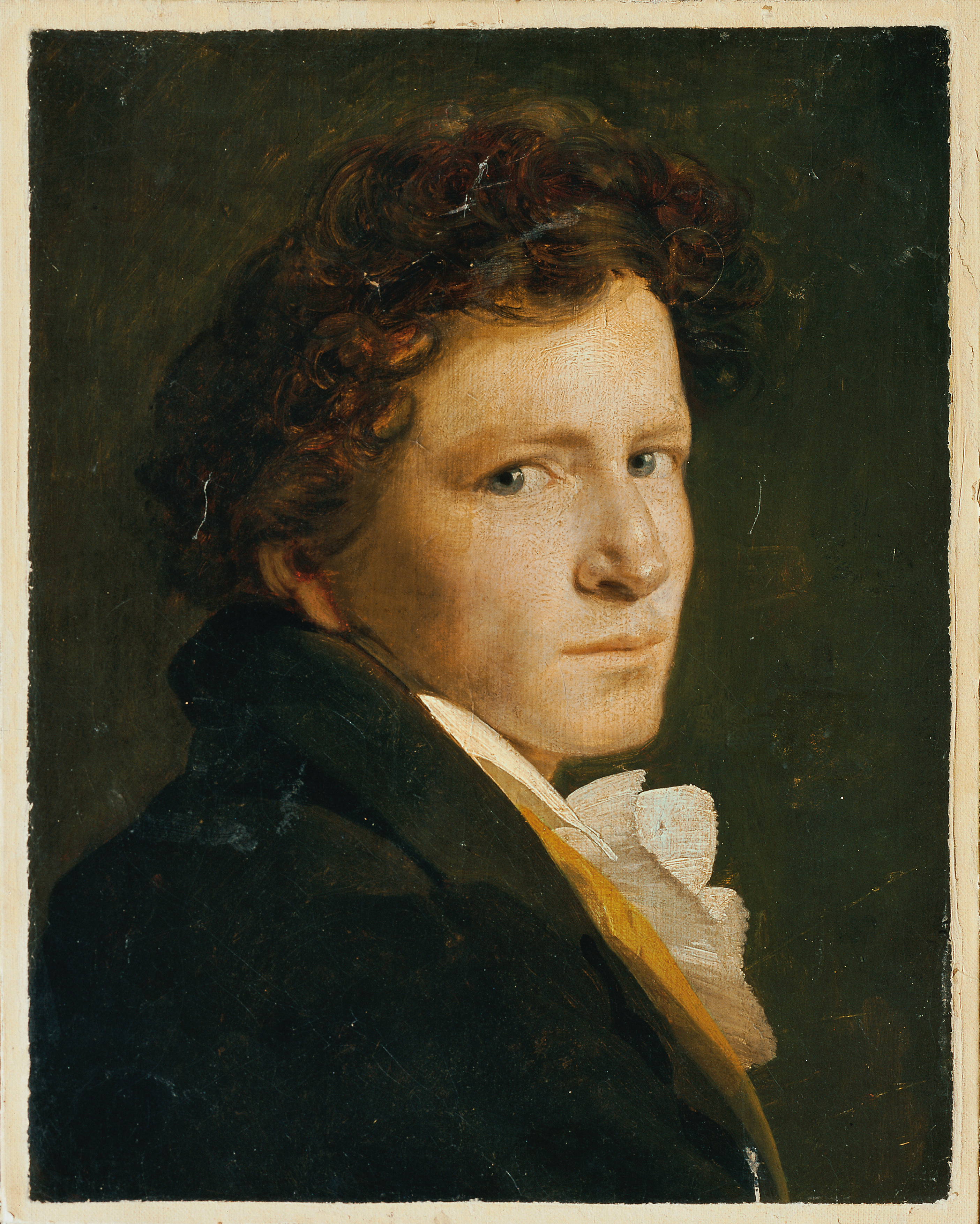
Brustbild eines jungen Mannes, Philipp Otto Runge

Brustbild eines jungen Mannes

Österreichische Galerie Belvedere

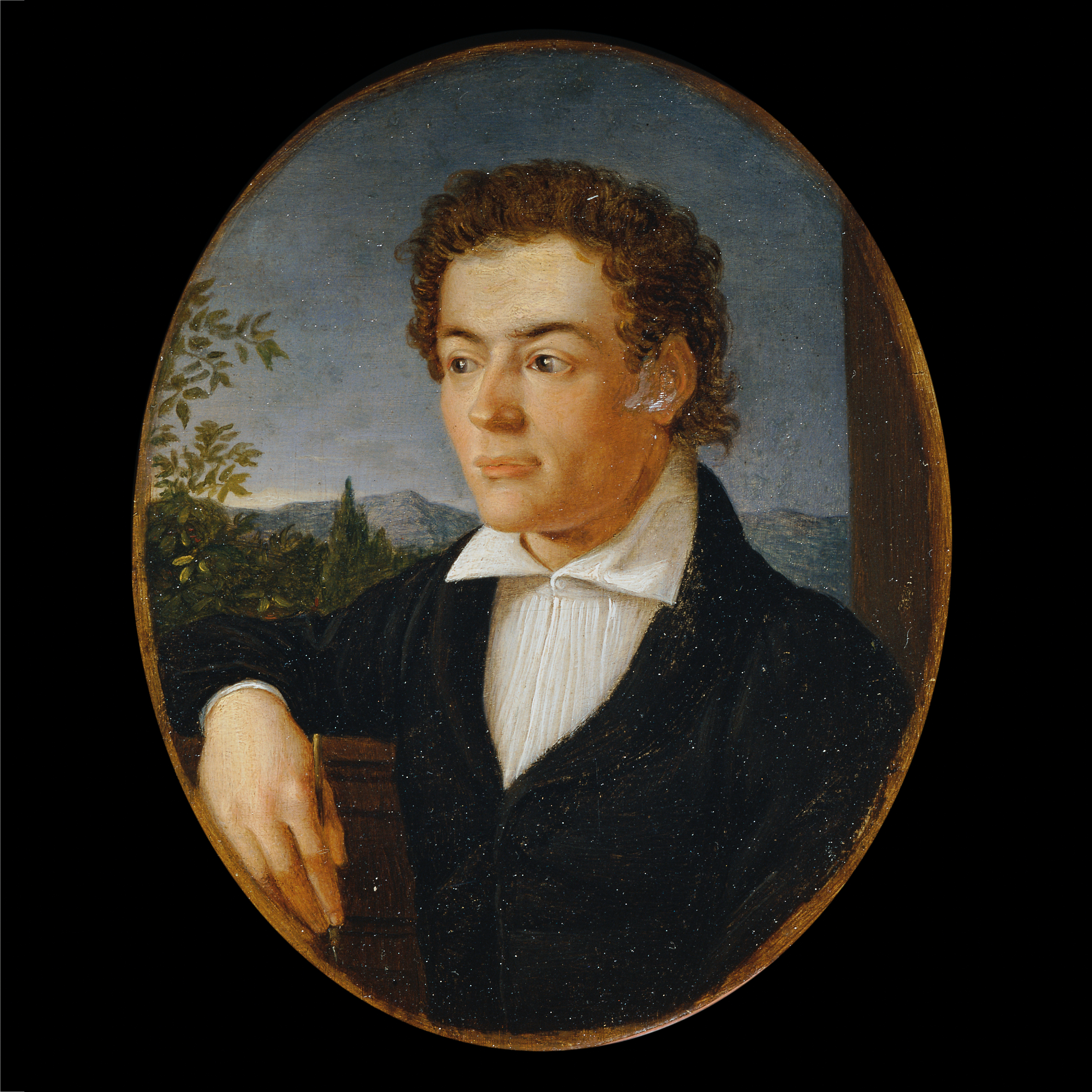
Brustbild eines jungen Mannes vor einer Abendlandschaft, Philipp Otto Runge

Brustbild eines jungen Mannes vor einer Abendlandschaft

Österreichische Galerie Belvedere

Porträtkopf eines Herrn, angeblich des Künstlers Bruder Daniel, Philipp Otto Runge

Porträtkopf eines Herrn, angeblich des Künstlers Bruder Daniel

Kupferstichkabinett Dresden

Kind mit Wickenblüte, Philipp Otto Runge

Kind mit Wickenblüte

Österreichische Galerie Belvedere

Brustbild eines jungen Mannes schräg nach rechts, wahrscheinlich fälschlich als Bildnis des Schwagers des Malers Friedrich Overbeck bezeichnet, Philipp Otto Runge

Brustbild eines jungen Mannes schräg nach rechts, wahrscheinlich fälschlich als Bildnis des Schwagers des Malers Friedrich Overbeck bezeichnet

Kupferstichkabinett Dresden

Kopf einer älteren Dame in weißer Haube, wahrscheinlich fälschlich als Bildnis der Mutter des Malers Friedrich Overbeck bezeichnet, Philipp Otto Runge

Kopf einer älteren Dame in weißer Haube, wahrscheinlich fälschlich als Bildnis der Mutter des Malers Friedrich Overbeck bezeichnet

Kupferstichkabinett Dresden

Die vier Tageszeiten: Nacht, Philipp Otto Runge, 1802–1807

Die vier Tageszeiten: Nacht

1802–1807 · Albertina

Die vier Tageszeiten: Morgen, Philipp Otto Runge, 1802–1807

Die vier Tageszeiten: Morgen

1802–1807 · Albertina

Nachbarn im Haus: J. Paul Getty Museum

Museumsseite
Irises, Vincent van Gogh, 1889

Vincent van Gogh

Schwertlilien, 1889

The Portal of Rouen Cathedral in Morning Light, Claude Monet, 1894

Claude Monet

The Portal of Rouen Cathedral in Morning Light, 1894

Wheatstacks, Snow Effect, Morning (Meules, Effet de Neige, Le Matin), Claude Monet, 1891

Claude Monet

Wheatstacks, Snow Effect, Morning (Meules, Effet de Neige, Le Matin), 1891

Sunrise (Marine), Claude Monet, 1872 or 1873

Claude Monet

Sunrise (Marine), 1872 or 1873

Still Life with Flowers and Fruit, Claude Monet, 1869

Claude Monet

Still Life with Flowers and Fruit, 1869

Saint Bartholomew, Rembrandt Harmensz. van Rijn, 1661

Rembrandt van Rijn

Saint Bartholomew, 1661

Daniel and Cyrus Before the Idol Bel, Rembrandt Harmensz. van Rijn, 1633

Rembrandt van Rijn

Daniel and Cyrus Before the Idol Bel, 1633

The Abduction of Europa, Rembrandt Harmensz. van Rijn, 1632

Rembrandt van Rijn

Der Raub der Europa, 1632