 Alessandro AlgardiItalien, 1595–1654
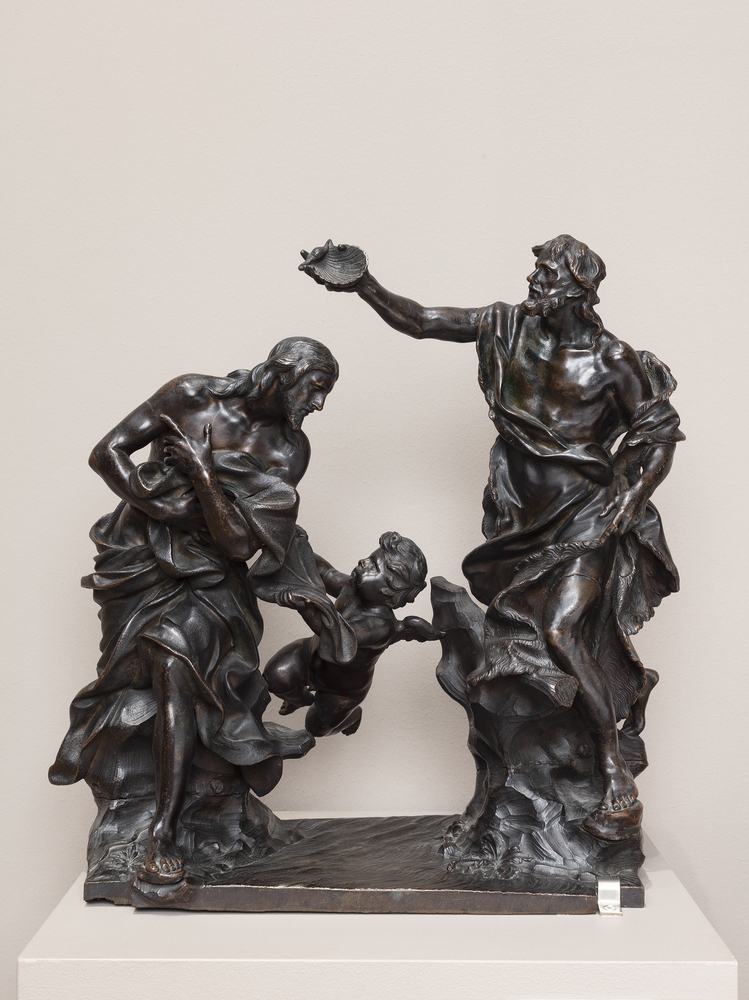
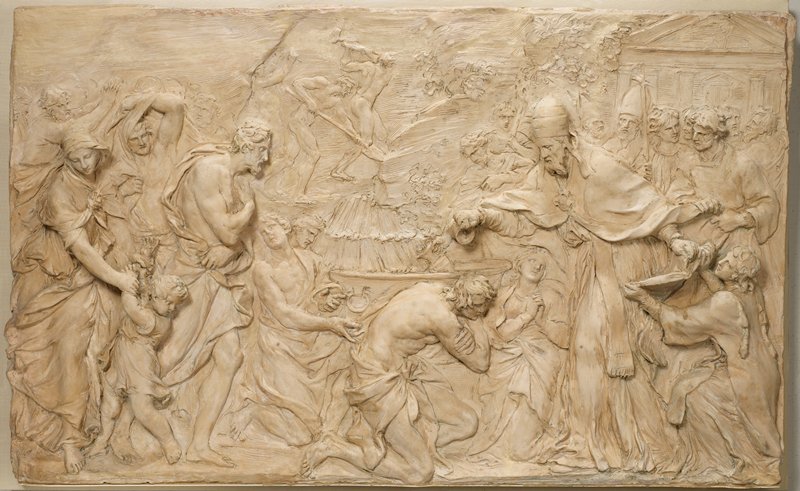
Pope Liberius Baptizing the Neophytes
Darf man es sehen?
Ja, es empfängt Besucher

Minneapolis, Vereinigte Staaten
Öffentlich ausgestellt.
- Geprüft
- Unverändert seit
- Quelle
- Das Museum
Über die Skulptur
This terra-cotta relief is the only known study in clay for a sculpture decorating the marble fountain of Saint Damasus in the Vatican. The fountain was erected in the 17th century by Pope Innocent X to mark his restoration of aqueducts built for Pope Damasus in the 4th century. The relief shows Damasus’ predecessor, Liberius, baptizing new converts to Christianity. Damasus stands behind him, lifting his mantle.
The easily worked medium of clay allowed Algardi to experiment and refine his ideas before carving the relief in marble. By sculpting the foreground figures almost fully in the round and those more distant in ever shallower relief, he achieved an illusion of depth and volume. Over time, weather and abrasive cleaning have taken a toll on the marble version, but the clay model remains evidence of the artist’s intent.
Minneapolis Institute of Art
Angaben
- Inventarnummer
- 59.17
Im Katalog
Quellen
- Minneapolis Institute of Art
- Bild: Minneapolis Institute of Art — public domain
Derweil im Leben von Alessandro Algardi
Das ganze Leben1625–1654 · Wirkungsort
Rome
1650
Meets Velázquez; commissions from Spain
He meets Diego Velázquez, who obtains commissions for his work from Spain: four chimney-pieces and the figures of the fountain of Neptune in the gardens of the Royal Palace of Aranjuez, and the tomb of the Count and Countess de Monterey in the Augustinian monastery at Salamanca.
in later years
A large studio, a fortune and pupils
In his later years he controls a large studio and amasses a great fortune. His classicizing manner is carried on by pupils such as Ercole Ferrata and Domenico Guidi, and Antonio Raggi initially trained with him (other accounts say all three then moved to Bernini); lesser-known assistants in his studio include Francesco Barrata, Girolamo Lucenti and Giuseppe Peroni.