ART WIKI32.963 ausgestellt
KarteSammlungKünstlerMuseenAusstellungenJournal
Anmelden

ART WIKI

Wo das Meisterwerk hängt und wann man vorgelassen wird.

Sammlungen: Art Institute of Chicago, Cleveland Museum of Art, Eremitage, Getty Villa, Harvard Art Museums, Hirshhorn Museum and Sculpture Garden, J. Paul Getty Museum, Louvre, Metropolitan Museum of Art, Minneapolis Institute of Art, Museum of Modern Art, National Gallery of Art, National Museum of Asian Art, National Portrait Gallery, Puschkin-Museum, Rijksmuseum Amsterdam, Russisches Museum, Smithsonian American Art Museum, Statens Museum for Kunst, Tretjakow-Galerie, Victoria and Albert Museum, Whitney Museum of American Art, Staatskatalog des Museumsfonds Russlands (274 Museen), Europeana (19 Museen), Wikidata (6 Museen), Paris Musées (12 Museen) und Joconde, die Museumsdatenbank des französischen Kulturministeriums (495 Museen). Die Bilder gehören ihren Rechteinhabern.

Rubriken

  • Karte
  • Suche
  • Sammlung
  • Meisterwerke
  • Jetzt ausgestellt
  • Künstler

Mehr

  • Museen & Galerien
  • Ausstellungen
  • Journal
  • Woher die Daten stammen
  • Datenschutz & Cookies
StartseiteKarteKatalog
  1. Sammlung/
  2. Harvard Art Museums/
  3. Paul Barroilhet (1810-1871)
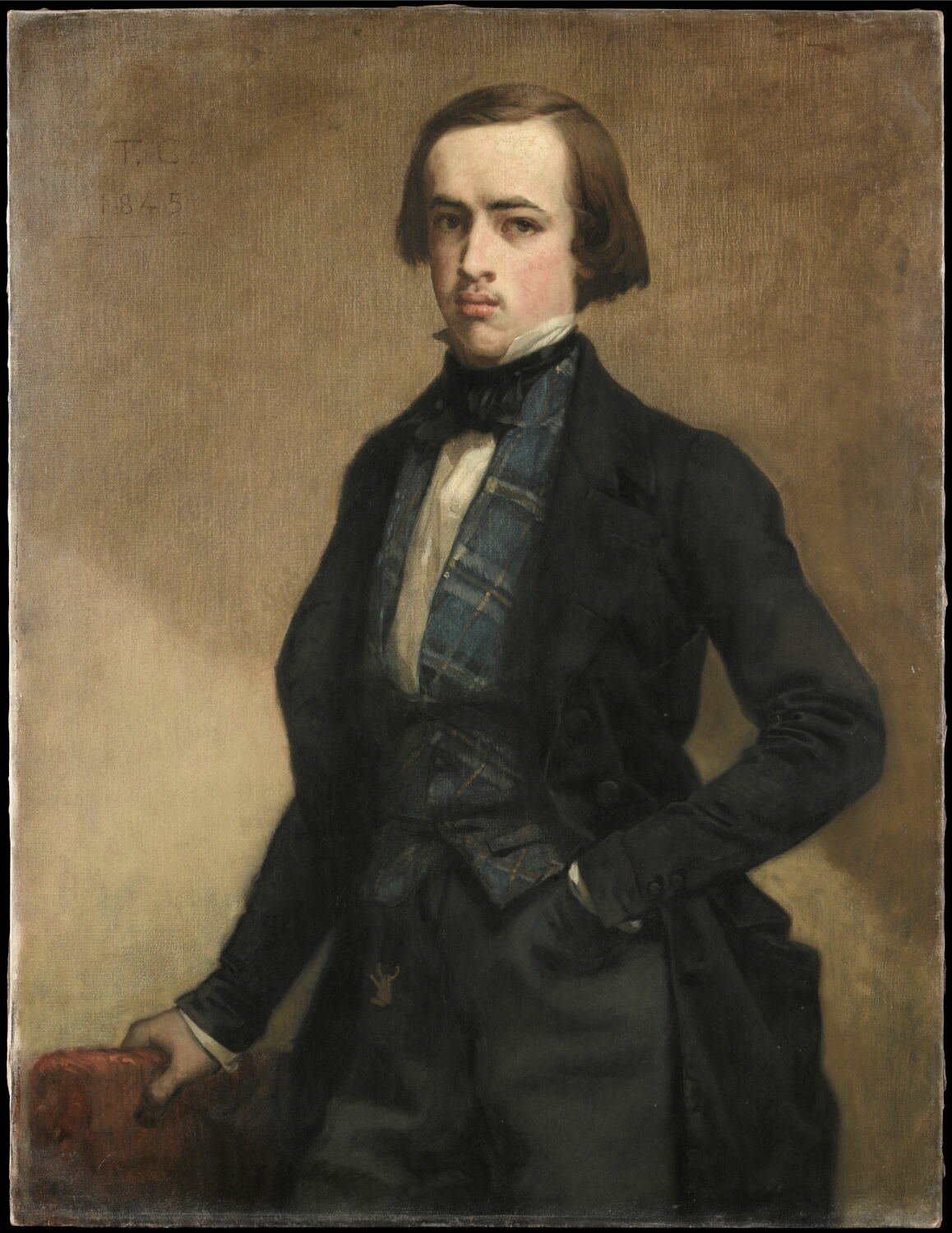
Paul Barroilhet (1810-1871), Thomas Couture, 1849
Thomas Couture, PorträtThomas CoutureFrankreich, 1815–1879

Paul Barroilhet (1810-1871)

1849 · Painting

Darf man es sehen?

Empfängt derzeit nicht

Harvard Art Museums

Cambridge, Vereinigte Staaten

Es gehört zur Sammlung, ist derzeit aber nicht ausgestellt.

Geprüft
vor 3 Tagen
Unverändert seit
27. Sept. 2026
Quelle
Das Museum
Auf der KarteMuseumsseite

Angaben

1849 · mit 34 Jahren
18151879
Inventarnummer
1943.223

Im Katalog

GemäldeÖlFranzösische MalereiRomantikRealismus19. JahrhundertFrankreich

Quellen

  • Harvard Art Museums
  • Bild: Harvard Art Museums — © President and Fellows of Harvard College

Derweil im Leben von Thomas Couture

Das ganze Leben
  1. 1847

    The Salon of 1847: the triumph of “The Romans of the Decadence”

    The picture meets with a resounding success and recognition: Théophile Gautier calls it the most remarkable work of the exhibition. Many find it symbolic that in the hall it takes the usual place of Veronese’s “The Wedding at Cana”, and some opinions favour the French canvas over the Italian classic.

  2. after 1847

    Opens an independent atelier in Paris

    Soon after this triumph, in the wake of which he called himself the only truly serious artist of his age, Couture opens an independent atelier on the streets of Laval and Pigalle in Paris. It is conceived as a rival to the École des Beaux-Arts: several dozen pupils study there, among them students from the USA and Germany, and Couture wants to train not geniuses but painters who know their craft, demanding individuality from them rather than imitation.

  3. 1847–1848

    A gold medal, and the state buys “The Romans”

    “The Romans of the Decadence” is awarded a first-class gold medal, and the state buys the picture for 12,000 francs. From 1848 it is shown in the collection of the Luxembourg Museum, and later it is transferred to the collection of the Musée d’Orsay.

  4. late 1840s – 1850s

    Commissions for murals from the state and the Church

    His innovative technique draws much attention, and from the late 1840s through the 1850s Couture receives government and church commissions for murals. He never completed the first two, and the third met with mixed criticism.

  5. 1848–1852

    The commission for “The Enrolment of the Volunteers in 1792” is cancelled

    The commission for the picture “The Enrolment of the Volunteers in 1792” (1848–1852), intended for the hall of the National Assembly and on which Couture pinned great hopes of recognition, is cancelled after Louis-Napoleon comes to power.

  6. January 1850

    Manet becomes his pupil

    From January 1850 Couture teaches Édouard Manet for more than six years. In the end Manet broke with his teacher and with academism and became one of the founders of Impressionism.
Mehr von Thomas Couture

Alle Werke
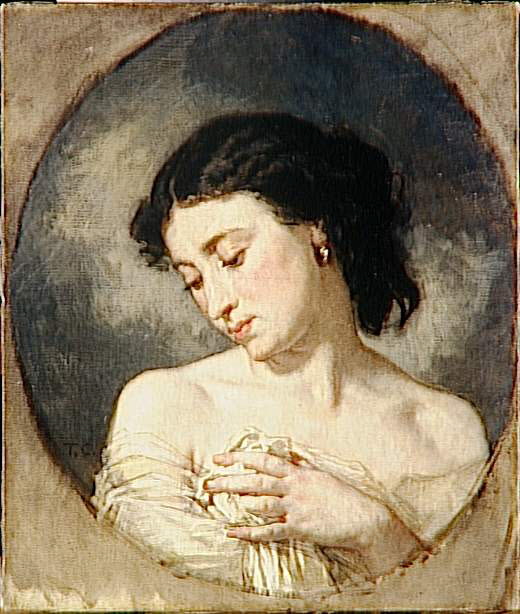
Jeune femme en buste, les épaules dénudées., Couture, Thomas, 2e tiers du XIXe siècle (1835 - 1879)

Jeune femme en buste, les épaules dénudées.

2e tiers du XIXe siècle (1835 - 1879) · Louvre

Marie Simonet, du village de Villemoyenne (Aisne)., Couture, Thomas, 2e quart du XIXe siècle (1836)

Marie Simonet, du village de Villemoyenne (Aisne).

2e quart du XIXe siècle (1836) · Louvre

Adolphe Moreau (1827-1882), fils du collectionneur Adolphe Moreau et père du donateur des MuséesNationaux, Étienne Moreau-Nélaton., Couture, Thomas, 2e quart du XIXe siècle (1845)

Adolphe Moreau (1827-1882), fils du collectionneur Adolphe Moreau et père du donateur des MuséesNationaux, Étienne Moreau-Nélaton.

2e quart du XIXe siècle (1845) · Louvre

Romans of the Decadence, Thomas Couture, 1847

Romans of the Decadence

1847 · Harvard Art Museums

The Bird Catcher, Thomas Couture, c. 1857

The Bird Catcher

c. 1857 · Art Institute of Chicago

The Romans of the Decadence, Thomas Couture, 1847

The Romans of the Decadence

1847 · Musée d’Orsay

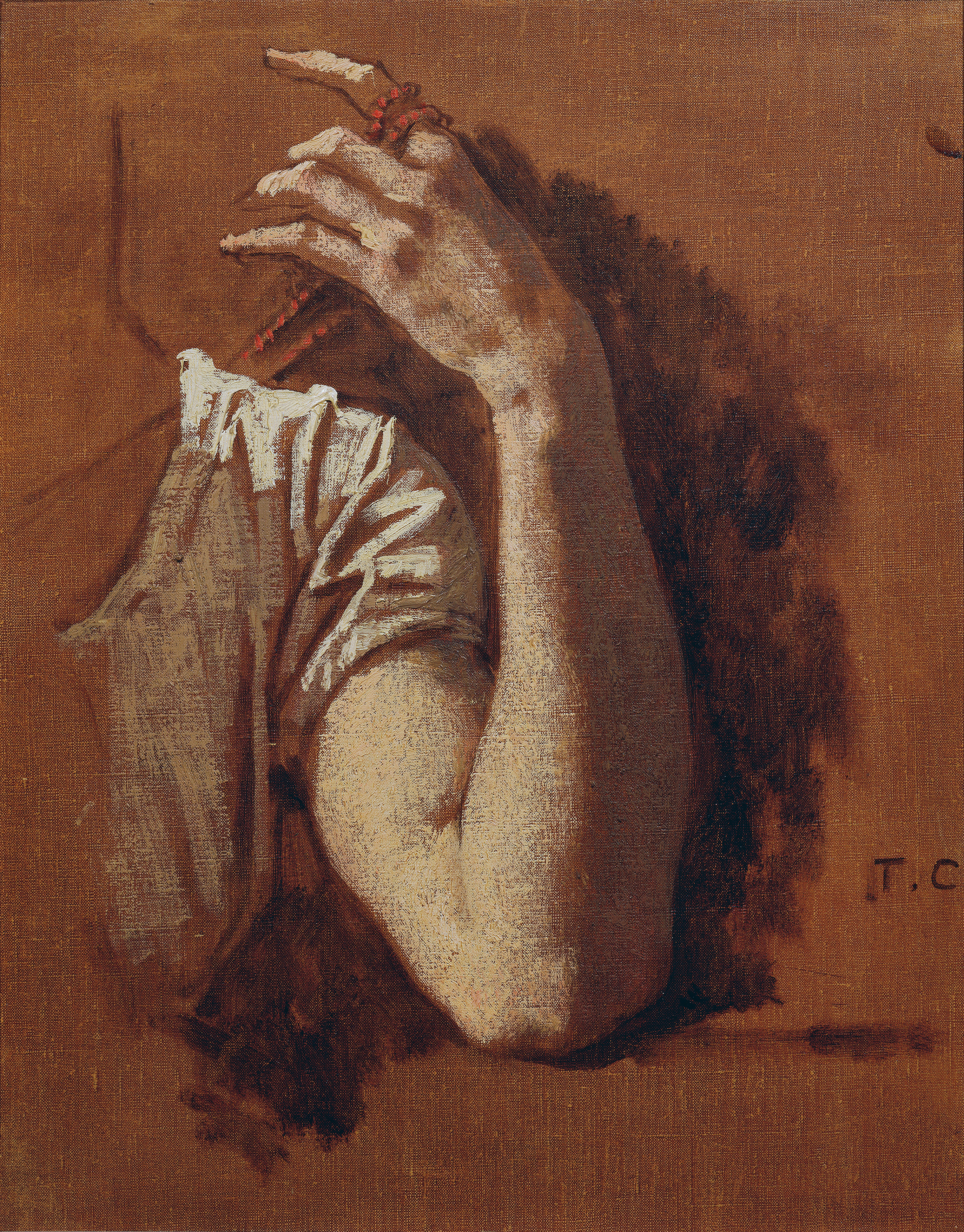
Armstudie, Thomas Couture

Armstudie

Österreichische Galerie Belvedere

La Courtisane, Thomas Couture, c. 19th century

La Courtisane

c. 19th century · Musée d’Orsay

Nachbarn im Haus: Harvard Art Museums

Museumsseite
Glück auf in Deutschland (N:4), Pınar Öğrenci, 2024

Pınar Öğrenci

Glück auf in Deutschland (N:4), 2024

Glück auf in Deutschland (N:10), Pınar Öğrenci, 2024

Pınar Öğrenci

Glück auf in Deutschland (N:10), 2024

Glück auf in Deutschland (N:7b), Pınar Öğrenci, 2024

Pınar Öğrenci

Glück auf in Deutschland (N:7b), 2024

Glück auf in Deutschland (N:6), Pınar Öğrenci, 2024

Pınar Öğrenci

Glück auf in Deutschland (N:6), 2024

Glück auf in Deutschland (N:11), Pınar Öğrenci, 2024

Pınar Öğrenci

Glück auf in Deutschland (N:11), 2024

Dwarpalika (Temple Guardian), Sneha Shrestha, 2023

Sneha Shrestha

Dwarpalika (Temple Guardian), 2023

The Eternal Pond of the Universe, Bingyi 冰逸, 2022-2024

Bingyi 冰逸

The Eternal Pond of the Universe, 2022-2024

Head from a Statue of Ur-Ningirsu, Ruler of Lagash, c. 2113 BCE-2017 BCE

Head from a Statue of Ur-Ningirsu, Ruler of Lagash, c. 2113 BCE-2017 BCE