 Robert RauschenbergVereinigte Staaten, 1925–2008
Park/ROCI Mexico
Darf man es sehen?
Empfängt derzeit nicht

Minneapolis Institute of Art
Minneapolis, Vereinigte Staaten
Es gehört zur Sammlung, ist derzeit aber nicht ausgestellt.
- Geprüft
- Unverändert seit
- Quelle
- Das Museum
Über das Gemälde
“One of the reasons that I am so thankful that I’m an artist is that the language of being an artist works anywhere. There is no country that is so rich or so poor that they don’t have an artistic culture. Artists always understand each other…I even feel restricted with the world as small as it is already. I’m trying to take advantage of as much as possible.”
- Robert Rauschenberg, “A Conversation about Art and ROCI, ” 1990
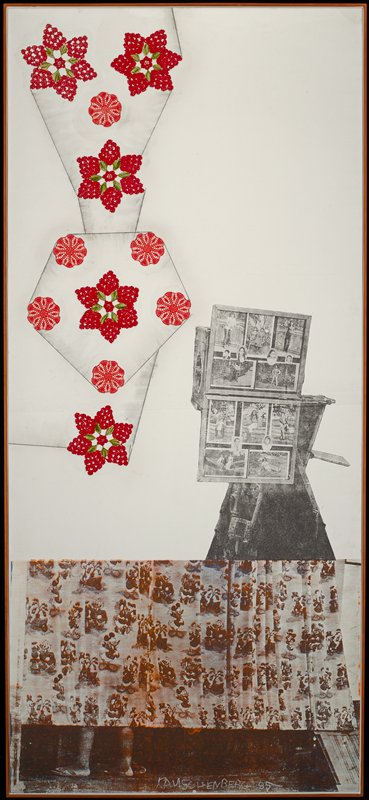
Park/ROCI MEXICO was created in Mexico City by American artist Robert Rauschenberg as a part of his global art tour ROCI – Rauschenberg Overseas Cultural Interchange. Rauschenberg traveled to 22 countries, creating art by using local artistic traditions and
Weiterlesen
materials. In Park/ROCI MEXICO, the vibrant colors and rich religious culture of Mexico are made visible in the crimson poinsettia doilies, which have been arranged to resemble a “Dia de los Muertos” skull. The rest of the canvas is starkly black and white – based on the collage of Rauschenberg’s own photographs and those he found in Mexico, screen printed on the canvas to create a complex rhythm with the poinsettia skeleton. This work would have traveled to exhibitions in the 21 other countries visited by ROCI, creating an
artistic dialogue between nations by presenting Rauschenberg’s exploration of Mexican artistic and visual culture.
Minneapolis Institute of Art
Angaben
- Inventarnummer
- 2013.75
Im Katalog
Quellen
- Minneapolis Institute of Art
- Bild: Minneapolis Institute of Art — Robert Rauschenberg, Park/ROCI/Mexico, 1985 © Robert Rauschenberg Foundation
Derweil im Leben von Robert Rauschenberg
Das ganze Lebenc. 1983
Darryl Pottorf becomes his life partner
For the last 25 years of his life Rauschenberg's partner was the artist Darryl Pottorf, formerly his assistant.
1983
Grammy for a Talking Heads album design
Rauschenberg won a Grammy for his design of the limited edition of Talking Heads' album “Speaking in Tongues”.
1984
Announces ROCI at the United Nations
In 1984 Rauschenberg announced at the United Nations the launch of the Rauschenberg Overseas Culture Interchange (ROCI), funded almost entirely by himself. Over seven years he toured ten countries — Mexico, Chile, Venezuela, China, Tibet, Japan, Cuba, the USSR, Germany and Malaysia — taking photographs, making works inspired by each culture, exhibiting them locally and often donating one to a local institution.