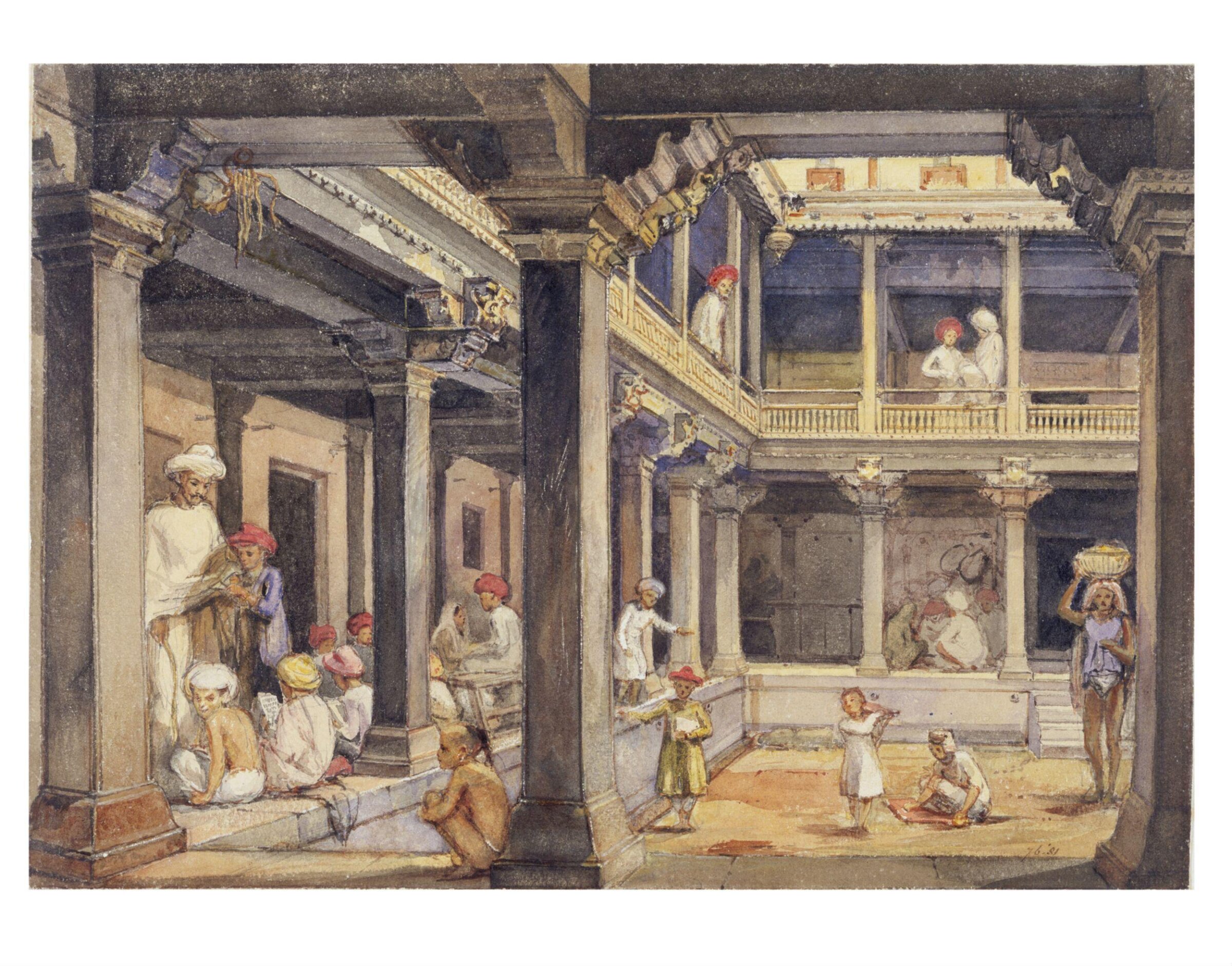
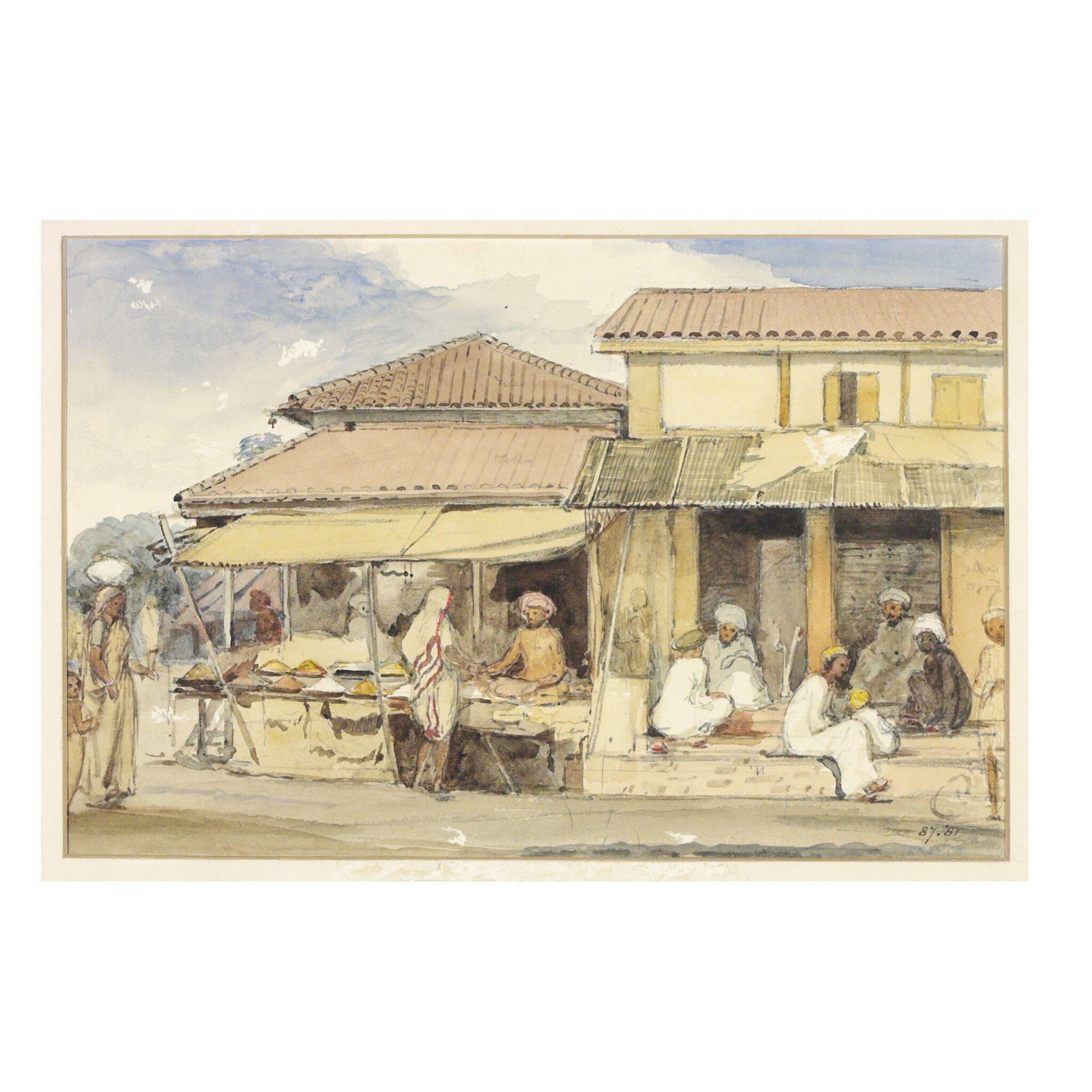
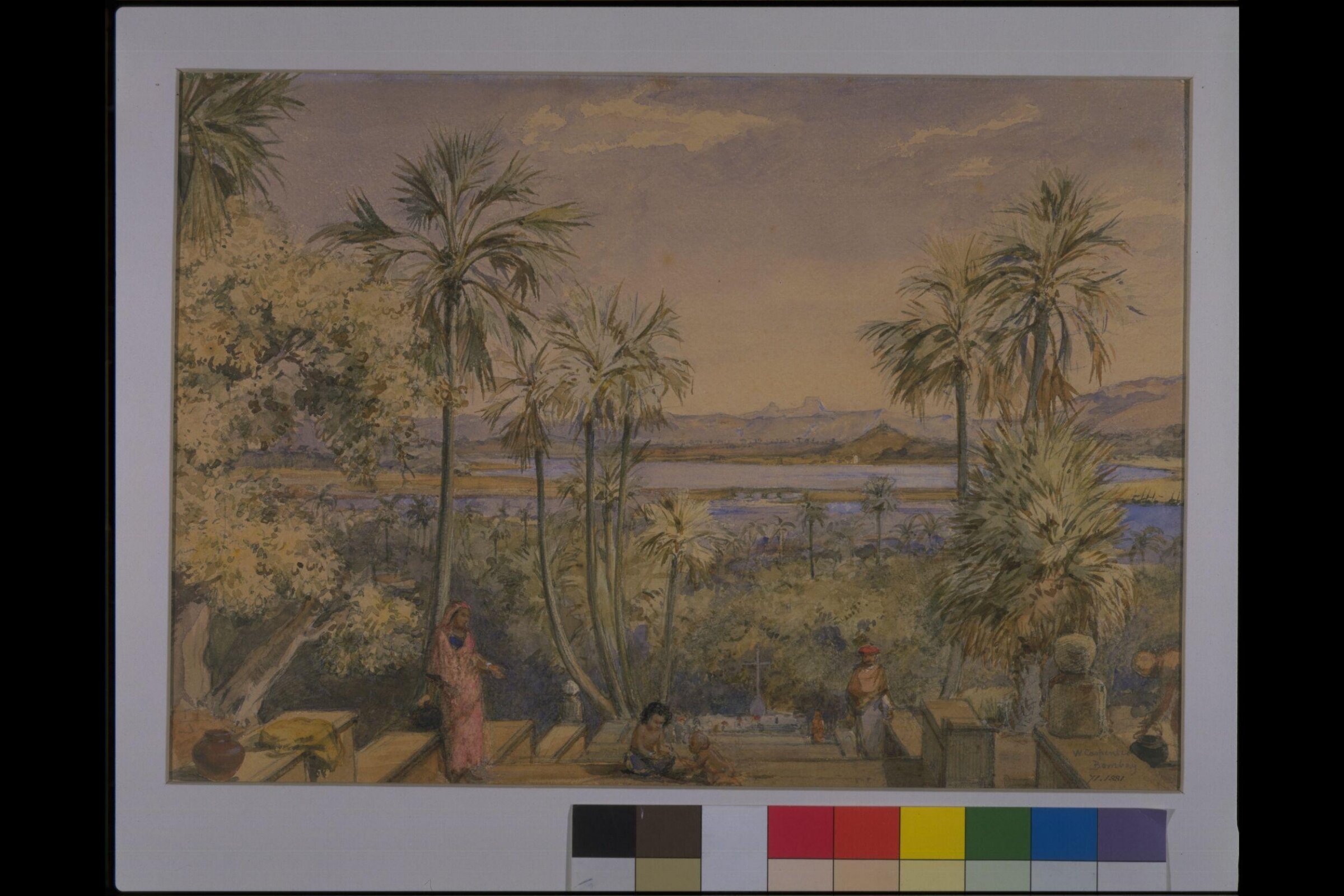
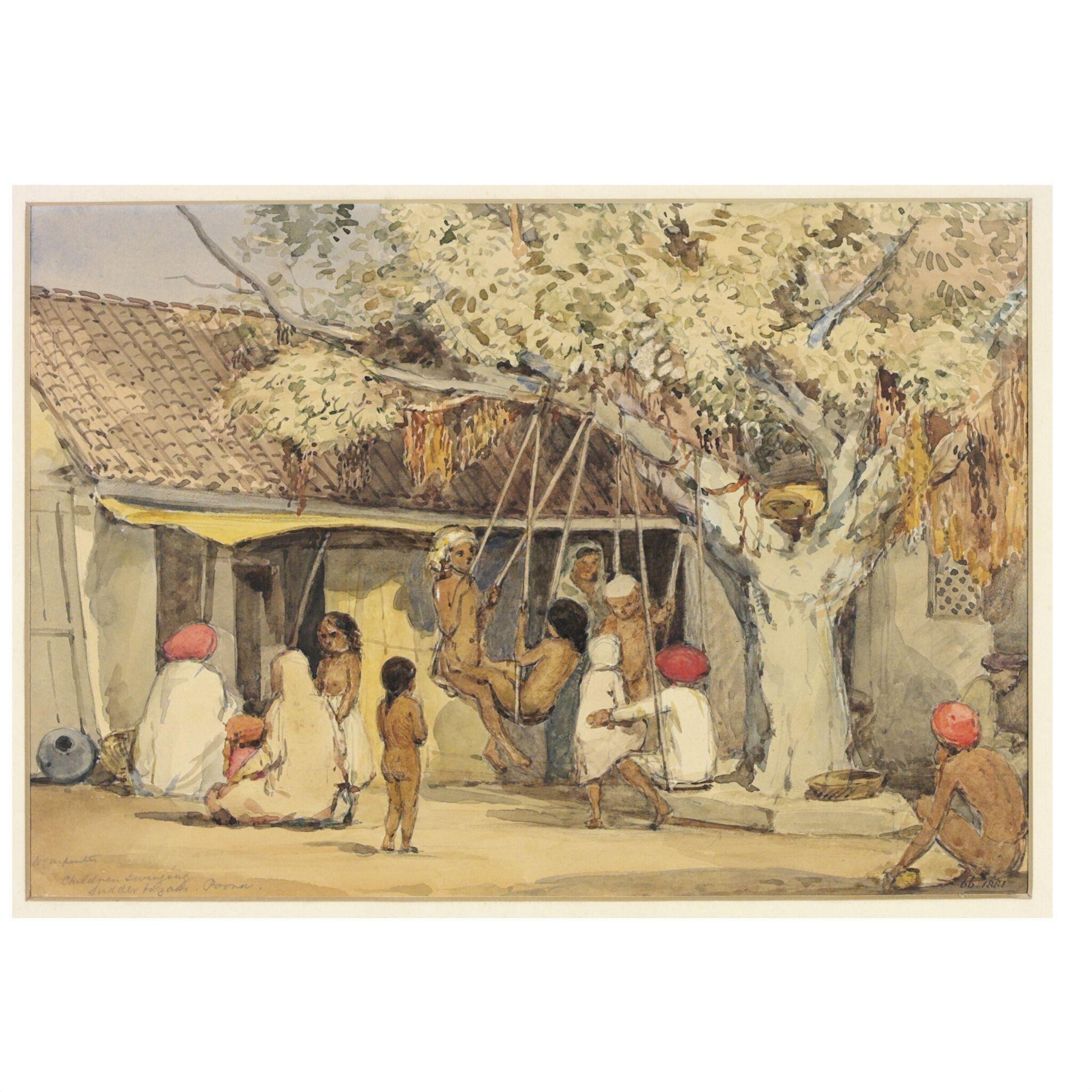
William Carpenter was the eldest son of the distinguished portrait painter Margaret Sarah Carpenter and of William Hookham Carpenter, who became Keeper of the Prints and Drawings Department at the British Museum. In early 1850 he set off in the footsteps of his younger brother Percy, also an artist, and landed in Bombay. He spent much of his time painting portraits of local rulers and the surrounding countryside, often wearing Indian dress himself. He travelled widely, from Sri Lanka in the south to Kashmir in the north, and he also spent some time in the Punjab and Afghanistan before moving south to Rajasthan. He appears to have returned to England in 1856. Ten years later he was living in Boston, USA, but he moved back to London, where he died in 1899.
Read on
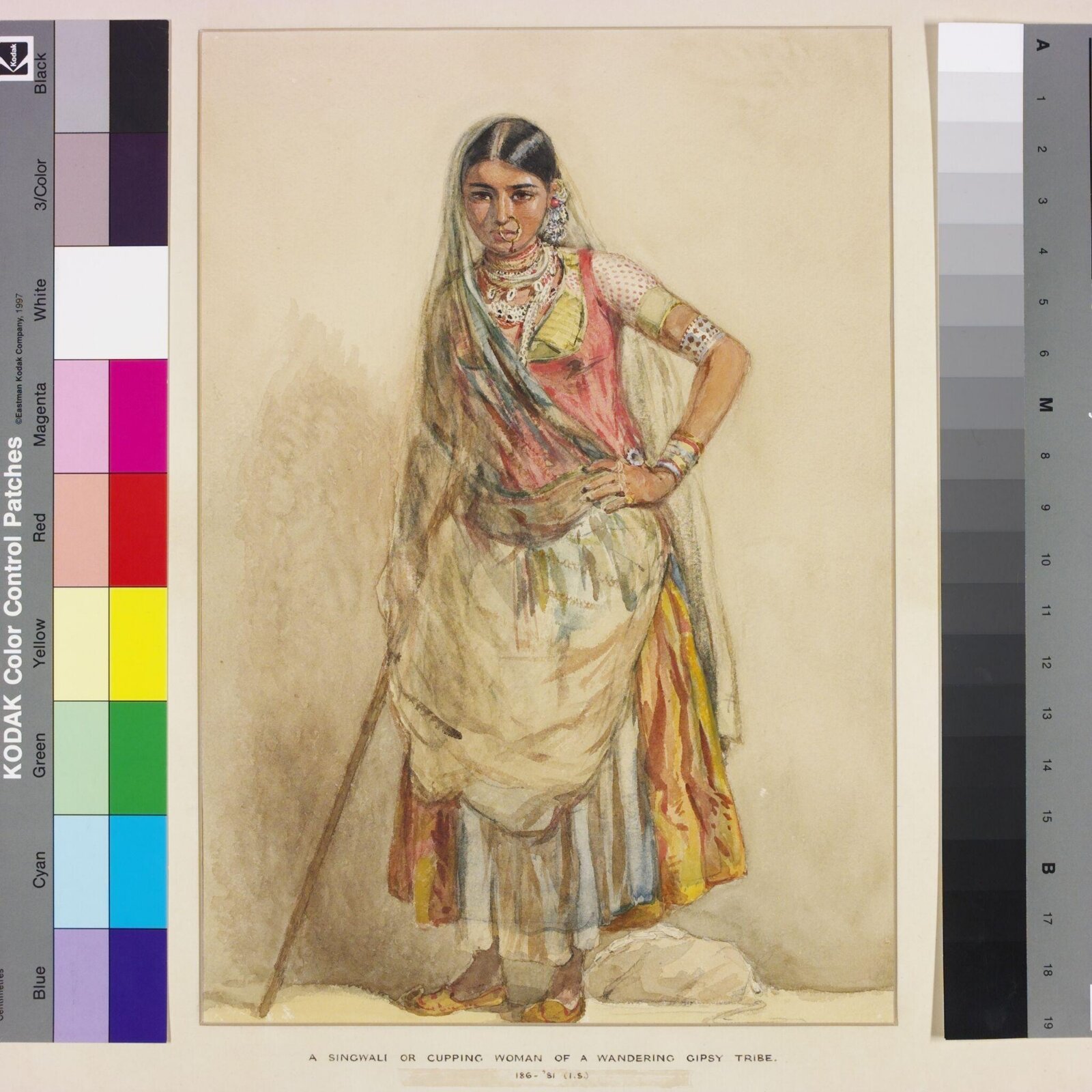
Carpenter's Indian pictures display a particular interest in costume, agriculture, and the day-to-day lives of the local inhabitants. From the title provided on the painting's mount, this work is a portrait of a Singiwala woman. The Singiwala are a nomadic community in north-west India and Pakistan. The name Singiwala is derived from the community's traditional practice of treating wounds using a horn ('Singi') to suction impure blood from the body, also known as cupping.