Mukund
Painting
Darf man es sehen?
Empfängt derzeit nicht

Victoria and Albert Museum
London, Vereinigtes Königreich
Es gehört zur Sammlung, ist derzeit aber nicht ausgestellt.
- Geprüft
- vor 9 Tagen
- Unverändert seit
- 25. Sept. 2026
- Quelle
- Sammlungsdaten des Museums selbst
About the painting
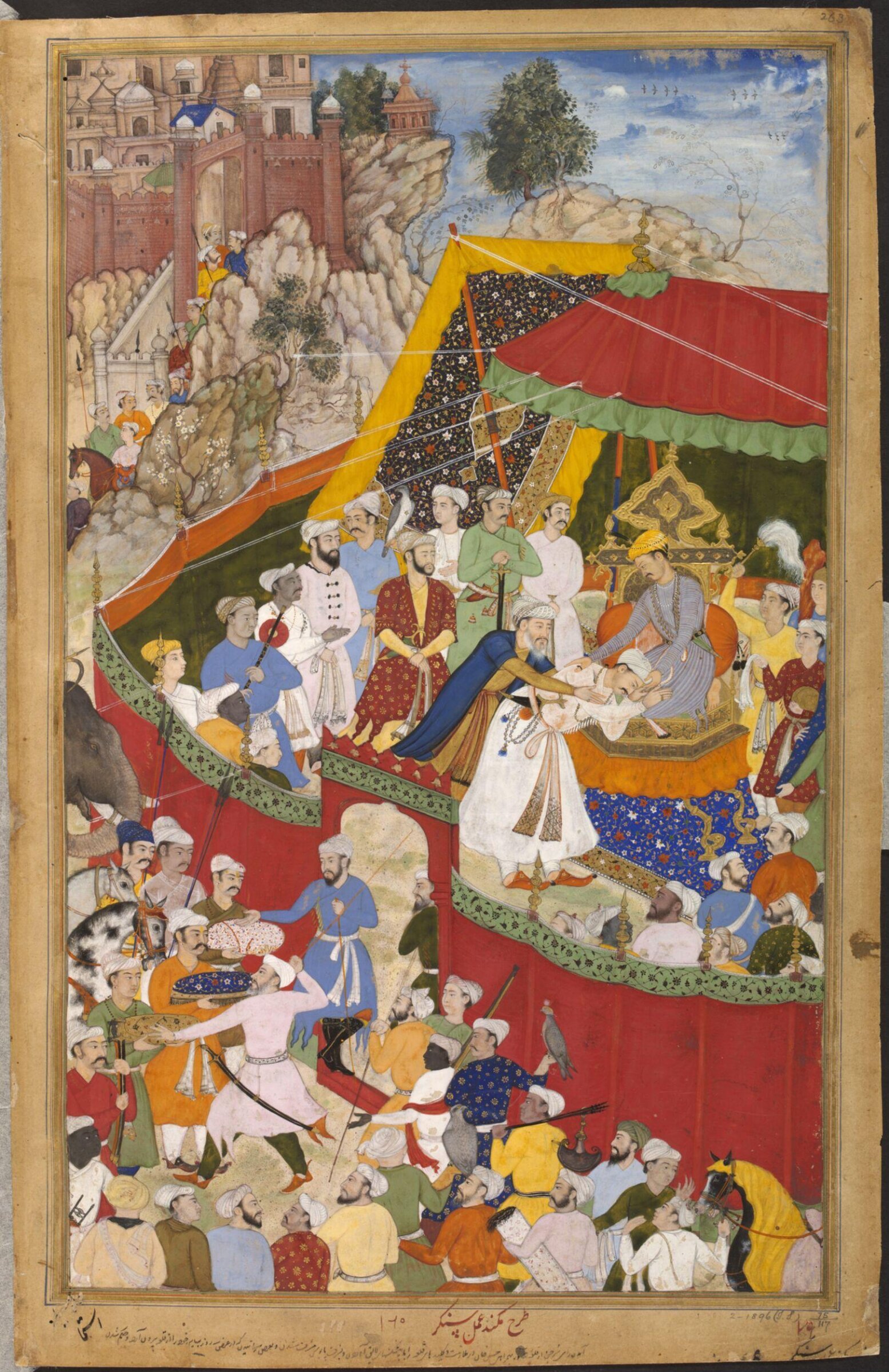
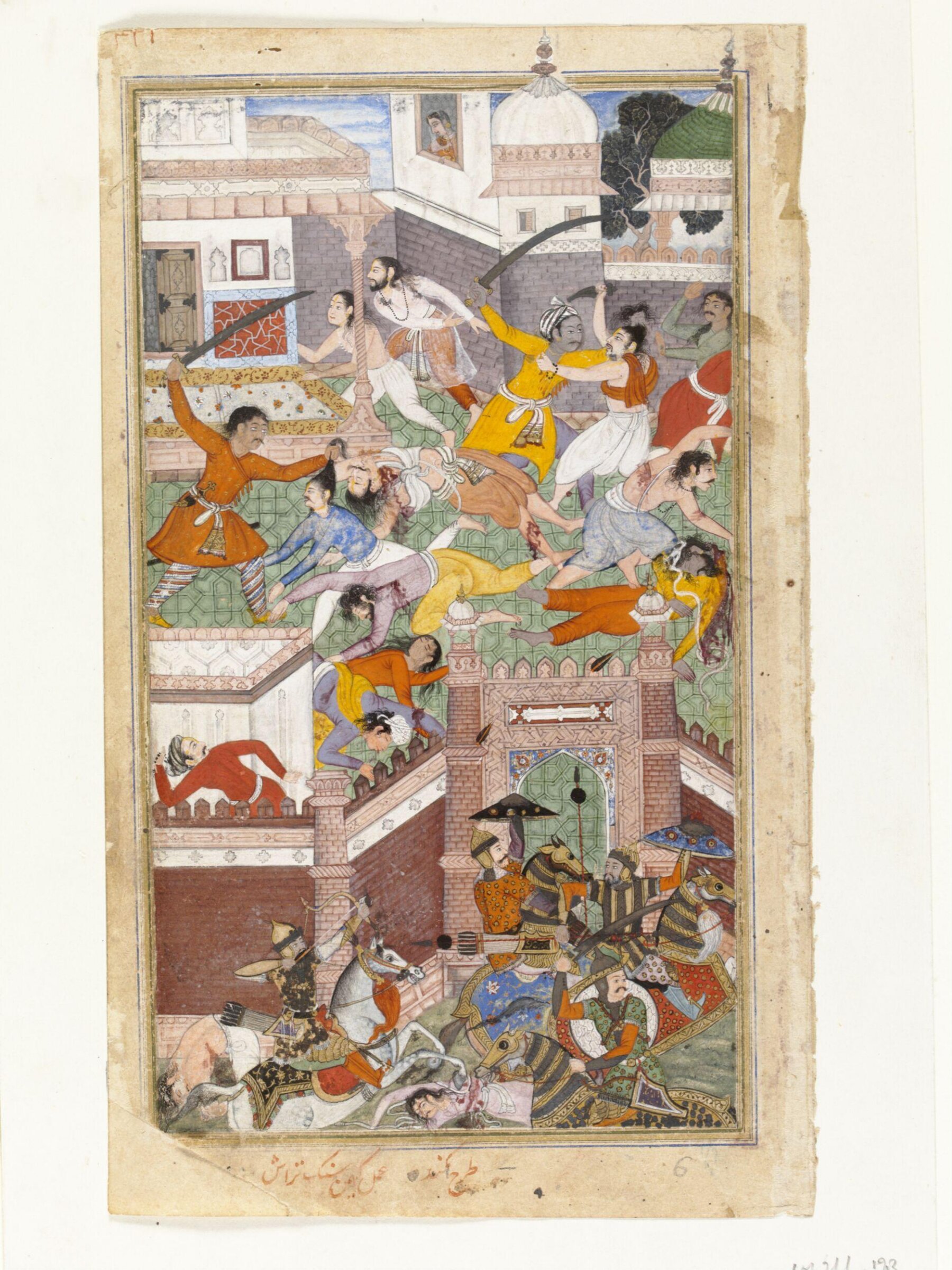
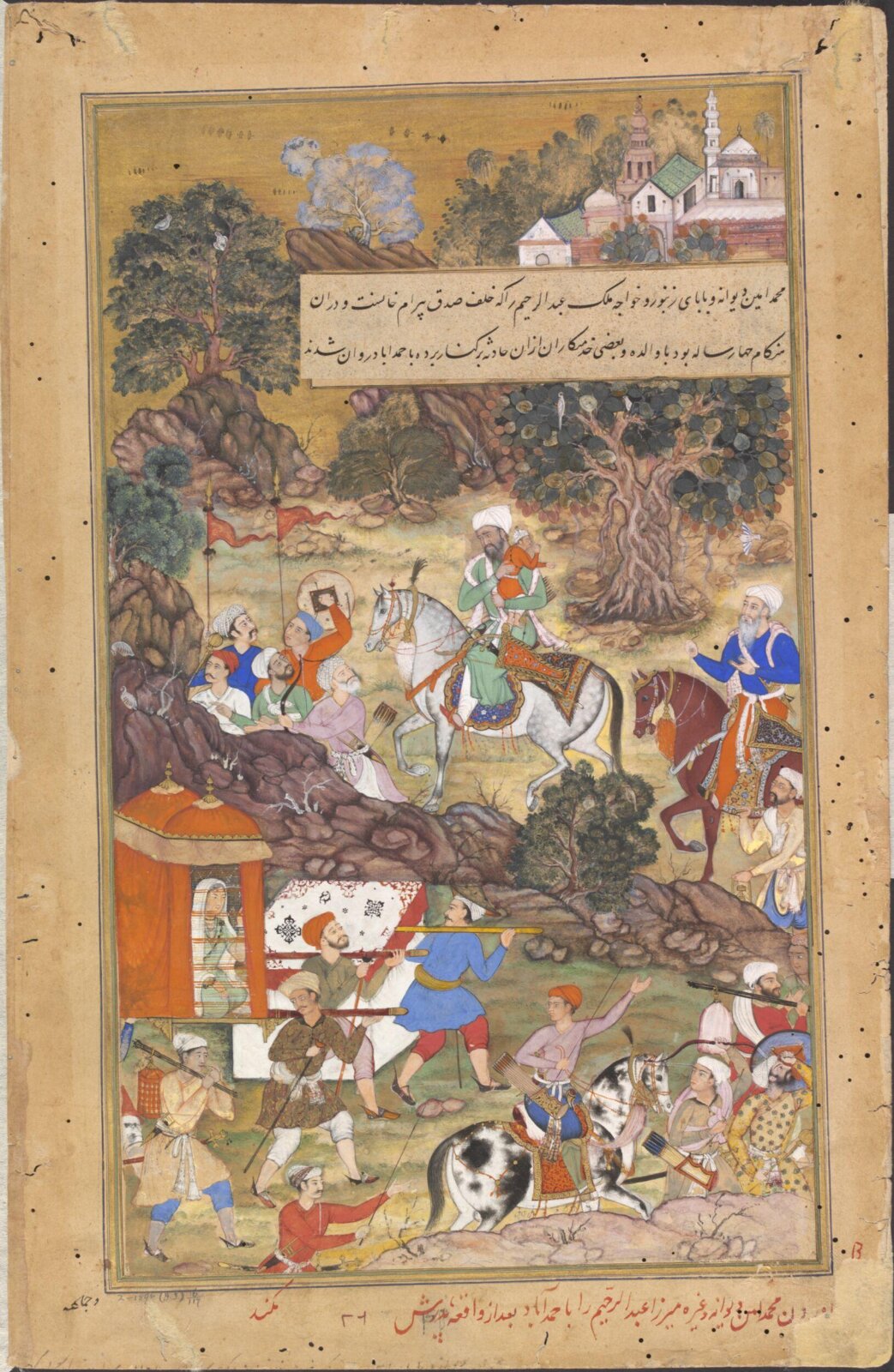
This illustration to the Akbarnama depicts Muhammad Amin Diwan escorting the widow of Bairam Khan and her four-year old son Abdur Rahim to Ahmadabad in 1561, following the assassination of Bairam Khan shown in illustration IS.2:5-1896. Bairam Khan, a close companion of Akbar's father Humayun, had been the guardian (ataliq) of the young emperor after his accession at the age of 13. He also guided him in many military victories, thus increasing the territory under Mughal control. However, as Akbar grew older, tensions between the two increased and in 1560 Bairam Khan had rebelled against him. The emperor forgave Bairam Khan, but it was agreed that he would leave Hindustan to make the pilgrimage to Mecca and Medina. On his way to the pilgrim port of Surat, he was assassinated by an Afghan whose father had been killed in battle by Mughal forces led by Bairam Khan.
Read on
His widow and her son Abd ur-Rahim stayed in Ahmedabad before being taken to the protection of Akbar's household.The boy grew up to reach the highest rank in the Mughal hierarchy and was a renowned scholar, a poet in several languages including Persian and Hindavi, and a translator.
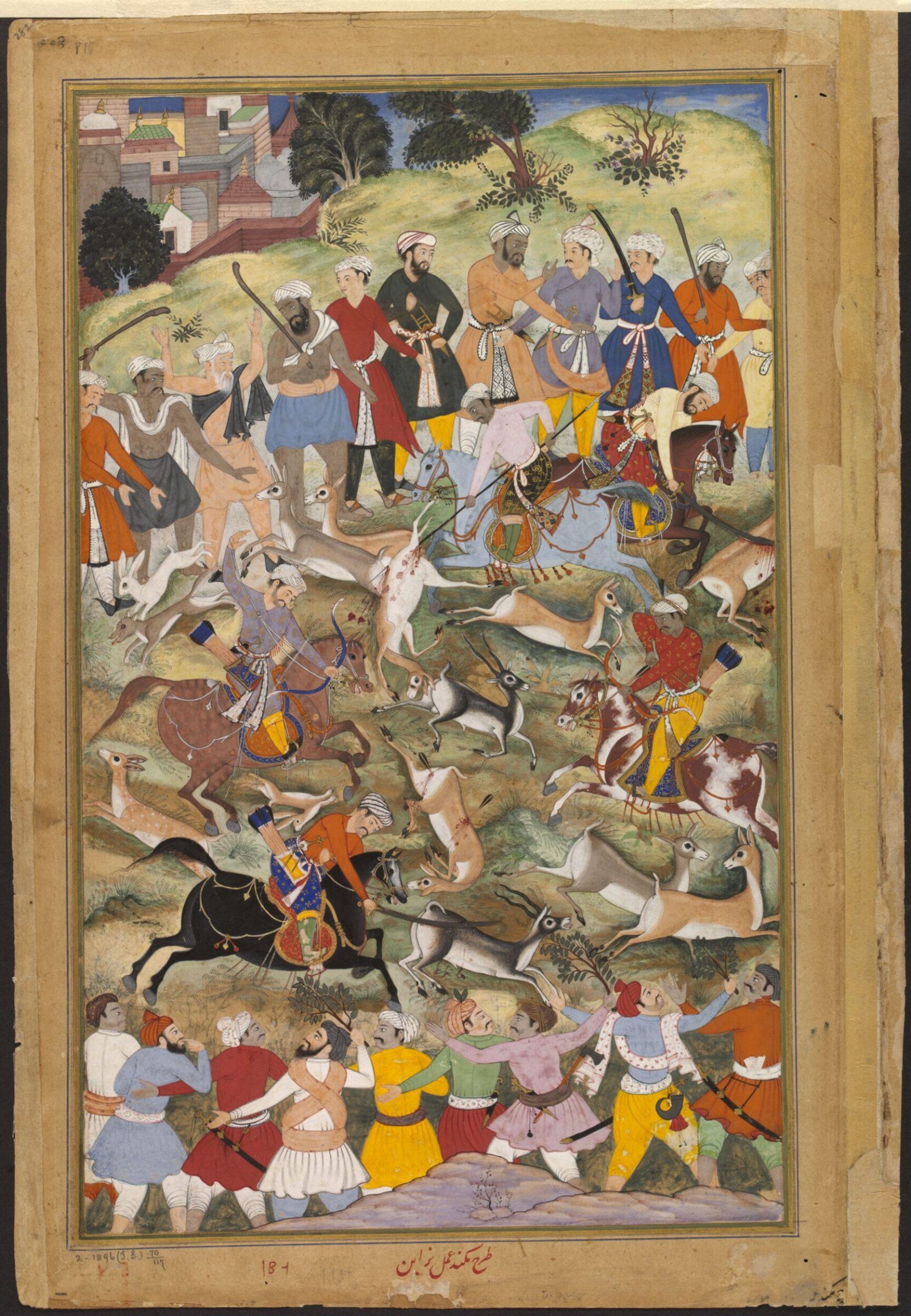
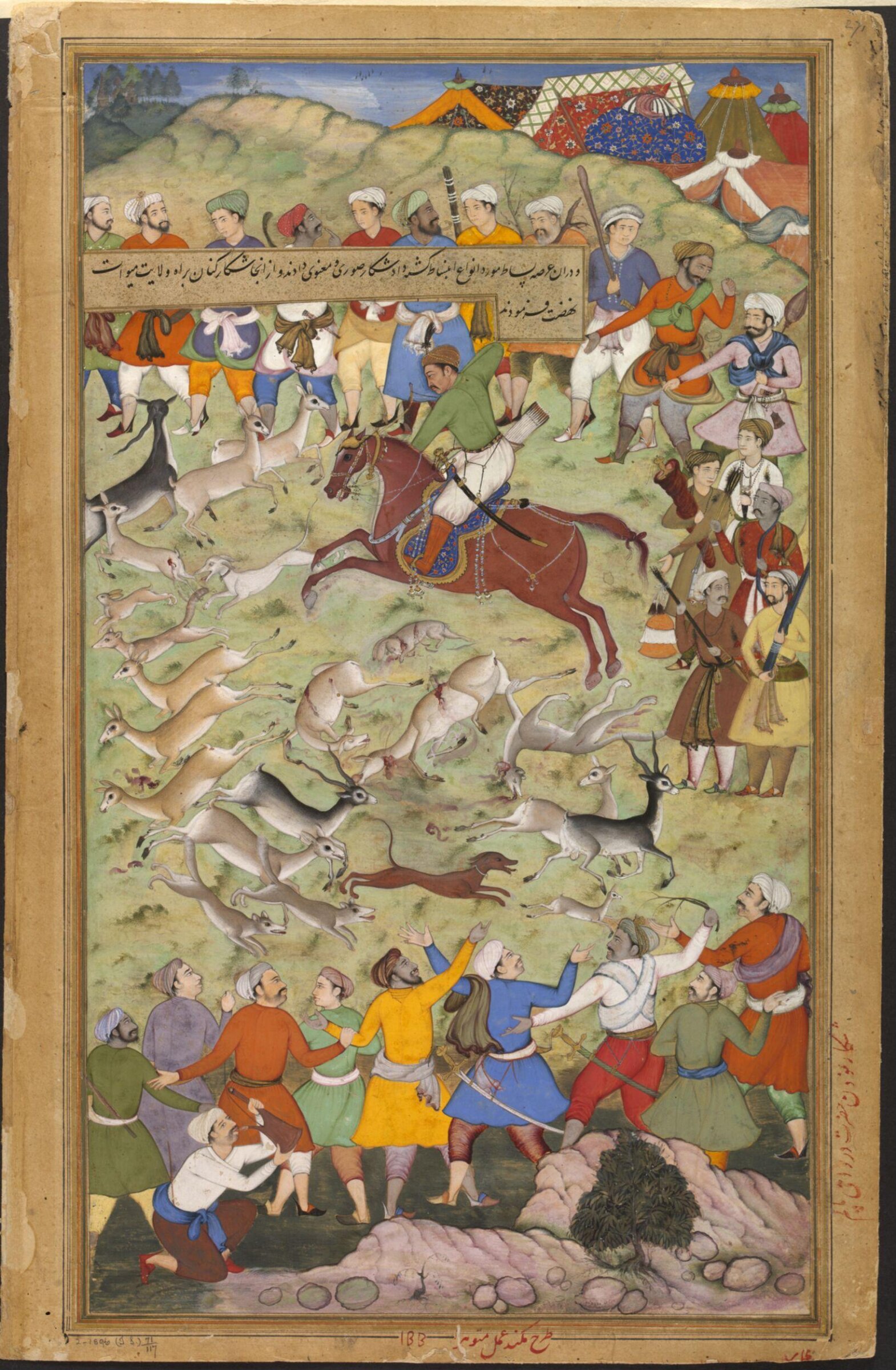
The Akbarnama was commissioned by the emperor Akbar as the official chronicle of his reign. It was written by his court historian and biographer Abu'l Fazl between 1590 and 1596 and illustrataed concurrently by at least forty-nine different artists from Akbar's studio. After Akbar's death in 1605, this manuscript remained in the library of his son, Jahangir (r. 1605-27) and later Shah Jahan (r. 1628-58). The Victoria and Albert Museum purchased it in 1896 from the widow of Major General John Clarke, Commissioner of Oudh, India, between 1858 and 1862. This partial manuscript is thought to be the earliest illustrated copy of the Akbarnama. It drew upon the expertise of some of the best royal painters of the time, many of whom receive special mention by Abu'l Fazl in the third volume of the Akbarnama, the A'in-i Akbari. The inscriptions in red ink on the bottom of the paintings refer to the artists and indicate that this was a royal copy.
Victoria and Albert Museum
Angaben
- Inventarnummer
- IS.2:6-1896
What it shows
Im Katalog
Quellen
- Victoria and Albert Museum: the museum's own open data · abgerufen vor 9 Tagen
- Bild: Victoria and Albert Museum — © Victoria and Albert Museum, London