Johan Christian DahlNorwegen, 1788–1857
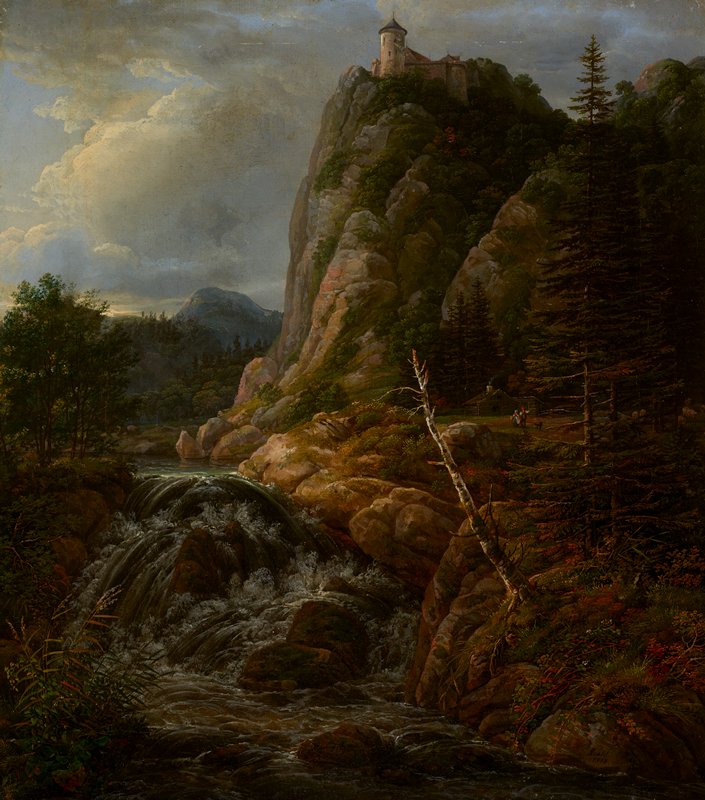
Norwegian Landscape
Kann ich es sehen?
Derzeit nicht ausgestellt
Wo ist „Norwegian Landscape“ heute? Sammlung: Schwedisches Nationalmuseum, Stockholm. Derzeit nicht ausgestellt. Geprüft 9. Oktober 2026.

Stockholm, Schweden
Es gehört zur Sammlung, ist derzeit aber nicht ausgestellt.
- Geprüft
- Unverändert seit
- Quelle
- Website des Museums
Angaben
Im Katalog
Ausstellungen
Derzeit nicht ausgestellt
Schwedisches Nationalmuseum · 9. Okt. 2026 — jetzt · Geprüft
Ob es ausgestellt war, ist unbekannt
Schwedisches Nationalmuseum · 27. Sept. 2026 — 9. Okt. 2026 · Unbestätigt
Quellen
- Schwedisches Nationalmuseum
- Bild: Schwedisches Nationalmuseum — Public Domain Mark 1.0
Im Leben von Johan Christian Dahl
Das ganze Leben1820
Trip to Italy at the prince's invitation
Prince Christian Frederik, then in Italy, invites Dahl to join him at the Gulf of Naples; the artist, who was courting Emilie von Bloch at the time, marries her hurriedly and sets off the next day. He spends ten months in Italy (other accounts have the journey lasting until 1823), and it is there, in the strong southern light, that his art truly flowers.
1820
Admitted to the Dresden Academy of Fine Arts
Dahl is accepted into the Dresden academy two years after arriving in the city.
12. Juni 1820
Married: Emilie von Block
1821
Rome: museums, acquaintances and landscapes for sale
In February 1821 Dahl goes to Rome, spending much time in museums, meeting other artists and painting pictures to sell, among them landscapes inspired by the mountains of Norway. He said that only in Rome did he truly come to appreciate Norwegian nature.
1822
Daughter born: Caroline Elisabeth Dahl
1823
A house for two families: Dahl moves in with Friedrich
The two families share a house in Dresden, and Dahl's students — Knud Baade, Peder Balke, Thomas Fearnley — come under the equal influence of both masters, though Dahl's own more spontaneous, painterly manner soon prevails. Clients sometimes commission pictures from both, a tranquil coastal scene by Friedrich to pair with a stormier subject by Dahl.