 Viktor Vasnetsov1848–1926
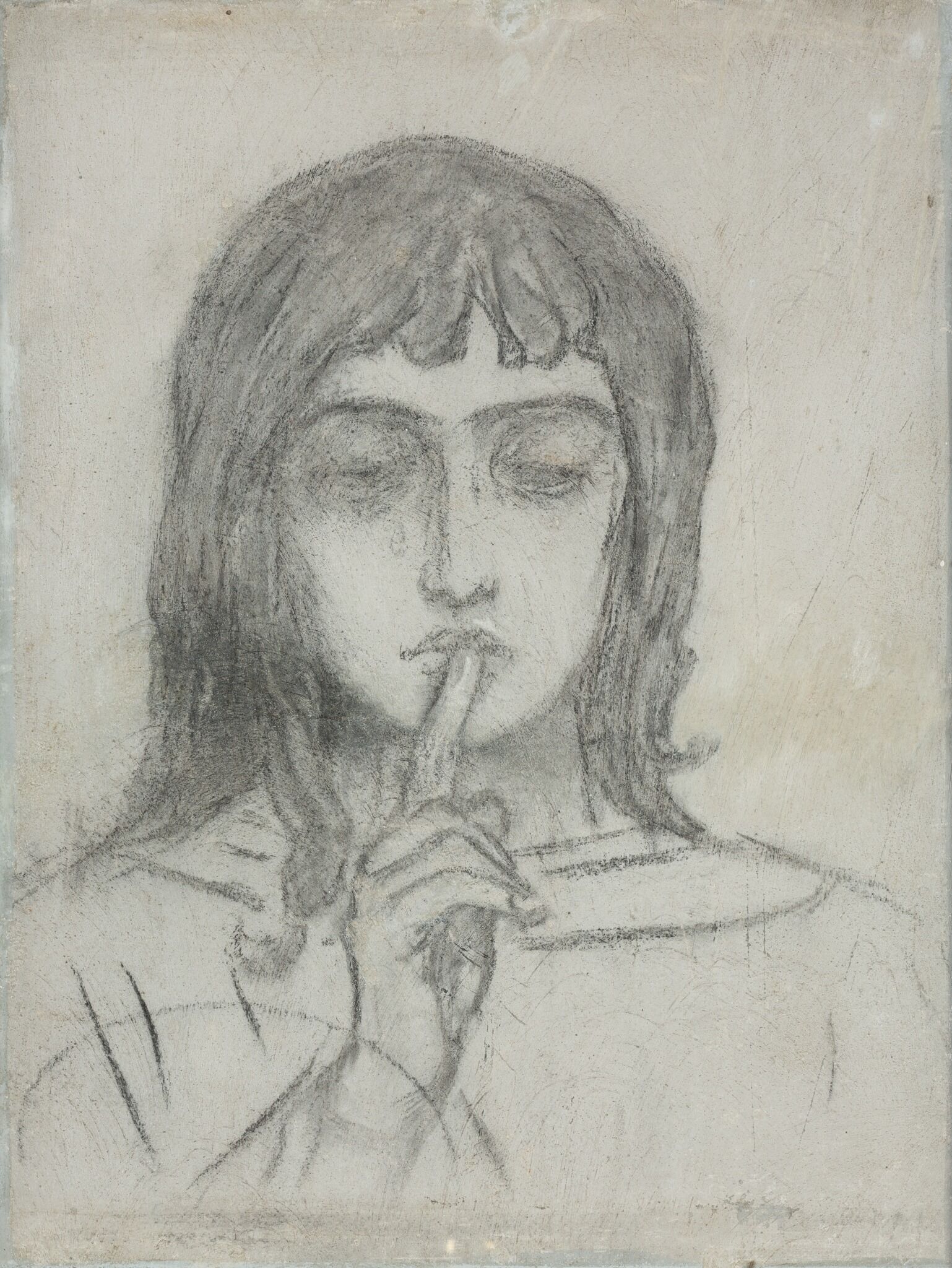
Молчание
Kann ich es sehen?
Unbekannt
Wo ist „Молчание“ heute? Sammlung: Tretjakow-Galerie, Moskau. Ob es heute ausgestellt ist, ist unbekannt.

Moskau, Russland
Der Besitzer ist bekannt; ob das Werk derzeit ausgestellt ist, nicht.
- Unverändert seit
- Quelle
- Das Museum
Über das Werk
In den Worten des Museums — auf Russisch
У входа в мастерскую своего московского дома углем на оштукатуренной стене художник нарисовал головку юноши с прижатым к губам пальцем. Длинные волосы юноши ниспадают на плечи, взгляд больших полуприкрытых глаз скрыт от зрителя, по правой щеке скатывается слезинка. Фоном портрета служит белая гладь стены, и от этого лицо юноши кажется очень бледным, а сам он – почти бестелесным, неземным. Ни в письмах самого художника, ни в переписке его детей этот загадочный образ-символ не упоминается. Можно только догадываться о тех смыслах, которые художник вложил в образ. Несомненно одно – для входящего в мастерскую изображение юноши было символом молчания.
Mehr lesen
Прижатый к губам палец в знак безмолвия встречается еще в византийском и древнерусском искусстве. Такой жест можно увидеть в иконе с изображением апостола и евангелиста Иоанна Богослова «в молчании». Этот образ-символ органично вписался в мастерскую художника и занял свое место в одном ряду с созданными здесь произведениями на фольклорно-эпическую и религиозную темы.
Tretjakow-Galerie
Angaben
- Inventarnummer
- ДМВ Г-2449
Im Katalog
Quellen
- Tretjakow-Galerie
- Bild: Tretjakow-Galerie — © State Tretyakov Gallery
Im Leben von Viktor Vasnetsov
Das ganze Leben1863–1867
Elwiro Andriolli: “Give up the seminary”
The Polish artist Elwiro Andriolli, exiled to Vyatka after the uprising of 1863, noticed the young man’s talent and urged him to give up the seminary and go to the Academy of Arts — there were priests enough, good and bad, without him, but few people with such gifts; Vasnetsov helped him execute frescoes for Vyatka’s Alexander Nevsky Cathedral.
1867
He leaves the seminary for St Petersburg
In 1867, with his father’s blessing, he left the Vyatka seminary and set off for St Petersburg to enter the Academy of Arts; he raised the money for the journey by auctioning his paintings “Woman Harvester” and “Milk-maid” (both 1867).
1867–1868 · Ausbildung
Risovalnaya shkola Imperatorskogo obshchestva pooshchreniya khudozhestv
1868
Admitted to the Academy of Arts
In August 1868, at the second attempt, he was admitted to the Imperial Academy of Arts; the attempt a year earlier had not worked out.
1870
He meets Pavel Chistyakov
Pavel Chistyakov, back from Rome, saw Vasnetsov’s drawing “A Prince’s Icon-painting Workshop” at an Academy exhibition, asked to be introduced to its author and soon made him a regular pupil; Vasnetsov remembered his teacher as “an enemy of the formula” who could show each pupil the road to his own development.
1878
He moves to Moscow, the city of his life’s work
In 1878, his resolve strengthened by Mamontov’s letter, he moved to Moscow, the city to which most of his creative life would be tied: he settled in a small flat in 3rd Ushakovsky Lane near Ostozhenka, walked the city for hours admiring the Kremlin and St Basil’s, and until 1885 the family changed rented flats in Moscow six times.