Peter Paul RubensFlandern, 1577–1640
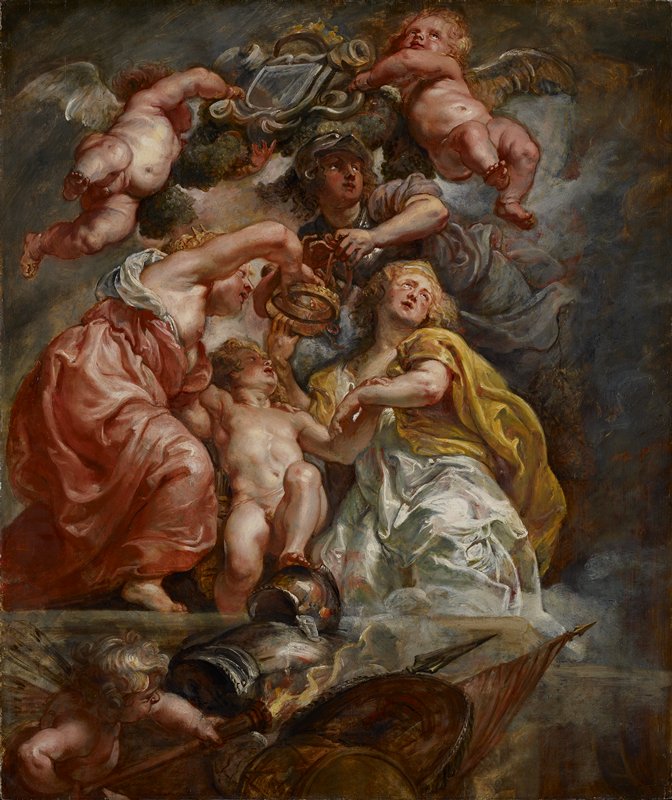
Minerva beschützt Frieden vor Mars
Minerva Protects Pax from Mars
Darf man es sehen?
Unbekannt

London, Vereinigtes Königreich
Der Besitzer ist bekannt; ob das Werk derzeit ausgestellt ist, nicht.
- Unverändert seit
- Quelle
- Das Museum
Über das Gemälde
Minerva protecting Peace from Mars or Peace and War is a painting by Peter Paul Rubens. He produced it in London between 1629 and 1630, during a diplomatic mission from the Spanish Netherlands to Charles I of England. It is now in the National Gallery, London.
It shows Minerva (goddess of war, wisdom and crafts) fighting off Mars, with the nude figure of the goddess Pax (commonly known as "Peace" in English) in the centre.
Angaben
- Inventarnummer
- NG46
Im Katalog
Quellen
- Wikidata
- Bild: National Gallery — Peter Paul Rubens · Public domain · Wikimedia Commons
Derweil im Leben von Peter Paul Rubens
Das ganze Leben1627–1630
Diplomatic Missions between Spain and England
Rubens was active as a diplomat, shuttling between the courts of Spain and England in an effort to achieve peace between the Catholic Spanish Netherlands and the Protestant Dutch Republic; he also made several trips to Holland.
1628–1629
Eight Months in Madrid, Friendship with Velázquez
During an eight-month stay in Madrid, Rubens, in addition to diplomatic negotiations, executed important works for Philip IV, studied and copied Titian anew, and became friends with the court painter Diego Velázquez.
1629 – April 1630
Diplomatic Journey to London
After a brief stay in Antwerp, Rubens traveled to London, where he remained until April 1630, continuing the peace negotiations between Spain and England.
1630
Marriage to Helena Fourment
Four years after the death of Isabella Brant, the 53-year-old Rubens married the 16-year-old Helena Fourment; she became the artist's muse and the inspiration for the sensuous figures in many of his paintings of the 1630s, including The Three Graces and The Judgment of Paris.
1630
Knighted by Charles I
King Charles I of England knighted Rubens, adding a heraldic lion to his personal coat of arms; a few months later Philip IV confirmed his knightly status.
6. Dezember 1630
Married: Helena Fourment